A self-portrait that turns a room into memory, music, and presence
This portrait uses reflection, color, and lived-in detail to create an intimate scene where music feels inseparable from identity. The image is rich with objects, but every strong element serves the feeling of a private world made visible.
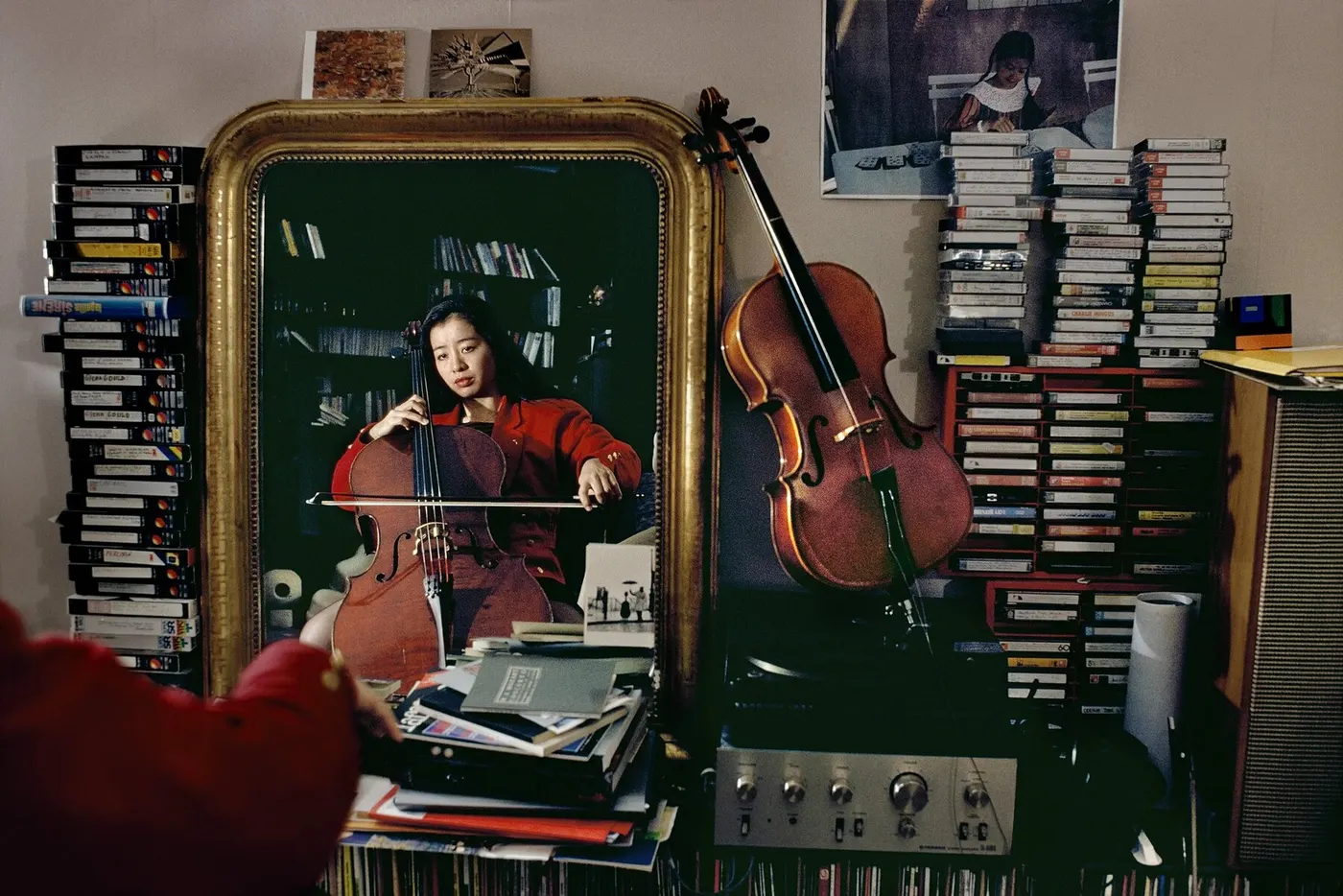
What makes this photograph so memorable is how completely it binds person, instrument, and environment into one emotional space. The image does not simply show a musician in a room; it shows a life organized around sound, memory, and self-perception. The mirror becomes a stage, the cello becomes both object and extension of the body, and the surrounding tapes and books make the portrait feel deeply inhabited.
The reflection gives the portrait its emotional gravity
The reflected figure immediately anchors the image. Her calm, inward expression and the poised hold on the cello create a mood that is intimate rather than performative. Because she appears inside the mirror, the portrait carries a double sense of presence: we are looking at her, but we are also looking at how she sees herself within this room. That subtle distance gives the photograph unusual psychological depth.

The reflected portrait feels personal, self-aware, and emotionally resonant.
The mirror turns a crowded room into a beautifully ordered composition
The ornate gold frame is one of the image’s smartest visual decisions. It creates a picture within the picture, giving the eye a clear structure inside a space filled with shelves, tapes, books, and equipment. The curved top and thick border introduce elegance and stability, while the dark mirror interior isolates the subject just enough to make her presence feel concentrated and vivid. The result is a composition that feels layered without losing coherence.

The mirror provides strong internal framing that makes the whole scene feel deliberate and composed.
The two cellos create a striking dialogue between image and object
One of the photograph’s most distinctive pleasures is the relationship between the cello in the reflection and the full instrument standing beside the mirror. This echo creates a conversation between performance and material reality, between the inner image and the room itself. The standing cello extends the portrait beyond the mirror’s boundary, making the music feel physically present in the space. It is an elegant visual idea, and it gives the frame both balance and conceptual richness.

The pairing of reflected musician and physical instrument gives the photograph a rare sense of visual and emotional depth.
Color is handled with warmth and restraint
The red jacket is the photograph’s key chromatic note. It draws attention at once, but it does so without overpowering the subdued atmosphere. That red is beautifully matched by the honeyed gold of the mirror and the warm brown wood of the cello, creating a palette that feels cohesive and tactile. Against the room’s darker greens, blacks, and neutrals, these warmer tones carry the emotional temperature of the picture.

The palette is rich and unified, with red and wood tones bringing warmth to the room’s quiet mood.
The surrounding objects make the portrait feel lived rather than staged
The stacked tapes, books, stereo equipment, and small printed images do more than decorate the frame. They establish biography. These are not generic props; they suggest habits, interests, time, and memory. The vertical tape stacks on either side of the mirror are especially effective, giving the room texture and rhythm while reinforcing the photograph’s connection to recorded sound. This attention to environment makes the image feel intimate in a lasting way.
The room’s media and objects deepen the sense of personality, memory, and authentic lived space.
Why this photograph stands out
This photograph stands out because it achieves intimacy through structure. Its reflection, repeated instrument, warm palette, and dense personal surroundings all work together to create a portrait that feels thoughtful, cultured, and deeply felt. It is memorable not only for what it shows, but for how gracefully it turns a private room into a portrait of identity itself.
About the photographer
Steve McCurry
Steve McCurry is renowned for his **vivid, emotionally charged photographs that bring human stories and cultures into sharp focus**. His work often places people within richly textured environments, using color, light, and expressive faces to create images that feel both immediate and deeply evocative. His photography is distinguished by **strong color, striking composition, and an extraordinary ability to capture a subject’s presence and emotion**. McCurry combines documentary observation with a painterly sense of light and framing, creating photographs that are memorable not just for what they show, but for how they make the viewer feel.