Looking at you (Frans Lanting)
A storm-blue sky and a golden herd meet in a photograph that feels both graphic and alive, turning a fleeting wildlife encounter into a memorably elegant composition.
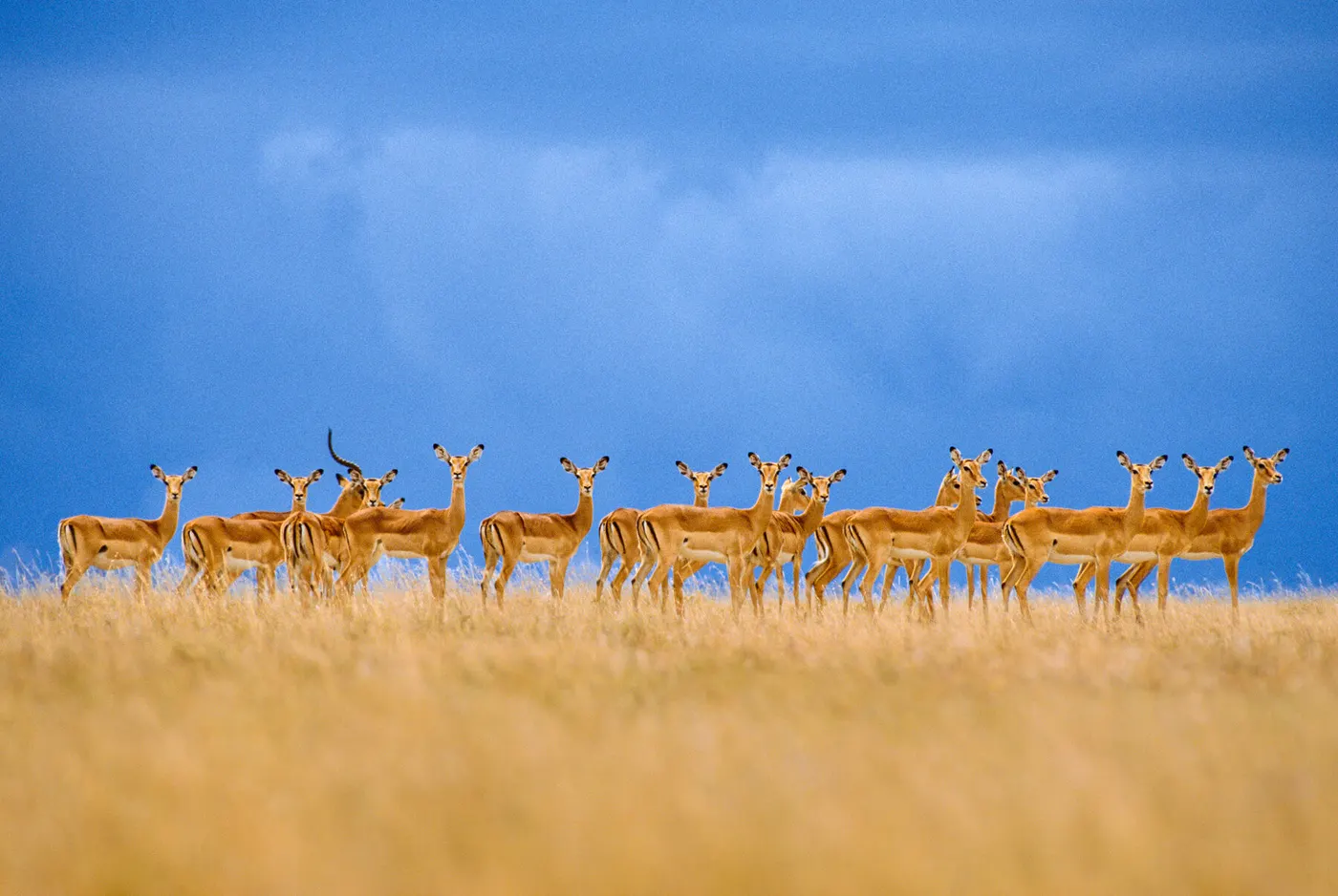
This photograph finds its power in simplicity: a band of impala, a field of dry gold, and an immense blue sky charged with weather. What makes it memorable is how decisively those elements are arranged. The image reads instantly, yet holds attention through color, rhythm, and small signs of alert life within the herd.
A sky that gives the frame its emotional charge
The deep storm-blue sky is the photograph’s great atmospheric force. It occupies most of the frame, and that generous negative space gives the scene a sense of drama and calm at once. Against that cool expanse, the warm ochre bodies of the impala glow with unusual clarity. The contrast is not only beautiful; it organizes the entire image, making the herd feel luminous and self-contained beneath the weather-heavy air.

The warm herd against the storm-blue sky creates a striking and memorable color relationship.
The herd as a single elegant line
One of the photograph’s strongest choices is the placement of the animals in a narrow horizontal strip near the lower third. That low horizon turns the herd into a graphic element, almost like a calligraphic line drawn across the landscape. The repeated backs, necks, and ears give the group cohesion, so the eye reads the animals both individually and as one unified form. It is a clean, confident composition that makes the scene feel distilled rather than crowded.

The herd forms a graceful horizontal band that gives the image strong graphic structure.
Rhythm built from repeated forms
The photograph is full of repetition, and that repetition is what gives it musicality. Upright ears echo across the frame. Slender necks rise at slightly different intervals. Backlines overlap into a pattern that feels natural but ordered. This rhythm is especially pleasing because the animals remain recognizable as individuals while still contributing to a larger visual cadence. The picture becomes as much about pattern as it is about wildlife.
Repeating ears, necks, and backlines create a vivid sense of rhythm across the herd.
Small gestures that keep the scene alive
Within the formal arrangement, subtle behavioral details add energy. A lifted tail, alert faces, and slightly varied head positions keep the photograph from becoming purely graphic. Those touches suggest a real shared moment of attention passing through the group. The image benefits from that balance: it is orderly enough to feel composed, but lively enough to feel observed rather than staged.
Small gestures within the herd bring life and presence to the photograph’s formal design.
Why this photograph stands out
Deers succeeds by reducing a wildlife scene to its most resonant essentials: weather, color, line, and alert animal presence. The photograph’s beauty comes from how clearly those elements support one another. The sky gives emotion, the herd gives rhythm, and the subtle gestures within the group keep the image vivid and alive.
About the photographer
Frans Lanting
Frans Lanting is renowned for his **immersive wildlife photography that portrays animals as sentient, expressive beings within their natural environments**. His images often go beyond straightforward documentation, using light, perspective, and intimate moments to create a strong emotional connection between the viewer and the natural world. His work is distinguished by **extraordinary patience, elegant composition, dramatic light, and a strong sense of visual storytelling**. Lanting combines the precision of a naturalist with the sensibility of a fine-art photographer, creating images that reveal both the beauty of individual animals and the larger story of life on Earth.