Saul Leiter’s Quiet Theater of Solitude
A lone café patron, a corner booth, and a few humble table objects become a complete emotional world in this restrained, beautifully structured street photograph.
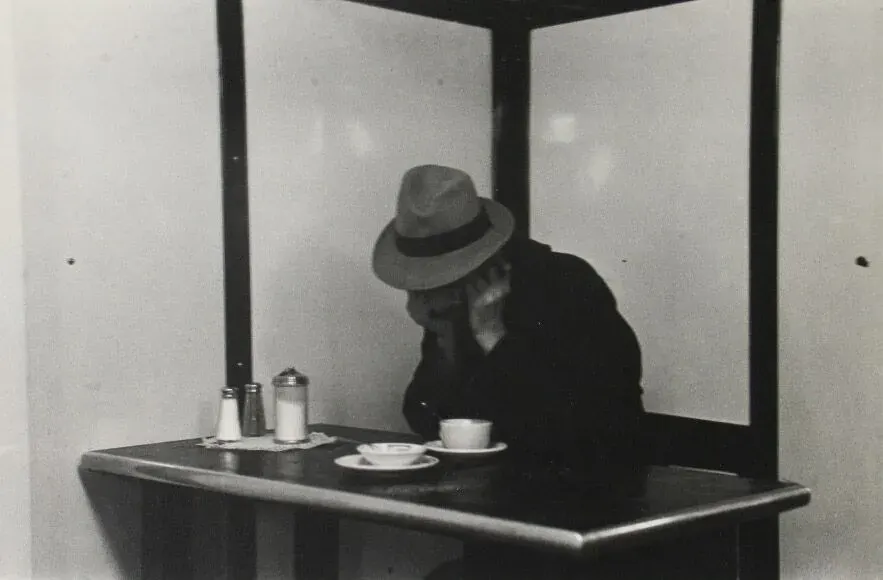
This photograph distills a public place into something deeply private. A single figure sits folded into a corner booth, head bowed beneath a hat, while the stark walls and spare tabletop details turn the café into a stage for introspection. Its power comes from restraint: simple forms, limited tones, and a scene observed with unusual emotional precision.
A gesture that carries the whole picture
The emotional force of the image rests in the sitter’s posture. The lowered head, the hand against the face, and the downward tilt of the hat brim create a self-contained silhouette that reads instantly as inward and absorbed. Nothing is overstated, yet the body language is eloquent. Because the face is partially hidden, the photograph keeps its mystery while still feeling specific and human.

The bowed gesture gives the photograph its memorable emotional gravity.
The booth becomes an architectural frame
The corner structure is handled beautifully. Dark vertical posts and the overhead beam surround the sitter with clean, emphatic lines, turning an ordinary booth into a precise compositional device. This framing does more than organize the image; it creates a feeling of enclosure that matches the subject’s withdrawn posture. The geometry is simple, but it is exact enough to make the scene feel inevitable.

The booth’s strong geometry transforms the café corner into a powerful frame within the frame.
Small table details deepen the story
The cup, saucer, and plate are modest objects, yet they give the scene its lived-in credibility. They place the figure unmistakably in the rhythm of everyday city life: someone has sat down, ordered something warm, and drifted into thought. These details keep the image from becoming abstract melancholy. They anchor it in a recognizable moment, which makes the solitude feel even more poignant.

The café still life makes the solitude feel tangible and fully lived.
Rhythm in the smallest forms
On the left side of the table, the salt, pepper, and sugar containers introduce a subtle visual cadence. Their upright shapes echo the booth posts behind them, setting small vertical accents against the broad horizontal plane of the tabletop. This repetition gives the spare composition a quiet sophistication. Even the minor objects participate in the image’s order.
The repeated tabletop forms add a delicate rhythm that enriches the composition.
Why this photograph stands out
What makes this photograph endure is the way atmosphere, structure, and human feeling are held in perfect balance. The scene is ordinary—a person alone at a café table—but the formal clarity and emotional understatement make it unforgettable. It is a beautiful example of how a great street photograph can reveal not spectacle, but the quiet depth of an unnoticed moment.
About the photographer
Saul Leiter
Saul Leiter was known for his poetic, painterly approach to street photography, finding beauty in quiet, everyday moments rather than dramatic events. He used reflections, fogged windows, rain, vibrant color, and layered compositions to create images that feel intimate and dreamlike. His work often obscures or partially hides his subjects, inviting the viewer to discover the scene rather than simply observe it. Leiter’s photographs are celebrated for their subtle mood, ambiguity, and extraordinary use of color and light.