Sculptural Horns, Ritual Presence, and Morning Haze
This photograph turns a cattle camp into something monumental. Through silhouette, horn geometry, and drifting haze, it gives everyday pastoral life the weight of myth while keeping the human presence intimate and immediate.
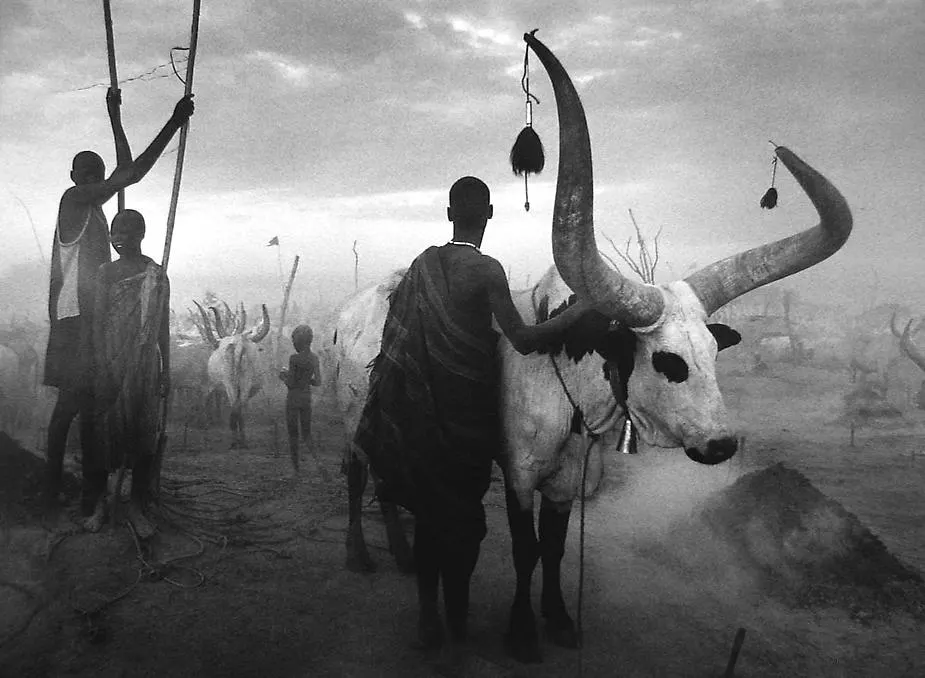
This image is unforgettable from the first glance. The great curve of the horns, the pale skull, and the dark figure at the animal’s side create a scene that feels both documentary and timeless. What makes it so powerful is how clearly it joins shape, atmosphere, and human presence. The photograph does not depend on spectacle; it builds its force through silhouette, restraint, and the feeling of life unfolding inside dust and early light.
A focal point built from horn and bone
The nearest animal holds the frame with extraordinary authority. Its bright head and sweeping horns read almost like carved forms against the lighter sky, giving the picture an immediate graphic signature. The asymmetry of the horns makes the shape even more alive: one rises nearly vertical, the other opens outward, so the silhouette feels both balanced and dramatic. That combination of luminous skull and dark surrounding tones gives the photograph a memorable center of gravity.

The main animal’s horn arc and pale skull create a striking sculptural anchor.
Human touch gives the scene its emotional life
The central figure beside the cow transforms the image from an elegant study of form into a lived moment. A hand rests on the animal, and that contact carries the picture’s feeling of care, familiarity, and ritual. The figure is seen largely in silhouette, which keeps the gesture simple and archetypal. Instead of isolating a person from the environment, the photograph shows a relationship: human and animal moving through the same air, the same work, the same morning.

The contact between person and animal gives the image warmth, dignity, and narrative presence.
Depth emerges through haze and repetition
Beyond the main pair, the background is filled with cattle, figures, and upright forms that gradually dissolve into mist. These repeated silhouettes make the camp feel expansive and inhabited. Nothing appears staged or isolated; the world continues well behind the foreground subjects. Because the distant animals fade softly into the haze, the photograph gains depth without losing cohesion. The eye moves from the central figure outward into a whole community of forms.
Layered cattle and figures make the camp feel deep, communal, and fully alive.
Atmosphere turns the documentary into the elemental
The low dust and ground haze around the animals’ legs are essential to the image’s mood. They soften edges, unify the tones, and give the scene a tactile sense of early activity. This atmosphere keeps the photograph from feeling merely descriptive. It becomes sensory: you can almost feel the dry air and the movement that has stirred the ground. The softness also works beautifully with the harder shapes of horn, skull, and staff, creating a rich contrast between solidity and vapor.
The dust and haze give the scene texture, mood, and a powerful sense of place.
Repeating horn shapes create rhythm across the frame
One of the most elegant choices in the image is the way horn forms recur across the composition. The partial animal on the right echoes the monumental horns of the main cow, while additional cattle in the distance repeat that visual language on a smaller scale. This rhythm ties the frame together and reinforces the pastoral identity of the scene. The photograph feels ordered not by rigid symmetry but by recurring shapes that the eye recognizes again and again.
Repeated horn silhouettes give the composition rhythm and a distinctive visual identity.
Why this photograph stands out
What lingers here is the union of grandeur and intimacy. The photograph presents a cattle camp as a place of beauty shaped by daily life: monumental horns, quiet gestures, suspended dust, and figures emerging through haze. Its strength lies in how naturally these elements come together. The result is an image with the authority of iconography and the immediacy of lived experience.
About the photographer
Sebastião Salgado
Sebastião Salgado is renowned for his **powerful black-and-white photographs that explore human life, labor, migration, and the natural world on a monumental scale**. His images often place individuals within vast landscapes or dramatic environments, emphasizing both human dignity and the forces shaping their lives. His work is distinguished by **rich tonal contrasts, dramatic light, layered compositions, and an almost epic sense of scale**. Salgado transforms documentary photography into something deeply poetic and immersive, creating images that confront difficult realities while celebrating the resilience and beauty of the people he photographs.