Rain, Motion, and Glass on a City Corner
This photograph turns a wet street crossing into something cinematic. Rushing figures, layered reflections, and a beautifully controlled monochrome palette make the city feel immediate, tactile, and alive.
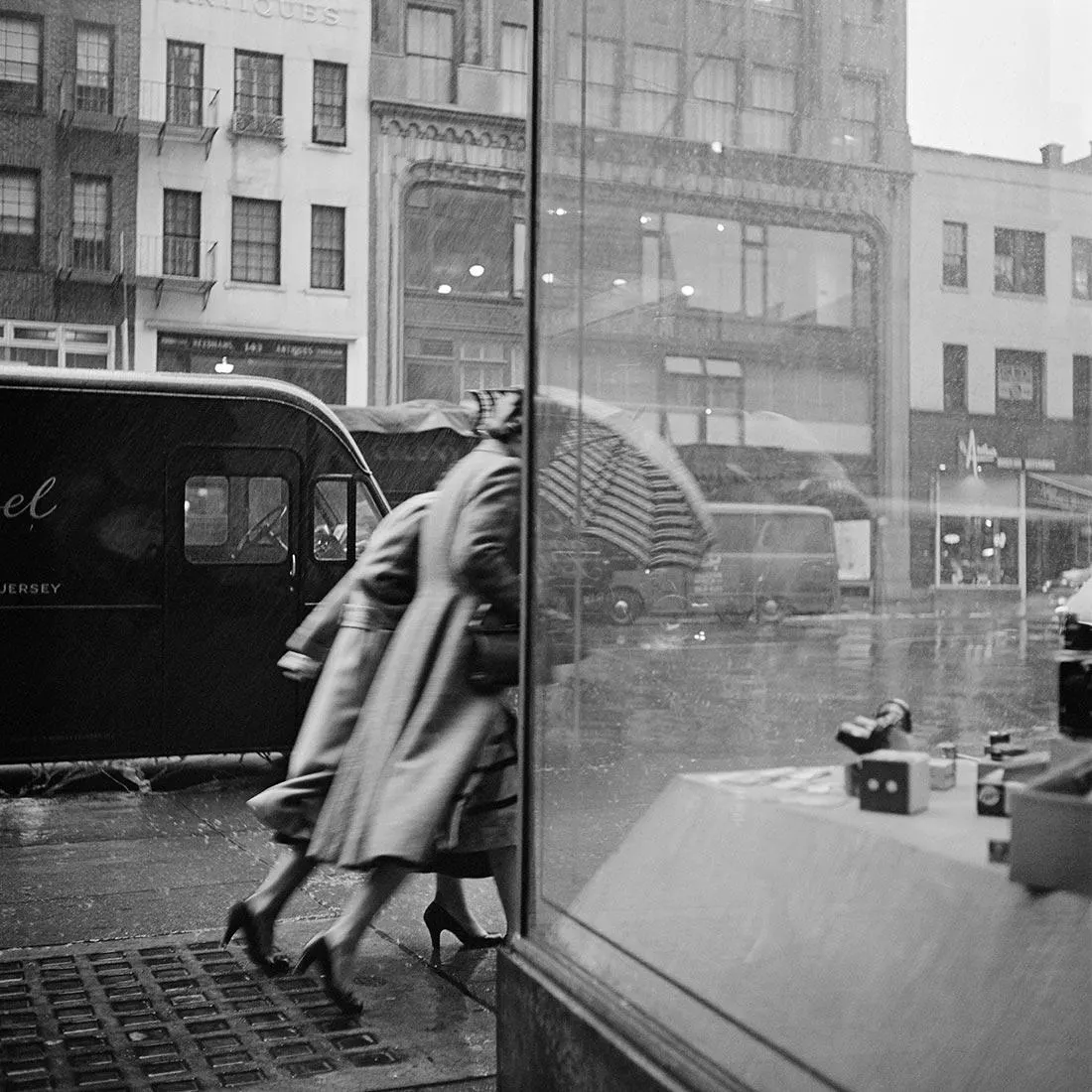
This image finds drama in an ordinary urban moment and renders it with remarkable elegance. A pair of figures hurrying through the rain becomes the pulse of the frame, while storefront glass, reflected umbrellas, parked vehicles, and wet pavement build a scene with unusual density and grace. What makes the photograph memorable is how completely its atmosphere is felt: the weather, the rush, the slick ground, and the layered city all arrive at once.
A fleeting gesture becomes the whole story
The photograph’s emotional force sits in the two blurred figures stepping quickly through the frame. Their forward lean, swinging coats, and mid-stride heels make the rain legible instantly. Nothing is overstated, yet the body language carries urgency, weather, and urban rhythm in one compact gesture. The blur is especially effective here because it does not obscure the action; it translates movement into feeling.

The blurred stride gives the scene narrative energy and makes the rain feel lived rather than merely seen.
Reflections turn the street into layered theater
Much of the image’s sophistication comes from the way direct observation and reflection share the same space. The striped umbrella reflection, the vehicle forms across the street, and the faint architecture in the glass create multiple visual planes without losing clarity. This interplay gives the frame depth and complexity, as if the city is unfolding on top of itself. The result is a photograph that rewards slow looking.

The reflections enrich the scene with depth, turning a passing moment into a densely woven urban image.
Monochrome tones make the weather luminous
The grayscale palette is handled with real finesse. Pale building façades and soft reflected light keep the rain-filled scene airy, while darker masses like the van and coats provide enough weight to ground it. Because the tones are carefully separated, the picture feels atmospheric rather than muddy. The upper right is especially beautiful, where reflected architecture becomes a light veil over the street.
The monochrome tonal range gives the photograph an elegant rain atmosphere with both softness and structure.
Street texture anchors the image in physical reality
The slick pavement and metal grate at the lower edge give the image a tactile base. These details make the weather tangible: you can almost feel the wet stone and hear shoes striking the ground. They also balance the softer reflections above by adding a crisp, physical counterpoint. This grounding texture helps the scene feel fully inhabited, not just visually composed.
The pavement texture gives the photograph tactile presence and deepens its rainy mood.
Why this photograph stands out
What lingers in this photograph is its ability to hold motion, weather, and city structure in a single elegant frame. It is vivid without being loud, layered without feeling crowded, and atmospheric without losing immediacy. The image honors a brief, rain-soaked instant and gives it lasting form.
About the photographer
Vivian Maier
Vivian Maier was known for her **intimate, observant street photography**, capturing fleeting moments of everyday life with a remarkable eye for gesture, expression, and composition. Her photographs often reveal the humor, loneliness, curiosity, and quiet drama of ordinary people and city streets. Her work is distinguished by **layered compositions, reflections, strong geometry, and an instinct for capturing unguarded moments**. Working largely in Chicago and New York, Maier created a deeply personal visual record of urban life that was discovered and recognized only after her death.