Lion Smell The Flowers
Varun Aditya turns a fleeting lion gesture into a lyrical wildlife portrait, where scent, stillness, and rich color meet beneath a flowering canopy.
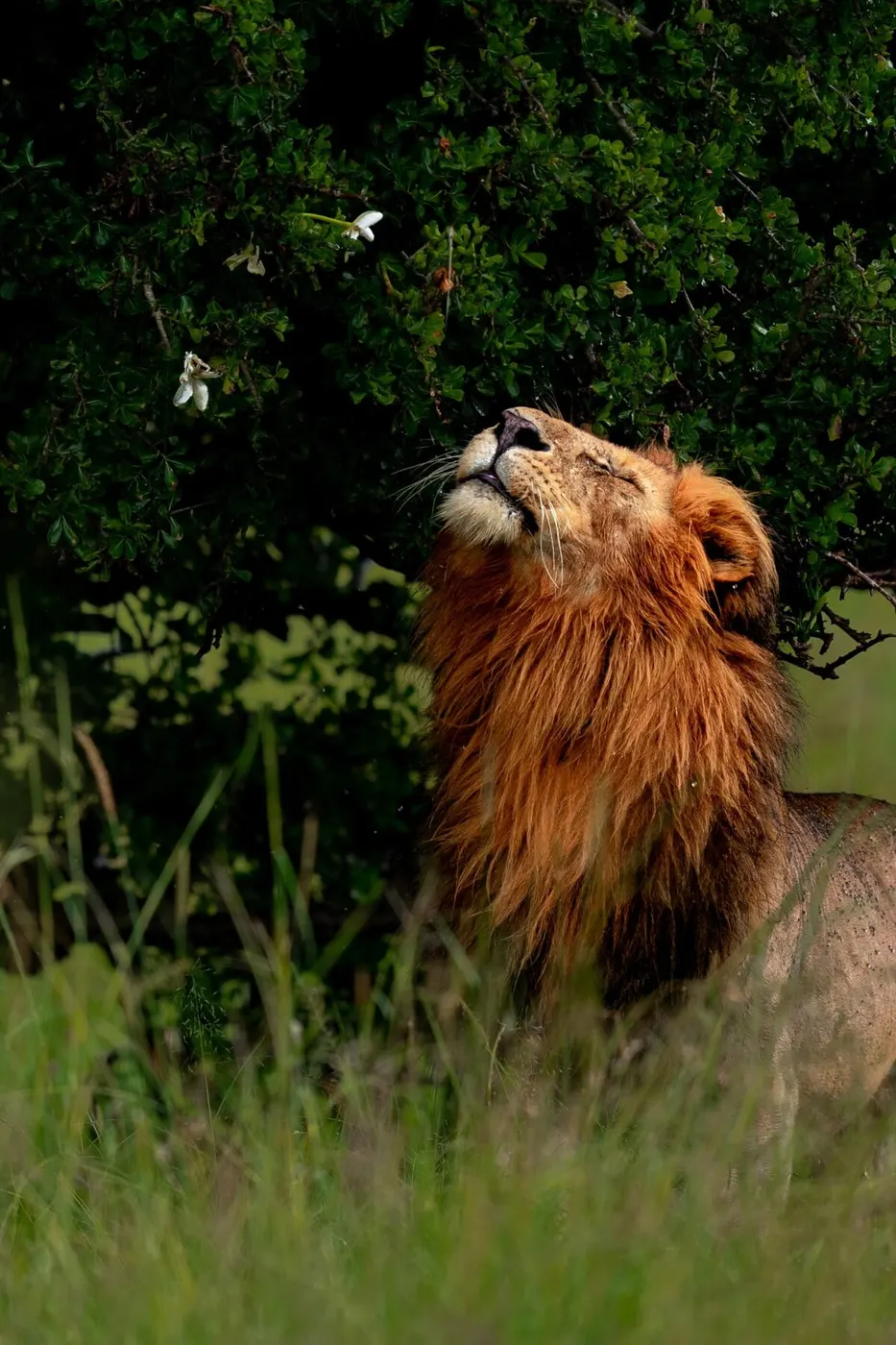
Varun Aditya is known for dramatic wildlife photography, but this image shows another side of that strength: restraint. A male lion stands beneath dense green foliage, head tilted upward, eyes closed, as if savoring the scent of the hanging blossoms above him. The photograph feels intimate rather than grand. Its power comes from behavior, atmosphere, and the precise way color and texture make the moment feel both majestic and unexpectedly gentle.
A gesture that transforms the portrait
The photograph becomes unforgettable through the lion’s expression and pose. His muzzle lifts toward the flowers, his eyes stay softly closed, and the usual force associated with a lion gives way to concentration and calm. That single upward gesture turns the frame from a wildlife study into a character-driven scene. It suggests scent, curiosity, and pleasure all at once, giving the animal a vivid inner life without any need for action.

The lifted muzzle and closed eyes create a wildlife portrait with real feeling and narrative clarity.
Color contrast makes the lion glow
One of the image’s most beautiful strengths is the meeting of warm and cool tones. The mane carries deep copper, amber, and rust, while the background sits in layered greens so dark they feel almost velvety. That contrast gives the lion immediate presence. The mane does more than frame the face; it becomes the visual heart of the composition, radiating warmth against the shaded canopy and making the subject feel sculpted out of the scene.

The warm mane against the shaded green background gives the portrait striking presence and elegance.
Soft light preserves tenderness and detail
The light here is wonderfully controlled. It falls gently across the muzzle and mane, holding texture in the fur without any harsh glare. The whiskers, nose, and fur along the chin stay clear, while the overall tonality remains subdued and quiet. That softness is essential to the image’s mood. It allows the lion to feel restful and receptive, matching the stillness of the pose and the hush of the setting.
The gentle light keeps the portrait intimate while revealing rich texture in the lion’s face and mane.
Small blossoms deepen the poetry of the scene
The white flowers hanging in the foliage are tiny compared with the lion, yet they are crucial to the photograph’s character. They introduce a delicate note into an image centered on one of the most powerful animals in the wild. Their pale brightness punctuates the dark leaves and gives the lion’s upward attention a clear destination. Because they are so understated, they feel discovered rather than arranged, adding a lyrical touch that makes the scene memorable.
The small white blossoms add a delicate visual counterpoint that makes the moment feel lyrical and distinctive.
Why this photograph stands out
What makes this photograph so compelling is its balance of strength and softness. Varun Aditya presents a lion with grandeur still intact, yet the image lingers because it is shaped around scent, stillness, and sensation. The rich mane, dark canopy, soft light, and tiny flowers all support that central feeling. It is a wildlife portrait that feels both noble and tender, and that rare combination is what makes it stay in the mind.
About the photographer
Varun Aditya
Varun Aditya is known for his **dramatic wildlife photography**, capturing animals in striking moments of action, interaction, and stillness. His images often emphasize the character and behavior of wildlife, using natural environments as a stage for powerful visual storytelling. His distinctive style combines **dramatic light, vivid color, tight compositions, and exceptional timing**, often bringing the viewer remarkably close to the subject. He has a particular talent for anticipating fleeting behavioral moments and turning them into **dynamic, emotionally engaging images** that highlight both the beauty and personality of wildlife.