A Working Portrait Filled With Quiet Devotion
This photograph turns a simple worktable scene into something deeply memorable through soft window light, concentrated posture, and the tactile beauty of ordinary materials.
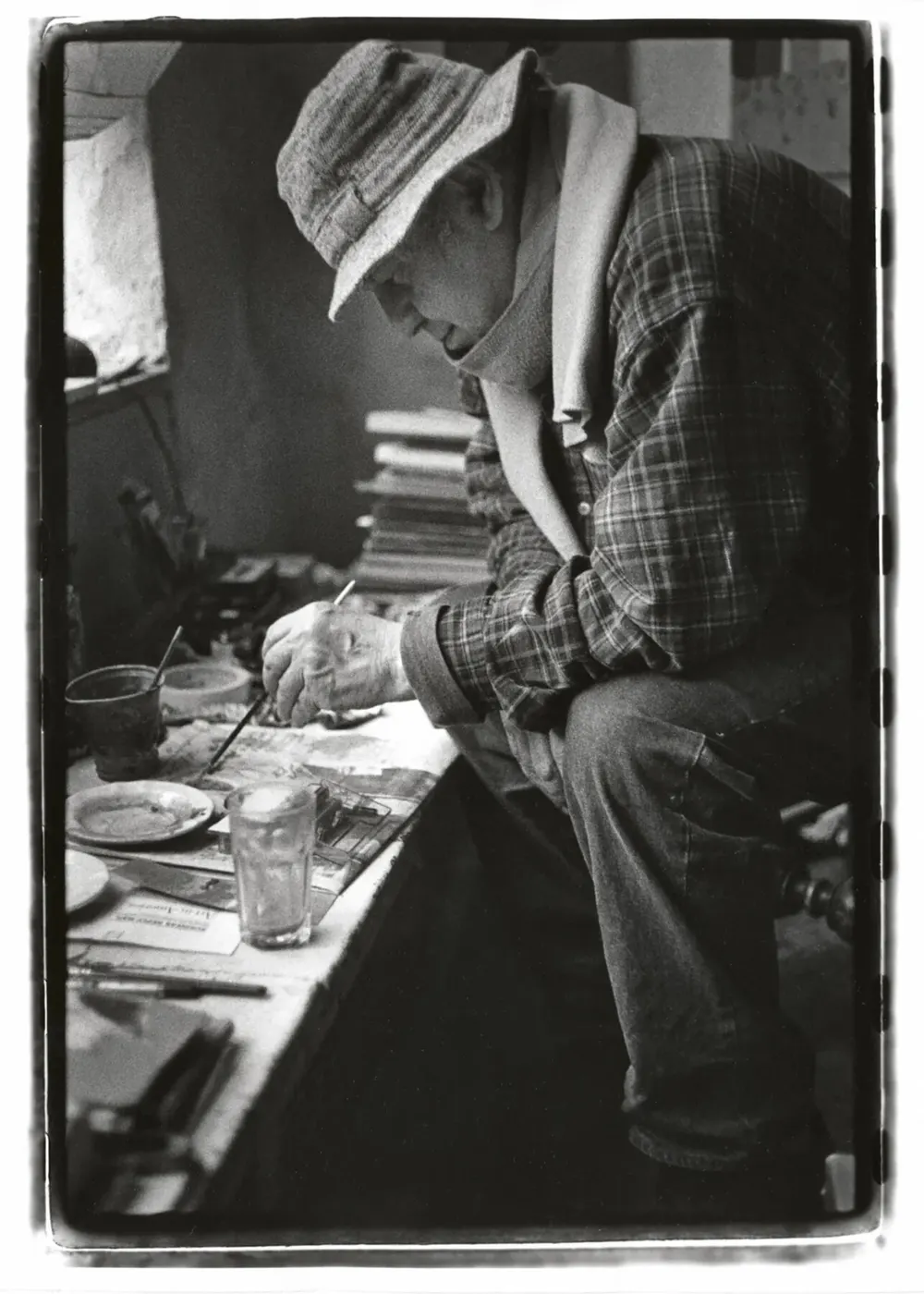
"Pg 274" is memorable for how naturally it holds concentration, labor, and atmosphere in a single frame. The image does not dramatize the moment; it trusts the bowed head, the working hand, and the surrounding tools to carry the feeling. In black and white, every surface becomes expressive, from skin and fabric to paper, glass, and tabletop, giving the portrait both intimacy and weight.
Soft window light gives the portrait its emotional center
The light entering from the left shapes the subject’s face with exceptional gentleness. Even with the head angled downward, the cheek, nose, and mouth remain clearly modeled, so the expression reads as inward and focused rather than hidden. Because the window is present in the frame, the illumination feels truthful and lived-in, perfectly suited to the workshop setting.

The side light creates a quiet, humane portrait within the working scene.
The hand at the table makes the photograph feel lived rather than posed
The image’s narrative strength gathers around the hand, tool, and active tabletop. That small area explains the entire scene: this is a person absorbed in making, adjusting, or repairing something with care. The gesture is modest, but that modesty is exactly what gives the photograph conviction. It feels observed at the right instant, when attention, touch, and purpose align.

The working gesture gives the portrait its vivid sense of real time and real labor.
The body lines guide the eye with elegant clarity
The hat brim, bowed head, scarf, shoulder, and bent arm form a strong chain of diagonals that carries the viewer down into the action on the table. This structure gives the photograph cohesion: the figure’s posture is not only expressive, it is compositional. The physical curve of concentration becomes the visual path through the frame, connecting thought, sight, and touch.
The figure’s posture turns concentration into graceful visual rhythm.
Textures make the monochrome image feel tangible
The plaid coat, soft scarf, worn tabletop, stacked papers, and small glass all register with rich tactile detail. Black and white is especially effective here because it strips the scene to form, tone, and surface, letting each material speak clearly. The roughness of fabric and the smoothness of skin and glass create a beautiful contrast, giving the portrait a tactile, almost archival presence.
The monochrome tonality turns everyday materials into a source of beauty and atmosphere.
The workshop setting deepens the sense of character
Nothing in the background feels decorative. The stacked papers and scattered objects support the sense of a real working environment, and that authenticity gives the portrait emotional depth. The subject is not isolated from the space; the room helps describe a life, a habit, and a way of spending time. The result is an environmental portrait that feels intimate without losing context.
The surrounding objects enrich the portrait by grounding it in a believable world.
Why this photograph stands out
What makes this photograph lasting is its restraint. It finds beauty in absorbed attention, in directional light, in the curve of a working body, and in the humble richness of things close at hand. The image honors craft by being crafted with the same patience it depicts, and that harmony between subject and seeing is what makes it so rewarding to look at.
About the photographer
Saul Leiter
Saul Leiter was known for his poetic, painterly approach to street photography, finding beauty in quiet, everyday moments rather than dramatic events. He used reflections, fogged windows, rain, vibrant color, and layered compositions to create images that feel intimate and dreamlike. His work often obscures or partially hides his subjects, inviting the viewer to discover the scene rather than simply observe it. Leiter’s photographs are celebrated for their subtle mood, ambiguity, and extraordinary use of color and light.