William Eggleston’s unforgettable glance across the pews
A young woman turning in a church pew becomes the emotional center of the frame, held by Eggleston’s instinct for color, gesture, and everyday drama.
Watch the video
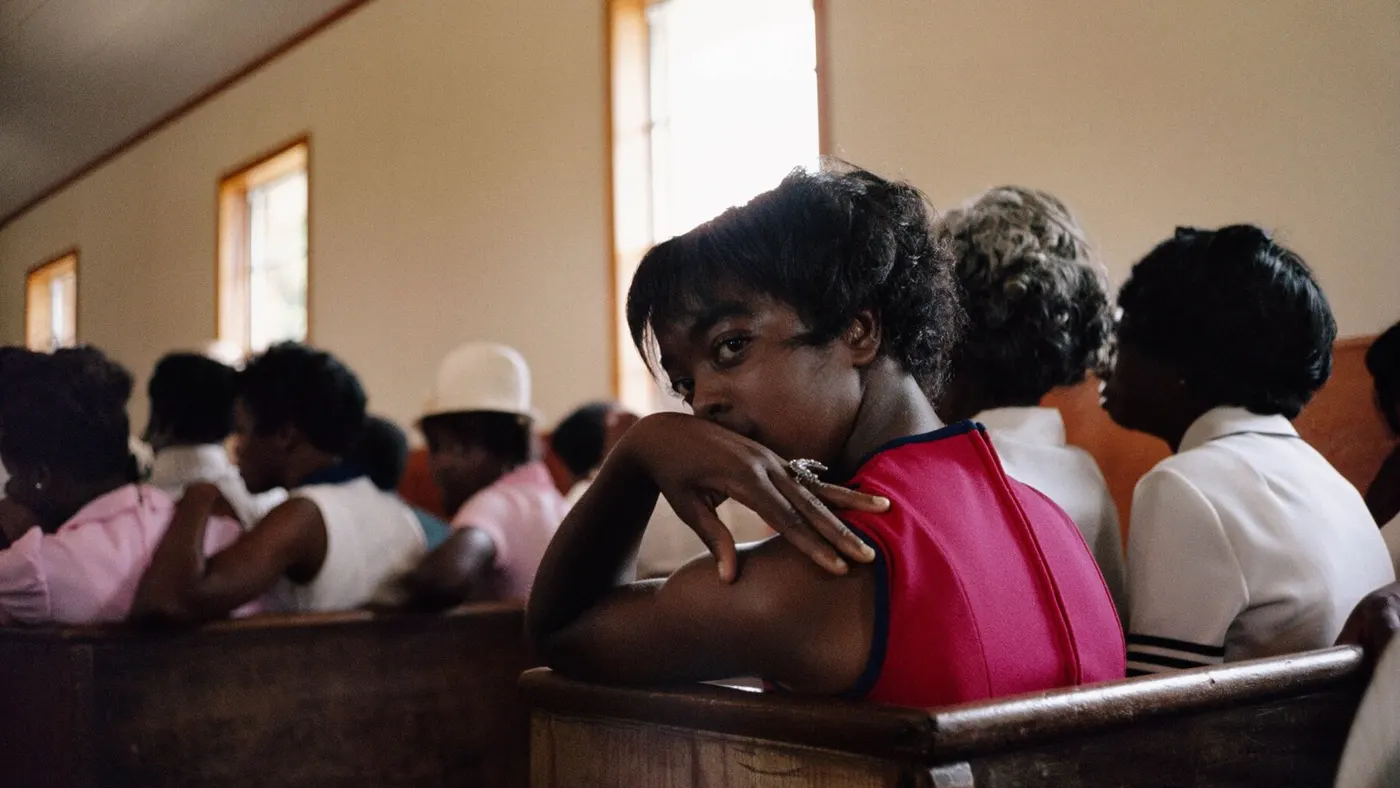
William Eggleston has long been celebrated for finding visual intensity in ordinary American life, and this photograph does exactly that. Inside a modest church, he catches a moment that feels both casual and unforgettable: a young woman turns back toward the camera, her hand draped across her shoulder, and the whole room seems to gather around that glance. The image is quiet, but its emotional presence is immediate.
A glance that turns the scene into a portrait
The photograph’s lasting force begins with the subject’s expression and pose. She is seated among others, yet her backward look creates a direct connection that feels intimate and alive. The curve of her hand across her shoulder adds elegance and personality, giving the moment a sculptural clarity. What might have remained a simple church scene becomes a portrait charged with awareness, poise, and mystery.

The backward glance and graceful hand gesture give the image its emotional signature.
Color used with absolute precision
Eggleston’s famous sensitivity to color is unmistakable here. The vivid red-pink dress is the visual anchor of the frame, immediately separating the subject from the subdued whites, browns, and creams around her. Because the room is otherwise restrained, that single saturated note feels even more radiant. The color does not overwhelm the photograph; it clarifies it, making the woman’s presence both striking and natural.

The saturated dress creates a beautiful, unmistakable center of attention within the muted interior.
Pews and windows give the candid moment structure
The frame feels spontaneous, but it is held together by strong geometry. The wooden pews form steady horizontal bands across the lower half of the image, giving the scene weight and depth. Above them, the tall windows repeat at even intervals, establishing a gentle architectural rhythm. These simple structural elements keep the photograph grounded, allowing the fleeting human moment to land with even greater force.

The repeating pews and windows lend calm order to a moment that feels instantly observed.
A community scene that never loses its focus
The surrounding congregation matters deeply to the picture. Figures on the left remain soft and secondary, yet they supply the full social setting: this is not an isolated portrait but a lived communal space. Their blurred forms, pale clothing, and seated postures create atmosphere without competing with the main subject. Eggleston lets the room breathe, so the woman’s glance feels like a fleeting spark inside a larger shared ritual.
The softly rendered congregation enriches the story while keeping the woman’s glance central.
Why this photograph stands out
What makes this photograph so memorable is its balance of immediacy and design. Eggleston discovers a single charged expression inside an ordinary interior, then lets color, gesture, and architecture deepen its effect. The result is a picture that feels candid yet composed, modest in subject yet unforgettable in presence.
About the photographer
William Eggleston
Born 1939, an American photographer widely regarded as a pioneer of color fine-art photography. Working primarily in and around Memphis, Tennessee, he elevates everyday scenes—suburban streets, diners, domestic interiors, and roadside signs—through saturated color and a "democratic" approach that treats every subject equally