Why Do My Photos Look Boring?
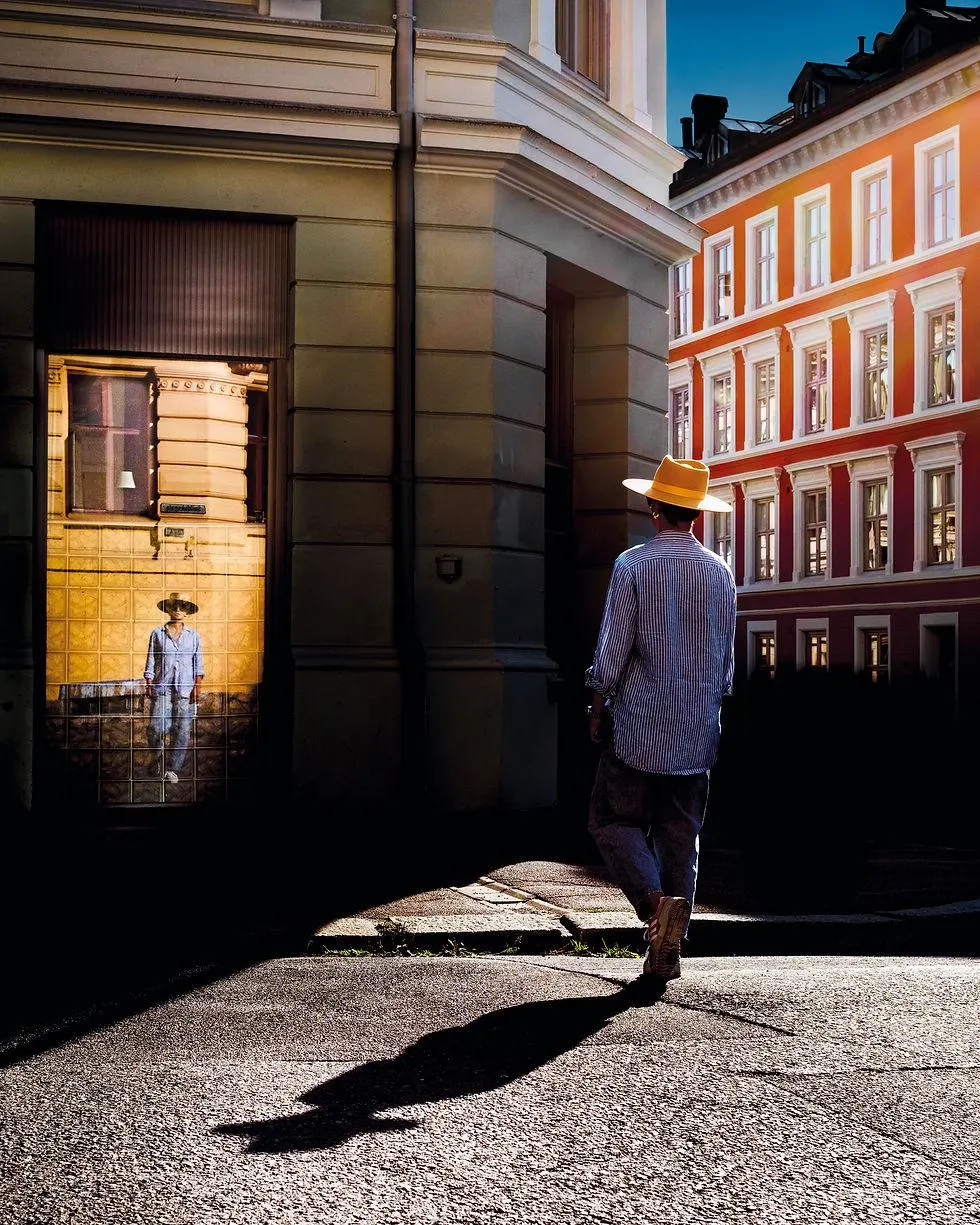
Why Your Photos Look Boring — And How to Develop a Better Photographic Eye
There is a frustrating moment in learning photography when your pictures become technically competent but stop getting noticeably better.
Your exposures are usually right. Your focus is reliable. You understand lenses, depth of field and shutter speed. You know the basic composition rules. You can look at a scene and make a photograph that is clean, sharp and well exposed.
And yet, when you look at the pictures later, they don't quite hold your attention.
They aren't bad. They're just… ordinary.
This is where photography becomes much more interesting. The problem is no longer primarily about learning how to operate a camera. It is about learning how to see.
The difference matters because a camera doesn't decide what a photograph means. You do. You choose the moment, the viewpoint, the boundaries of the frame, what to include, what to exclude, and ultimately which photograph is worth keeping.
The camera is the tool. The decisions are the photograph.
When technically good isn't enough
Early in photography, improvement is relatively straightforward. You learn how exposure works, how to focus, what different lenses do, and how shutter speed affects motion and aperture affects depth of field. You make fewer technical mistakes, and your photographs improve.
Eventually, however, the obvious technical problems begin to disappear.
You can make a photograph that is perfectly sharp and perfectly exposed and still give the viewer very little reason to look at it.
That's because a photograph isn't simply a record of what was in front of your camera. It is a selection. You selected the moment, the viewpoint, what to include and what to leave out. You selected when to press the shutter, and later, which photograph to keep.
This is one reason John Szarkowski's The Photographer's Eye remains such a useful way of thinking about photography. Its ideas—subject, detail, frame, time and vantage point—are really ways of thinking about the decisions that turn the world into a photograph. Stephen Shore's The Nature of Photographs similarly encourages photographers to look closely at how photographs actually work rather than treating photography simply as a collection of technical skills.
Once you reach this stage, buying another lens or memorizing another composition rule isn't necessarily going to solve the problem.
You need to become better at noticing.
An interesting subject doesn't make an interesting photograph
One of the easiest traps in photography is confusing an interesting subject with an interesting photograph.
A spectacular mountain is an interesting subject. A beautiful sunset is an interesting subject. An unusual person, an exotic location or an impressive building can all be interesting subjects.
But none of them automatically makes a compelling photograph.
Think about standing in front of a spectacular landscape. When you're there, you're experiencing much more than the camera can record: the scale of the place, the temperature, the sound, the atmosphere, the feeling of standing there. You make a photograph, take it home, and discover that it simply shows a mountain.
The mountain was interesting. The photograph isn't necessarily.
The same thing happens with people. You can meet someone fascinating, hear their story and become completely absorbed by their personality. Then you make a portrait. The viewer doesn't know any of that. They only have the rectangle.
The photographer's job is therefore not simply to find interesting things. It is to discover what is interesting about those things as photographs.
Instead of asking, What should I photograph?, start asking, What is actually happening visually here?
That small change in question can completely alter the way you photograph.
Look at what the subject doesn't tell you
A beautiful scene already tells the viewer that it is beautiful. Your photograph needs to give them another reason to stay.
Maybe a tiny person in a huge landscape establishes scale. Maybe a dark foreground changes the mood. Maybe a reflection creates an unexpected relationship between two parts of the frame. Maybe the photograph is less about the landscape itself and more about the evidence of human intervention within it.
The subject hasn't changed. Your way of seeing it has.
This is one reason photographers such as Robert Adams are so instructive. His landscapes often aren't spectacular in the conventional sense. They can be quiet, ordinary places shaped by development and human intervention. The interest comes from the photographer's attention to light, space and the relationship between the natural and built environment.
Rinko Kawauchi provides a very different example. Much of the power in her work comes from paying extraordinary attention to ordinary fragments of life: light, color, small gestures and fleeting moments. The subject doesn't need to announce its importance. The photograph can create that importance through observation.


Rinko Kawauchi, from Illuminance. The photograph doesn't depend on a spectacular subject. Attention, timing, light and the relationships within the frame create the interest.
The lesson isn't that you should photograph ordinary things.
It's that ordinary things can be enough if you learn to see them differently.
Your camera turns the world into a rectangle
There is a fundamental problem hiding inside every photograph: the world is three-dimensional and continuous, while a photograph is a bounded rectangle.
Everything you photograph requires exclusion.
You don't photograph the whole street. You photograph this section of it.
You don't photograph the entire person. You photograph this expression, this gesture, this relationship to the surroundings.
You don't photograph the whole landscape. You choose where the frame begins and ends.
That means changing your position can be more important than changing your camera settings.
Move closer and the context disappears. Move farther away and the context becomes part of the story. Raise your camera and the relationships between objects change. Lower it and the foreground becomes more prominent. Move six inches to one side and two objects that were separate may suddenly overlap.
Then wait.
A person enters the frame. A shadow moves. Someone turns their head. A patch of light changes.
The scene may be essentially the same.
The photograph isn't.
Composition begins with deciding what the rectangle should contain.
Stop thinking about composition as a list of rules
The rule of thirds is useful. So are leading lines, symmetry, negative space, framing and other familiar compositional ideas.
But rules are most useful when they help you understand something that is actually happening in the photograph.
The mature question isn't, Did I use the rule of thirds?
It's, What is the relationship between the things inside this frame?
What do you notice first?
What do you notice second?
What connects those elements?
What competes with them?
Where does your eye go next?
Look especially carefully at the edges. A bright patch in the corner can compete with your subject. A stray object can create an accidental relationship. A person's elbow can become more visually important than you intended. Two objects can almost touch and create a connection that changes the entire composition.
The frame isn't a window.
It is a construction.
Every element inside it changes the meaning of every other element.
A useful way to look at any photograph
When you're studying your own photograph—or someone else's—try making four passes through the image.
First: What do I notice first?
This tells you something about visual hierarchy.
Second: Where does my eye go next?
This tells you something about the relationships within the frame.
Third: What keeps competing for my attention?
This is where distractions often reveal themselves.
Fourth: What could disappear without weakening the photograph?
This is perhaps the most difficult question.
Good photographs aren't necessarily full of important things.
Sometimes their strength comes from knowing what doesn't need to be there.
A complicated photograph isn't necessarily an interesting photograph
Once photographers realize that their pictures feel too simple, another trap appears: adding complexity.
More layers. More colors. More foreground. More objects. More visual information.
But complexity isn't the goal.
Relationships are.
Alex Webb's photographs are a useful example. His frames can contain several things happening at once—people, shadows, architecture, color, foreground objects, gestures and multiple layers of space.
The photographs aren't compelling simply because they're busy.
They're compelling because the elements interact.
A gesture relates to another gesture. A patch of color connects distant parts of the frame. A foreground object changes how you understand something behind it. Light creates a relationship between things that might otherwise seem unrelated.


Alex Webb, Nuevo Laredo, Mexico. Don't count the number of things in the frame. Ask what is connected to what. Where does the light lead you? Which gesture relates to another shape? What happens between foreground and background?
This is a useful way to study complex photographs.
Don't ask, How do I put more things into my photographs?
Ask, How can the things already in my photograph relate to one another?
Work the scene
One of the biggest differences between beginning photographers and experienced photographers is not necessarily that experienced photographers always know exactly when to press the shutter.
They often work the situation.
They move. They wait. They try another angle. They make another frame. They respond to what changes.
A finished photograph can make the moment look inevitable. A contact sheet often tells a very different story.
The photographer was searching.


Elliott Erwitt's famous bulldog sequence is a good example of why this matters. Looking at a final frame by itself can make the photograph seem like a moment that was simply recognized and captured. Looking at a sequence reveals the process: variations in position, timing and alignment eventually lead to the frame that works.
This is why you shouldn't automatically leave after making the first competent photograph.
If something interests you, stay with it.
Move closer. Move farther away. Change your height. Change the foreground. Wait for a different gesture. Remove something from the frame. Try the obvious photograph, then deliberately try something that isn't obvious.
The goal isn't to take hundreds of photographs indiscriminately.
It's to explore the possibilities of a situation.
Try three more photographs
Here's a simple exercise.
When you've made the photograph you initially wanted, don't move on immediately. Make three more interpretations.
First, get closer.
Remove context and see what happens when you isolate the relationship.
Second, make it stranger.
Change your position, your height, the foreground or the timing. Don't worry whether the result is successful. You're testing another possibility.
Third, make it simpler.
Remove something. Ask whether the photograph becomes stronger when there is less information.
You may not keep any of these three photographs.
That's fine.
The purpose is to prevent your first solution from automatically becoming your final solution.
Your habits may be the real problem
Every photographer develops habits.
Maybe you love shallow depth of field. Maybe you always photograph at eye level. Maybe you tend to center your subjects. Maybe you photograph almost everything during golden hour. Maybe you always reach for the same focal length.
There is nothing wrong with having preferences.
The problem comes when you stop choosing them.
You see a person, reach for the familiar lens, open the aperture, compose them in the familiar way and take the photograph. The result may be perfectly good, but you never discovered what else the scene could have become.
Try removing one of your favorite solutions for a week.
No wide-open aperture.
No eye-level photographs.
No centered subjects.
No golden hour.
No favorite focal length.
The purpose isn't to prove that your usual approach is wrong. It is to discover what you see when your usual answer is unavailable.
Constraints can be useful precisely because they make you pay attention to decisions you normally make automatically.
Photograph relationships, not nouns
Try changing the way you give yourself photographic assignments.
Instead of:
Dogs
try:
Dogs and their owners
Instead of:
Architecture
try:
Old and new
Instead of:
Rain
try:
People adapting to rain
Instead of:
Trees
try:
Human intervention in nature
The difference is small but powerful.
A noun gives you a subject.
A relationship gives you a question.
Questions are much more productive because they give you something to look for.
You are no longer waiting for an interesting object to appear. You're looking for interaction: between people and places, light and architecture, old and new, movement and stillness.
That is where photographs begin to acquire meaning.
Photograph somewhere boring
You don't need an exotic destination to improve.
In fact, one of the best exercises is to photograph somewhere you already know.
Your street.
Your neighborhood.
The local park.
Your commute.
The same building you walk past every day.
Go back repeatedly.
At first, you'll probably photograph the obvious things. Then you'll run out of obvious things.
That's when the exercise becomes useful.
You start noticing the way light reaches a particular wall at a certain hour. You notice a recurring figure. You notice reflections, patterns, small changes in the environment and the way people occupy the same space differently from one day to the next.
Familiarity becomes an advantage.
You already know the place.
Now you can start noticing it.
Look before you photograph
Here's another exercise worth trying.
Go for a twenty-minute walk with your camera in your bag.
Don't take a single photograph.
Instead, look for photographs.
When something catches your attention, stop and ask yourself why.
Is it the relationship between two people?
A particular quality of light?
A repeated color?
An unusual alignment?
A dramatic difference in scale?
A shadow?
An empty space?
A reflection?
A moment that is about to happen?
Only after you've identified what interests you should you take the camera out and try to photograph it.
This forces you to separate seeing something from photographing something.
They're not the same skill.
Editing is part of seeing
Taking photographs is only half of photographic practice.
The other half is deciding which photographs matter.
This is why contact sheets and sequences are so valuable. Put twenty or thirty photographs from a shoot together, including near-duplicates. Don't immediately open the one you remember liking.
Look at them as a group.
Choose five.
Then choose two.
Then choose one.
Now ask why.
Don't settle for I like this one.
Describe what is actually happening.
Perhaps the gesture is clearer.
Perhaps one distracting bright area has disappeared.
Perhaps two shapes connect more effectively.
Perhaps the timing creates tension.
Perhaps the subject has more room to move.
Perhaps the photograph simply says what you wanted it to say more clearly.
The act of comparing photographs trains a different skill from the act of making them.
You are learning to discriminate.
And that ability—to recognize why one photograph works better than another—is one of the foundations of developing a photographic eye. The research behind this approach points toward comparison, perceptual learning, feedback and deliberate attention as useful ways of developing visual judgment.
Don't trust the photograph you remember making
There is another reason editing your own work is difficult.
You remember the experience.
You remember the cold morning, the difficult hike, the unexpected encounter, the person you met or the incredible light that lasted for thirty seconds.
The viewer doesn't.
They only see the photograph.
Try looking at your photographs after some time has passed. Forget where you took them. Forget what was happening around the camera. Look at them as if someone else made them.
Then ask:
What do I notice first?
What is this photograph about?
What keeps me looking?
Where does my attention go after the subject?
Is there anything in the frame that feels accidental?
Those questions can be uncomfortable.
They're also useful.
Don't use post-processing to solve a seeing problem
Post-processing can be an important part of making a photograph. Cropping, contrast, color, tonal adjustments and local corrections can all change how an image is experienced.
But there is a difference between refining a photograph and trying to rescue one that never worked.
If the composition is weak, more contrast won't create a meaningful relationship between two elements.
If the moment is empty, a dramatic color grade won't create the missing moment.
If the viewpoint is generic, a preset won't give you a new viewpoint.
Processing is most powerful when it strengthens something that is already present.
Before asking what Lightroom can do to your photograph, ask what the photograph itself is trying to say.
Study great photographers differently
Looking at great photography is one of the best ways to improve.
But don't just look at a photograph and think, That's beautiful.
Ask why.
When looking at Saul Leiter, ask what obstruction does to the photograph. What information is hidden? How does reflection change the space? What does color connect?
When looking at Alex Webb, study layering, timing, gesture and the relationships between simultaneous events.
When looking at Rinko Kawauchi, look at how ordinary subjects become meaningful through attention to light, color and fleeting moments.
Don't try to reproduce their photographs.
Try to understand their decisions.
The goal isn't to borrow somebody else's visual style.
It's to expand the range of things you are capable of seeing.
Don't buy your way out of the problem
A new camera can be exciting.
A new lens can genuinely change what you photograph.
Better equipment can solve real technical limitations.
But equipment can't decide what is important inside the frame.
At some point, technique becomes infrastructure.
Early in photography, you ask:
What does aperture do?
Later, you ask:
Why does this photograph need this depth of field?
Early on, you learn the rule of thirds.
Later, you ask:
Why does this arrangement of elements work?
Early on, you search for interesting subjects.
Later, you begin seeing possibilities in places you previously considered boring.
That's the shift.
An eight-week practice for developing your photographic eye
You don't need to wait until you're an experienced photographer to start working on these skills. Try spending eight weeks deliberately practicing how you see.
Week 1 — Compare
Create contact sheets after your shoots. Compare similar photographs and choose the strongest frame. Write down exactly why you chose it.
Week 2 — Watch the edges
Before pressing the shutter, inspect all four edges and the corners of the frame. Look for distractions, accidental overlaps and things you are unintentionally cutting off.
Week 3 — Break a habit
Identify one thing you do repeatedly and remove it for a week. Notice what happens.
Week 4 — Photograph relationships
Give yourself assignments based on relationships rather than subjects: people and place, old and new, light and shadow, human and nature.
Week 5 — Walk without photographing
Take several walks without using your camera. Look for photographs and describe to yourself what makes each potential image interesting.
Week 6 — Stay longer
When you find something promising, don't immediately take one photograph and leave. Wait. Move. Watch. Make several interpretations.
Week 7 — Ask someone else
Show another photographer a small group of your photographs. Instead of asking which one they like, ask what they notice first and what they think the photograph is about.
Week 8 — Make a small body of work
Choose one place, subject or question and photograph it repeatedly. Then edit aggressively. Reduce thirty photographs to fifteen, fifteen to ten, and ten to your strongest five.
Look for patterns.
What keeps appearing?
What do you keep noticing?
What do you repeatedly leave out?
You may be starting to discover your photographic voice.
Your photographic voice isn't a preset
It's tempting to think of photographic style as a particular color grade, focal length, aspect ratio or editing technique.
Those things can certainly become recognizable characteristics of someone's work.
But they aren't necessarily where a photographic voice comes from.
A more interesting definition is what repeatedly emerges from what you notice, what you care about, how you organize it, what you exclude and what you choose to keep.
That's why photographic voice usually becomes clearer across a body of work rather than in a single photograph.
Photograph the same place for long enough and you'll discover what repeatedly catches your attention.
Edit enough photographs and you'll discover what you consistently reject.
Study enough of your own work and you'll begin to see patterns you weren't consciously aware of.
Those patterns are much more interesting than a preset.
So why do your photos look boring?
Maybe your camera isn't the problem.
Maybe you don't need another lens, another preset or another composition rule.
Maybe you're simply at the point where learning photography requires something different from what got you here.
You need to become better at recognizing the difference between something worth photographing and a photograph worth looking at.
Those aren't the same thing.
The first is about finding subjects.
The second is about seeing.
And seeing can be practiced.
Look closely. Compare photographs. Work the scene. Move. Wait. Subtract. Return. Edit. Study photographs deeply. Ask why one frame works and another doesn't.
Most importantly, stop treating every photograph as an isolated success or failure.
Your photographs are feedback.
Every frame tells you something about what you noticed, what you ignored, what you chose and what you still haven't learned to see.
At first, photography improves when you learn what your camera can do.
Eventually, it improves when you understand why you want it to do something.
That's where the real work begins.
A photographic eye isn't built by taking more pictures. It's built by becoming more sensitive to what changes when you choose one picture over another.
Look closer. There's always more to see.