Where Labor Becomes Monument
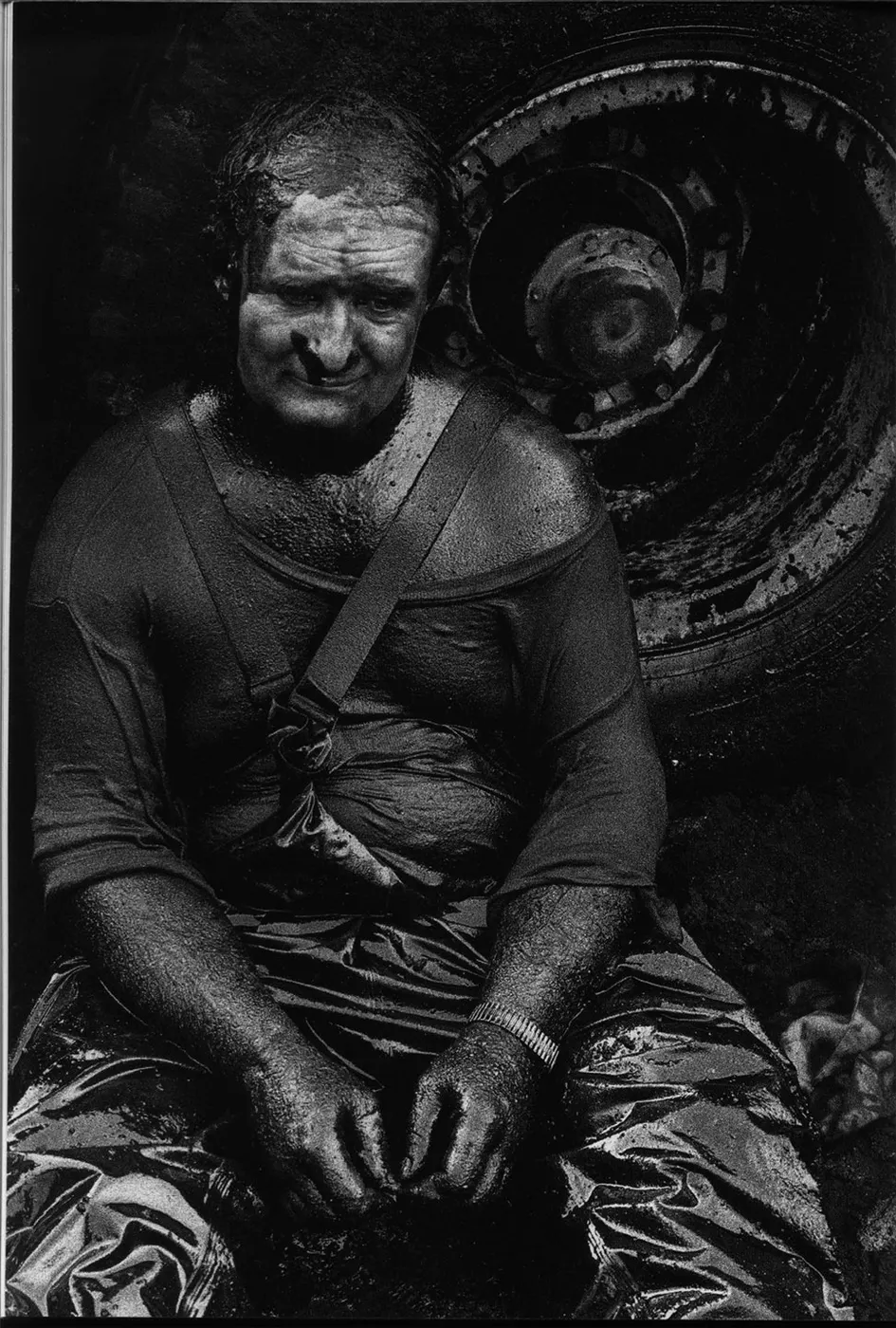
In "Greater Burhan Oil Field, 1991," a worker and a machine occupy the same visual gravity. The portrait turns oil, skin, fabric, and steel into one dense monochrome language, giving the image its unforgettable physical and emotional force.
Watch the video
This photograph has the force of a monument and the intimacy of a confession. A seated worker fills the frame, his body slick with oil, his expression settled somewhere between fatigue and endurance. Behind him, a circular machine part echoes his presence with mechanical authority. The picture is memorable because it makes no separation between person and environment: everything—skin, clothing, metal, darkness—belongs to the same hard world.
A human presence that holds the entire frame
The emotional center of the portrait is the man’s face. His expression feels unperformed and fully lived-in, with a slight downturn at the mouth and a guarded gaze that suggest long effort rather than theatrical suffering. Light across the forehead, cheeks, and nose gives the face just enough prominence to remain the anchor amid the surrounding darkness and texture. The result is a portrait that feels psychologically exact.

The face gives the image its human gravity and makes the portrait feel profoundly believable.
The machine becomes a perfect counterweight
The large circular form behind the worker’s right shoulder is an inspired compositional force. Its hard geometry balances the softer asymmetry of the body and head, creating a dialogue between man and mechanism without needing any explanatory detail. The wheel-like structure also places the subject unmistakably inside an industrial world. It is context, shape, and tension all at once.

The circular machinery gives the portrait both structural balance and immediate industrial context.
Texture is the picture’s visual language
Monochrome is especially powerful here because it unifies every surface into a single tactile vocabulary. Oil on the skin catches light differently from sweat, fabric, and steel, yet all of it belongs to the same tonal universe. The shirt clings and shines, the arms appear almost metallic, and the machinery recedes into a dense, weathered black. These textures do more than decorate the frame—they tell the story of labor directly through surface.
The tactile rendering of oil, fabric, and metal turns the whole frame into a physical record of work.
Straps and posture quietly organize the scene
The portrait feels dense, but it is carefully guided. The diagonal straps pull the eye downward from the shoulders through the torso, while the slightly hunched posture reinforces the inward, exhausted mood. Those lines keep the body coherent inside a dark environment full of competing forms and tones. The composition feels compressed, but never confused.

The diagonal straps and bowed posture give the image a clear internal rhythm.
A portrait that makes endurance visible
What lingers is the way the image joins dignity with heaviness. The worker is not romanticized or cleaned up; he is presented with full physical weight, embedded in the machinery and residue of his environment. That honesty is what makes the picture beautiful. It recognizes labor as something bodily, psychological, and monumental, and it does so with extraordinary economy.
The photograph transforms a single worker’s presence into a powerful emblem of endurance.
Why this photograph stands out
"Greater Burhan Oil Field, 1991" is unforgettable because every element serves the same idea: the merging of human presence and industrial reality. Expression, geometry, texture, and tonal depth all work together to create a portrait that feels both immediate and timeless. It is a picture of labor, but even more than that, it is a picture of stature.
About the photographer
Sebastião Salgado
Sebastião Salgado is renowned for his **powerful black-and-white photographs that explore human life, labor, migration, and the natural world on a monumental scale**. His images often place individuals within vast landscapes or dramatic environments, emphasizing both human dignity and the forces shaping their lives. His work is distinguished by **rich tonal contrasts, dramatic light, layered compositions, and an almost epic sense of scale**. Salgado transforms documentary photography into something deeply poetic and immersive, creating images that confront difficult realities while celebrating the resilience and beauty of the people he photographs.