Weather, Work, and the Street’s Memory
A pair of postal workers move through thick snowfall past a wall of vintage soda signs, and the scene feels both immediate and timeless. The photograph turns weather, storefront detail, and everyday labor into a vivid portrait of urban life.
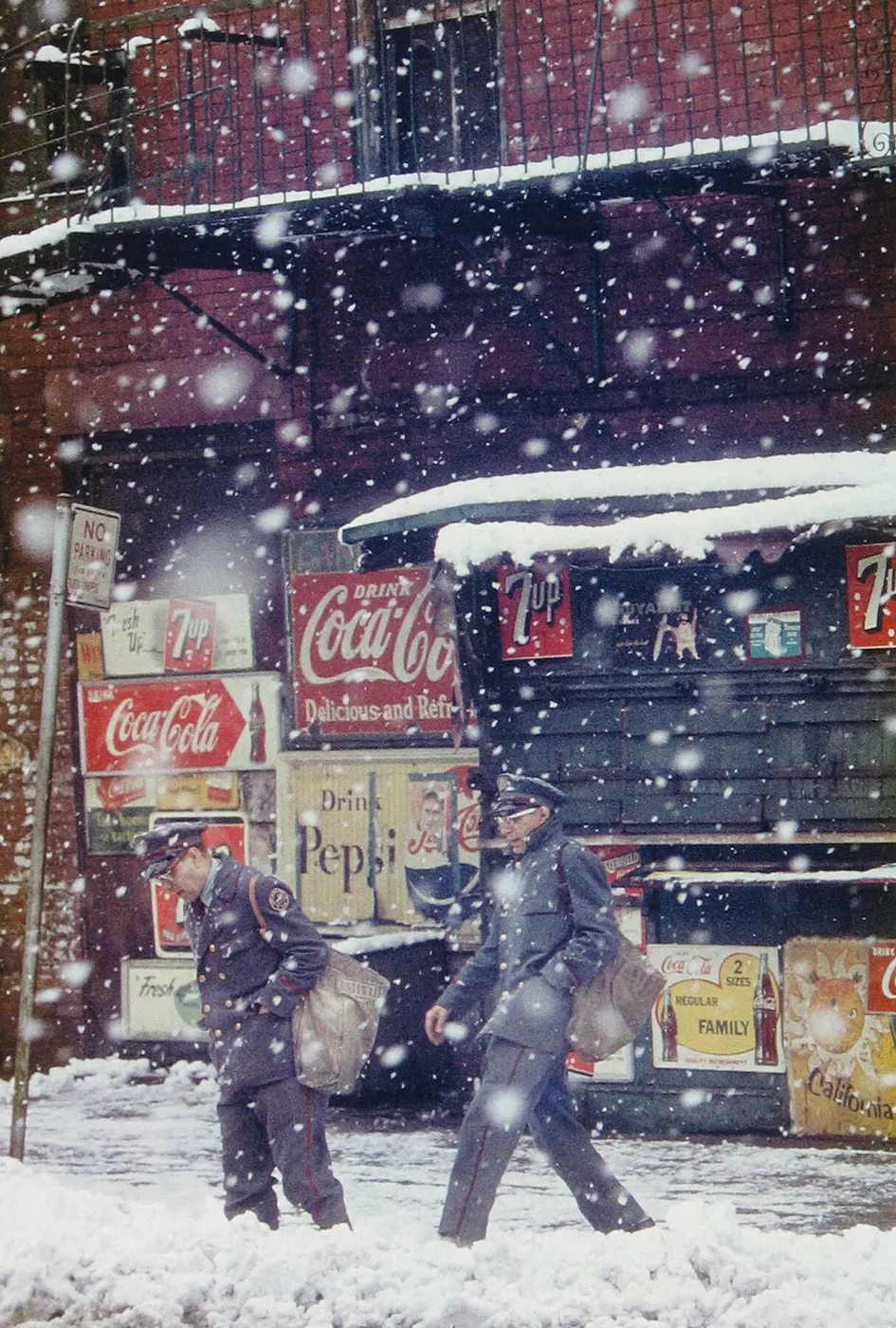
This photograph is rich with documentary life. Two postal workers stride through deep slush while snow fills the frame and old storefront signs glow through the storm. What makes the image so memorable is how fully it commits to atmosphere: the weather is not background, the street is not backdrop, and the people are not incidental. Everything works together to create a scene that feels observed, lived, and specific.
A human story moves cleanly through the storm
The two postal workers give the photograph its pulse. Their forward motion is easy to read even through the snowfall: heads down, bags over their shoulders, bodies angled into the conditions. They bring scale to the street and turn the picture from a record of weather into a record of daily work. Their pairing is especially strong because it feels unforced; the echo between the two figures creates rhythm while still preserving each person’s presence.

The two walkers give the frame movement, scale, and an immediate sense of lived urban routine.
The storefront becomes a character of its own
Behind the figures, the dense cluster of Coca-Cola, 7-Up, and Pepsi signs builds an extraordinary sense of place. These are not generic commercial details; they root the image in a particular visual era and make the block feel culturally textured. The layering of signs, colors, and lettering gives the eye plenty to discover, and that richness deepens the documentary power of the scene. The storefront does more than describe location—it carries memory.

The vintage signage gives the image a vivid period identity and a powerful feeling of place.
Snow is used as atmosphere and structure at once
The snowfall is one of the photograph’s great strengths. Large flakes crossing the lens make the storm feel physically present, while the churned snowbank at the bottom gives the scene weight and texture. This combination creates real depth: foreground slush, midground figures, background storefront. The weather becomes tactile, and that tactility is what makes the image so immersive. You can almost feel the cold, the wet fabric, and the resistance of each step.
The heavy snow gives the photograph tactile depth and makes the weather feel fully inhabited.
Horizontal bands hold a busy scene together
For all its visual density, the frame is remarkably well organized. The bright white line of snow along the awning is a key stabilizing element, cutting across the picture and separating the upper brick façade from the dark storefront below. That clear division helps the eye navigate the image: red brick above, signs and workers below, slush at the bottom. The structure is subtle but essential, giving coherence to a scene that might otherwise dissolve into storm and detail.

The snow-capped awning creates a strong horizontal anchor that organizes the entire frame.
Why this photograph stands out
What endures in "2392" is its combination of specificity and atmosphere. It is a street scene, but also a weather picture, a work picture, and a portrait of storefront America. The photograph honors ordinary movement through harsh conditions and surrounds that movement with texture, color, and history. Its beauty comes from how completely those elements belong to the same moment.
About the photographer
Saul Leiter
Saul Leiter was known for his poetic, painterly approach to street photography, finding beauty in quiet, everyday moments rather than dramatic events. He used reflections, fogged windows, rain, vibrant color, and layered compositions to create images that feel intimate and dreamlike. His work often obscures or partially hides his subjects, inviting the viewer to discover the scene rather than simply observe it. Leiter’s photographs are celebrated for their subtle mood, ambiguity, and extraordinary use of color and light.