Varun Aditya’s Brilliant Wildlife Illusion in “Giraffe Tree”
A giraffe hidden in the fork of a lone tree turns this wildlife photograph into a witty, elegant study of surprise, shape, and stillness.
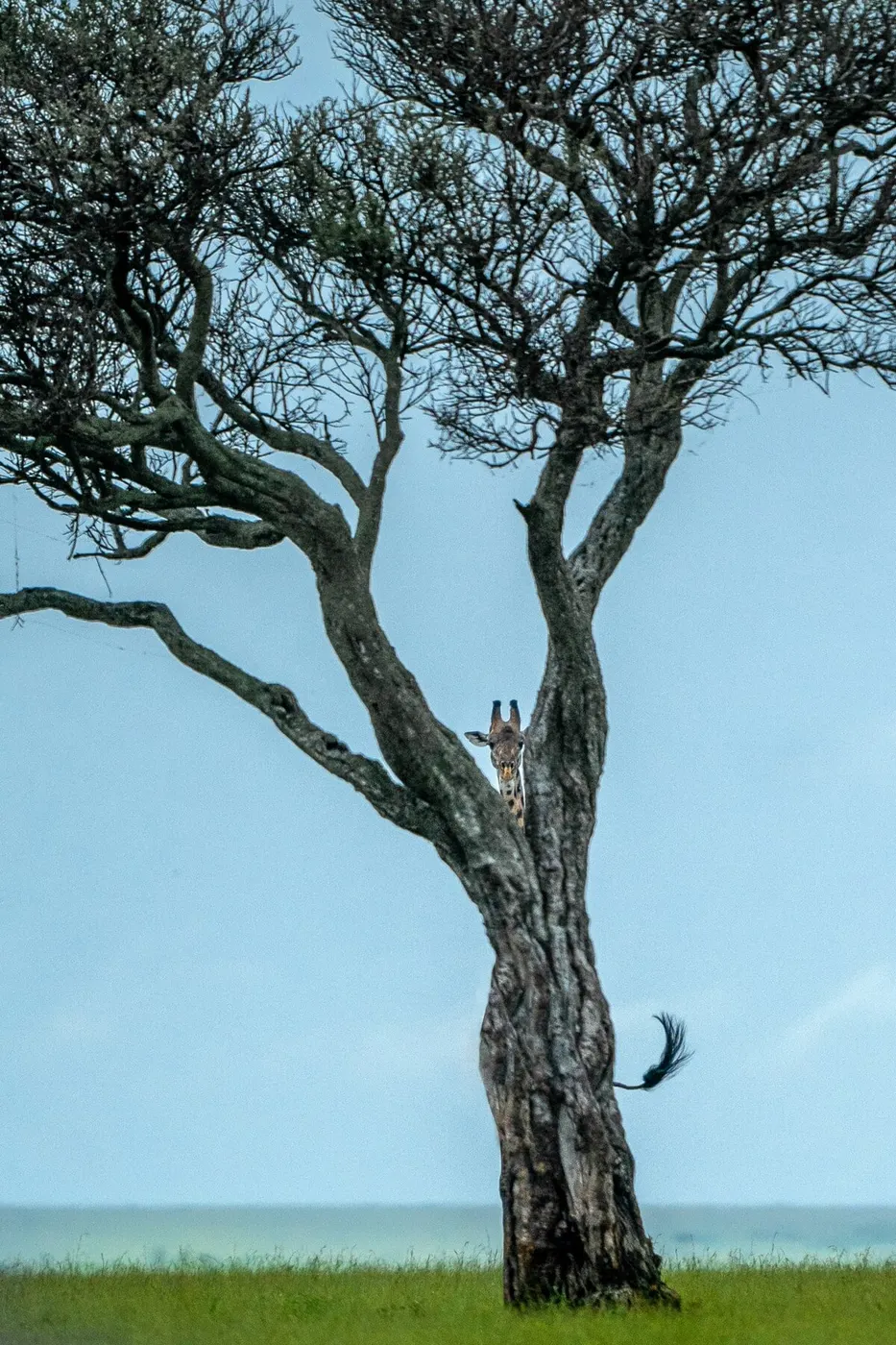
Varun Aditya is known for turning wildlife behavior into striking visual drama, and “Giraffe Tree” does it with remarkable restraint. At first glance, the photograph reads as a sculptural tree against an open sky. Then the giraffe appears, tucked into the split trunk, and the image shifts from landscape to revelation. That delayed recognition is the picture’s magic: it makes the viewer look twice, then admire how completely the animal and environment have been woven into one design.
A hidden subject that creates instant wonder
The photograph’s most memorable choice is the giraffe’s face appearing exactly in the fork of the trunk. It is a rare wildlife moment that feels playful and uncanny at once. The animal is not simply beside the tree or behind it; it seems to emerge from the tree itself. That visual surprise gives the frame its narrative force, and the giraffe’s direct, centered gaze makes the discovery feel personal once the eye finds it.

The giraffe’s hidden face turns the image into a vivid double-take, full of surprise and personality.
The split trunk becomes a perfect natural frame
The tree is far more than background here. Its two main trunks rise like a tall, organic frame that funnels attention straight toward the animal. Because the giraffe sits precisely in that opening, the composition feels resolved and deliberate. The surrounding branches add complexity above, but the central fork remains clear and strong, giving the image a graphic simplicity that anchors all the detail.

The forked trunk gives the photograph its elegant structure and guides the eye with unusual precision.
A small gesture opens up the whole body
One of the cleverest details is the giraffe’s tail, visible off to the right against the pale sky. That small dark shape does important visual work. It confirms the animal’s full presence behind the tree, expands the scene beyond the face, and adds a flicker of life to an otherwise still composition. It is a tiny clue, but it enriches the storytelling enormously.

The isolated tail adds liveliness and helps the hidden animal read as a complete, living presence.
Texture and muted color deepen the mood
The subdued palette is beautifully judged. Soft blue-gray sky, weathered bark, and a low band of green grass create a quiet atmosphere that suits the image’s slow reveal. Nothing in the color distracts from the central idea. Instead, the rough bark texture and gentle tonal harmony invite close looking, making the photograph feel tactile as well as graphic.
The restrained color and bark detail create a calm, tactile mood that strengthens the photograph’s quiet wit.
A minimal horizon gives the scene scale
The thin strip of grass and distant horizon at the bottom provides just enough environmental context. It roots the tree in open land, suggests the breadth of the habitat, and makes the height of the trunk feel more dramatic. Because this lower band is so clean and simple, it supports the image without competing with the hidden-subject reveal above.
The spare horizon and grass ground the image beautifully while preserving its clean, uncluttered design.
Why this photograph stands out
“Giraffe Tree” is memorable because it joins visual wit with strong photographic control. Varun Aditya turns a lone tree, a concealed giraffe, and a quiet sky into an image that rewards attention and stays in the mind. Its power comes from how naturally everything aligns: the fork as frame, the face as revelation, the tail as clue, and the muted landscape as a stage for one beautifully seen moment.
About the photographer
Varun Aditya
Varun Aditya is known for his **dramatic wildlife photography**, capturing animals in striking moments of action, interaction, and stillness. His images often emphasize the character and behavior of wildlife, using natural environments as a stage for powerful visual storytelling. His distinctive style combines **dramatic light, vivid color, tight compositions, and exceptional timing**, often bringing the viewer remarkably close to the subject. He has a particular talent for anticipating fleeting behavioral moments and turning them into **dynamic, emotionally engaging images** that highlight both the beauty and personality of wildlife.