Gregory Crewdson: The Quiet Drama of Untitled Merchants Row
A lone figure, wet pavement, and fading small-town light turn this intersection into something cinematic and deeply felt.
Watch the video
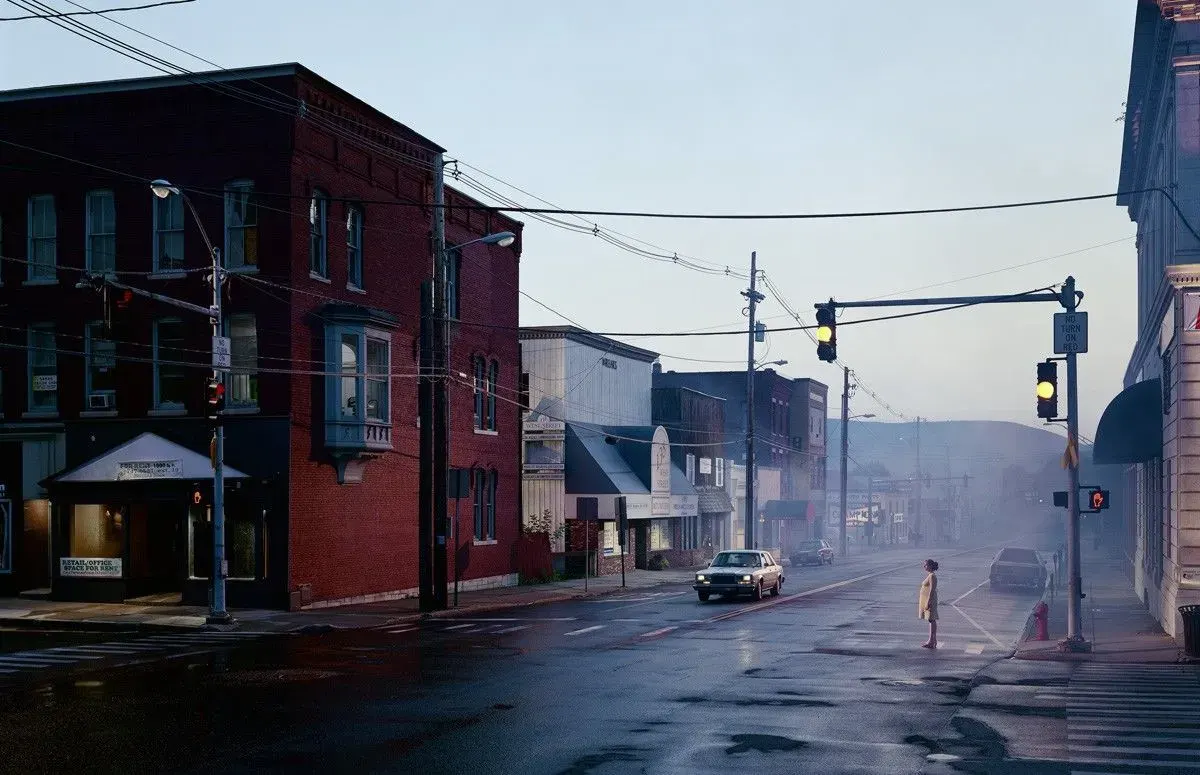
Untitled Merchants Row finds extraordinary feeling in an ordinary intersection. The photograph’s power comes from restraint: a nearly empty street, soft haze, muted storefronts, and one solitary pedestrian held in a pool of pale light. Everything visible in the frame works toward a mood of pause, distance, and fragile human presence.
A solitary figure gives the street its heartbeat
The pedestrian at the far right side of the frame turns the scene from a town view into a human story. Her small scale against the broad roadway and long row of buildings makes the space feel vast and slightly hushed, while her stillness creates a sense of suspended time. The pale coat catches the available light beautifully, making her presence unmistakable without breaking the quiet tone of the image.

The single figure gives the intersection emotional scale and unforgettable narrative presence.
The car introduces a precise note of tension
The approaching car is positioned perfectly to activate the empty roadway without overwhelming it. Its placement creates a subtle dramatic relationship with the waiting pedestrian, suggesting timing, attention, and the fragile choreography of shared public space. Because the vehicle sits within the softened mist and subdued palette, it feels integrated into the atmosphere rather than disruptive to it.

The car adds motion and suspense while preserving the photograph’s calm, cinematic mood.
Reflections carry the mood across the whole frame
The wet pavement is one of the photograph’s richest visual elements. It turns the foreground into a field of deep blues, grays, and near-black tones, giving the image weight and texture before the eye moves toward the lighter distance. The street’s sheen also gathers and stretches the ambient light, making the silence of the scene feel tangible.

The reflective street surface gives the image depth, tonal richness, and a palpable sense of weather.
Small lights punctuate the blue-gray stillness
The traffic signals are tiny compared with the buildings and roadway, yet they play an outsized role in the composition. Their warm yellow glow breaks through the cool atmosphere with remarkable delicacy, echoing the theme of pause and decision already embodied by the pedestrian. These points of color are modest, but they keep the eye engaged exactly where the photograph’s quiet drama is unfolding.
The signal lights provide elegant warm accents that sharpen the scene’s mood of waiting.
Haze and distance make the town feel cinematic
The recession of storefronts into fog gives the photograph its spatial poetry. Details soften gradually down the street, so the image breathes from solid brick and dark road in the foreground into a pale, dissolving horizon. That transition creates depth without spectacle and makes the town feel remembered as much as seen, which is a large part of the picture’s lasting beauty.
The foggy distance creates graceful layering and a memorable sense of place.
Why this photograph stands out
What makes Untitled Merchants Row so affecting is its balance of specificity and mystery. Every element is concrete—the bricks, the signals, the car, the wet asphalt—yet together they produce something dreamlike. The photograph honors the quiet drama of a small town at the edge of day, and in that stillness it finds a rare and lasting kind of beauty.
About the photographer
Gregory Crewdson
Gregory Crewdson is known for creating cinematic, meticulously staged photographs that feel like scenes from an unsettling film. He uses elaborate sets, dramatic lighting, and carefully directed subjects to explore loneliness, mystery, and the emotional tension of everyday life. His compositions often leave the viewer wondering what happened before or what might happen next, creating a sense of suspense and ambiguity. Crewdson’s work transforms ordinary suburban environments into strange, dreamlike worlds filled with psychological depth.