The Dream by Julia Margaret Cameron
A luminous profile, dark backdrop, and flowing hair turn this portrait into a study in hush, grace, and inward feeling.
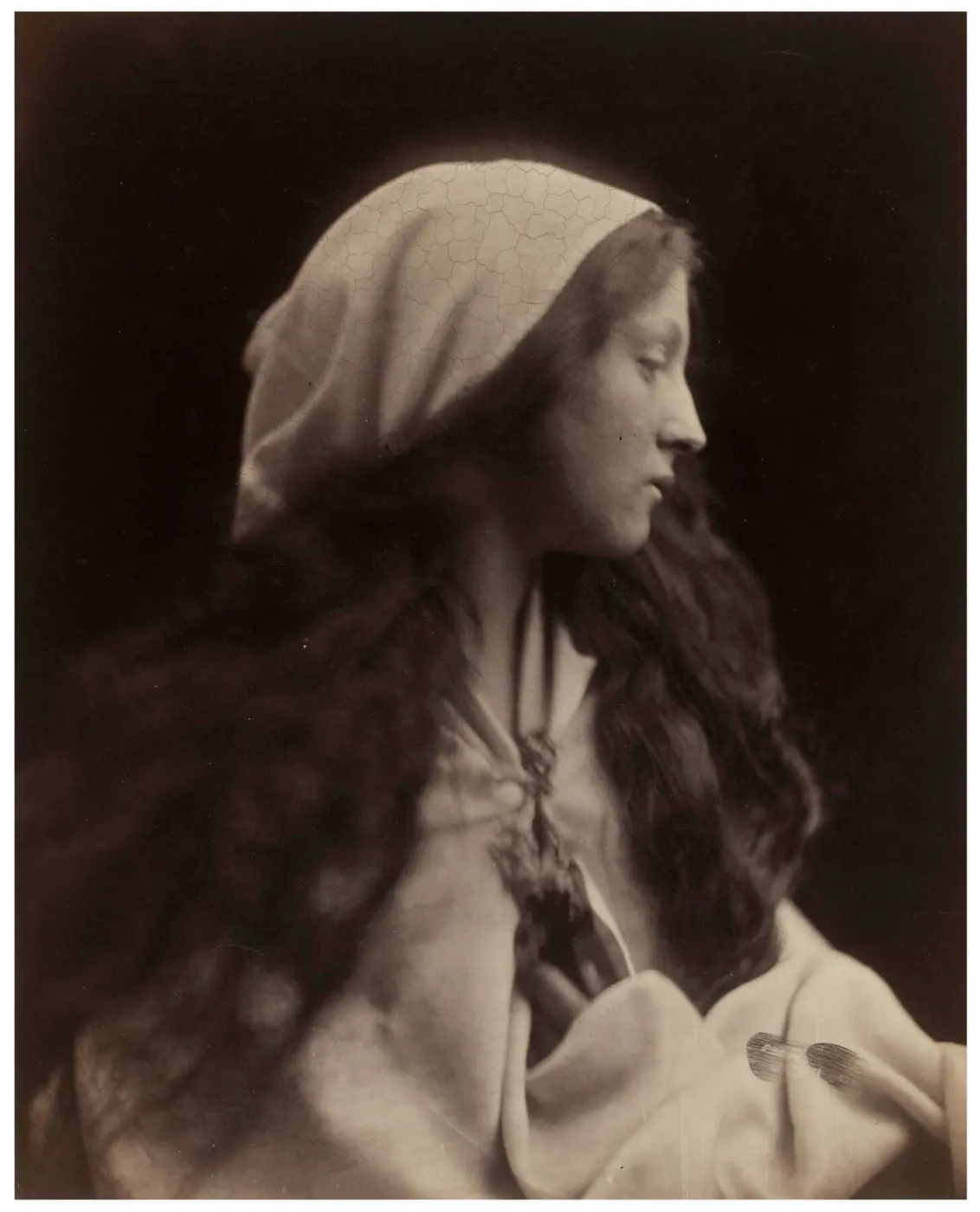
Julia Margaret Cameron’s The Dream distills portraiture to a few unforgettable elements: a bowed profile, a veil of light over the head, and a surrounding field of darkness that lets every contour breathe. The image feels less like a document than an apparition. Its beauty lies in how clearly Cameron shapes presence through softness, using blur, tone, and costume to make the sitter feel both tangible and dreamlike.
A profile shaped with classical clarity
The portrait’s center of gravity is the sitter’s side profile. The line of forehead, nose, lips, and chin reads instantly, giving the image a sculptural calm. Even within Cameron’s characteristic softness, that contour remains precise enough to anchor the whole frame. The lowered gaze deepens the feeling of inwardness, so the profile is not only beautiful as shape but expressive as mood.

The sitter’s profile has the clarity and grace of a carved silhouette, giving the portrait immediate presence.
Light turns the hood into a halo-like form
The pale hood is one of the photograph’s most memorable passages. Set against the near-black background, it separates the head with remarkable simplicity and strength. This contrast makes the figure appear to emerge from darkness, while the soft illumination keeps the effect gentle rather than theatrical. Cameron uses this bright shape almost like a painted aura, surrounding the face with quiet radiance.

The glowing hood lifts the head from the dark ground with striking, serene elegance.
Hair and drapery carry the image in waves
Below the face, the portrait opens into a looser, more atmospheric rhythm. The long dark hair spreads in soft masses along the left and right sides, balancing the clean profile with movement and depth. The drapery continues that flow, turning the lower half of the frame into a sequence of folds and cascades rather than hard edges. This interplay between firm silhouette and drifting texture is a major part of the image’s lyrical power.

The flowing hair and cloth give the portrait a beautiful sense of motion within stillness.
Small costume details enrich the sitter’s identity
The pendant and neckline detail add a subtle narrative charge. They suggest a person with history, dress, and inner life rather than an anonymous study of form. Because these details remain understated, they deepen the portrait without distracting from the face. They work as quiet signs of character, extending the mood of reverie into something more personal and human.
The pendant and costume details quietly deepen the portrait’s sense of identity and story.
Sepia tone and surface texture make the image feel lived-in
The sepia palette gives the photograph its warmth and temporal depth. Instead of crisp modern contrast, Cameron offers a tonal world of browns, creams, and velvety blacks that feels suspended between memory and dream. The fine crackle-like texture visible on the hood adds material presence, reminding us that this is not only an image of a person but also an object with age, touch, and history. That tactile quality is central to the portrait’s emotional atmosphere.
The sepia tonality and delicate surface texture give the portrait a rich historical and tactile beauty.
Why this photograph stands out
The Dream is memorable because it says so much with so little. A single profile, a field of darkness, a luminous hood, and softly falling hair become enough to convey intimacy, mystery, and grace. This is where Julia Margaret Cameron remains so distinctive: she makes softness feel decisive, and turns atmosphere into structure. The photograph lingers not through spectacle, but through its quiet certainty of feeling.
About the photographer
Julia Margaret Cameron
Julia Margaret Cameron was known for her **intimate, expressive portraits**, using photography to explore character, emotion, and the inner presence of her subjects. Rather than pursuing technical perfection, she embraced soft focus, dramatic lighting, and imperfect details to create images with a distinctly painterly and poetic quality. Her distinctive style is characterized by **close framing, luminous faces, atmospheric softness, and a dreamlike sense of intimacy**. Cameron deliberately used blur and shallow focus as expressive tools, giving her portraits a romantic, almost ethereal quality and helping establish photography as a medium capable of personal artistic expression.