Soulmate
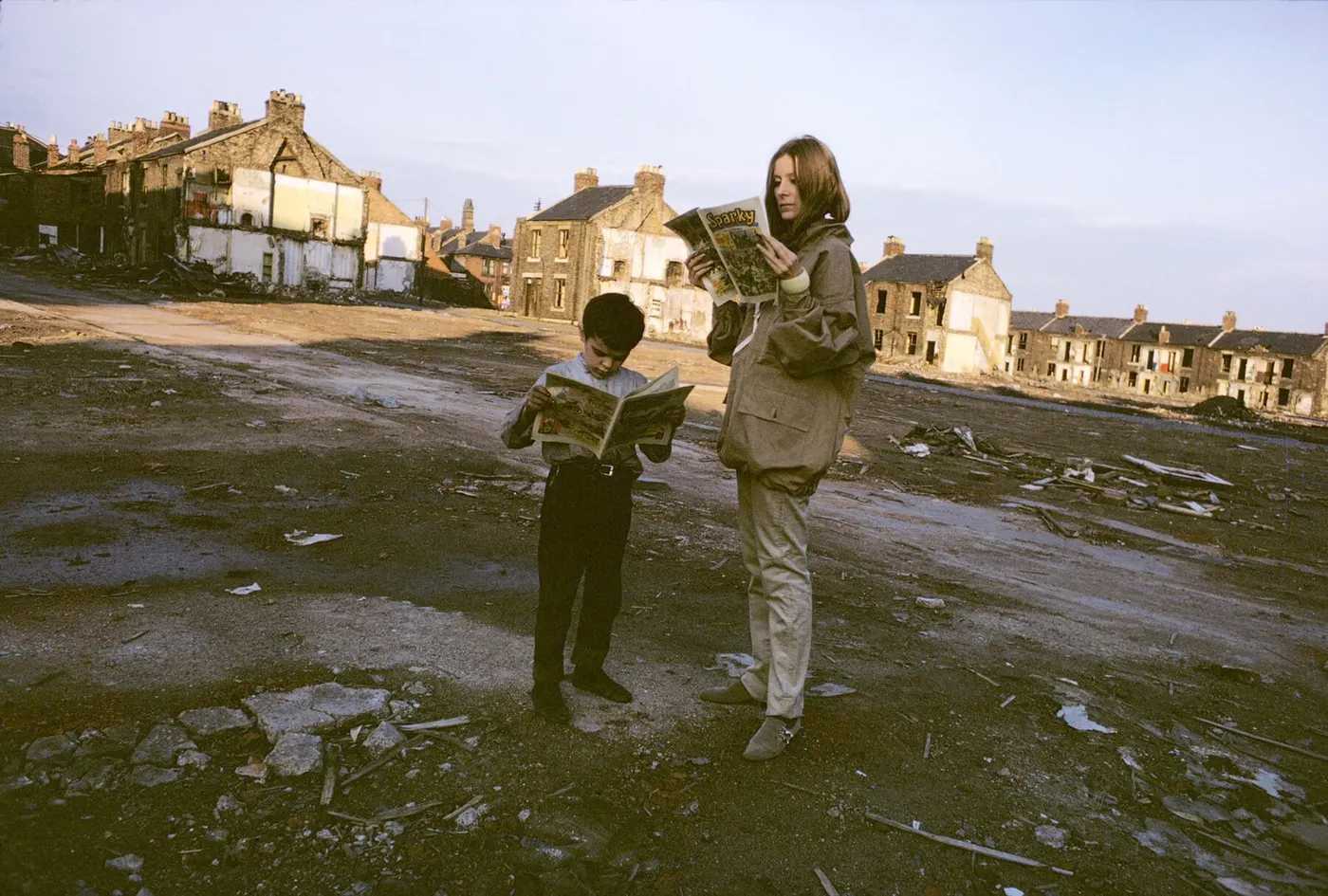
Two children reading in a cleared urban lot become the still, radiant center of a scarred landscape. The photograph’s power comes from that contrast: private absorption held inside public ruin.
Watch the video
"Soulmate" is unforgettable because it builds a complete world from one quiet act. Two children stand in an emptied lot, each absorbed in a comic, while damaged terraces stretch behind them. That pairing of concentration and desolation gives the picture its emotional voltage. Nothing is overstated. The scene stays plain, direct, and deeply felt.
A quiet act becomes the heart of the picture
The strongest choice in the photograph is its refusal to chase drama. Instead, it centers on two children simply reading. Their lowered gazes and self-contained posture create a mood of real absorption, not performance. In the middle of blasted ground and broken architecture, that everyday stillness becomes extraordinary. The image draws its force from the gap between what the children are doing and where they are doing it.

The children’s absorbed attention gives the image its emotional center and lasting human presence.
The background turns a moment into social history
The damaged row houses are more than setting; they are what expands the photograph into a documentary statement. Burned interiors, exposed walls, and broken windows describe a neighborhood marked by loss, while the remaining facades preserve the trace of ordinary domestic life. Because the children stand in front of this fractured streetscape, the picture holds both intimacy and public memory at once.

The ruined terraces give the scene historical weight and make the photograph read as both personal and civic.
The pairing of the figures creates natural rhythm
The two children are arranged with an ease that feels found rather than arranged. One stands taller, upright, and slightly back; the other bends smaller into his page. That difference in height and posture sets up a gentle visual rhythm that keeps the frame alive. Their spacing feels open enough to separate them as individuals, yet close enough to read as a shared moment.
The asymmetrical relationship between the two figures gives the composition movement without disturbing its calm.
Soft light preserves realism and tenderness
The light is especially well judged because it shapes the figures without turning the scene theatrical. On the girl’s face, hands, and jacket, the angled illumination reveals form and texture with remarkable softness. The same light settles across the ground and building fronts, holding detail in rubble, plaster, and fabric. It lets the picture remain believable while still feeling luminous.
The gentle side light gives the photograph dimension and tenderness while keeping its documentary truth intact.
Texture makes the emptiness palpable
Much of the photograph’s atmosphere comes from the ground itself. Scattered timber, broken stone, patches of mud, and scraped earth create a rough surface that feels recently disturbed and physically real. Those textures are not decorative; they make the cleared lot palpable as a lived, damaged place. Against that harsh terrain, the printed pages in the children’s hands feel especially delicate and intimate.
The gritty textures of the lot make the setting tangible and heighten the fragility of the children’s quiet activity.
Why this photograph stands out
What makes "Soulmate" so moving is its balance of opposites: ruin and routine, openness and intimacy, hardship and attention. The photograph never pushes its meaning, which is why it lingers. Two children reading comics in a devastated place become more than subjects; they become a measure of endurance, imagination, and ordinary grace.
About the photographer
Saul Leiter
Saul Leiter was known for his poetic, painterly approach to street photography, finding beauty in quiet, everyday moments rather than dramatic events. He used reflections, fogged windows, rain, vibrant color, and layered compositions to create images that feel intimate and dreamlike. His work often obscures or partially hides his subjects, inviting the viewer to discover the scene rather than simply observe it. Leiter’s photographs are celebrated for their subtle mood, ambiguity, and extraordinary use of color and light.