Saul Leiter Street Photography Mirror 2
This photograph turns a passing street view into something hushed and cinematic, using bars, blur, and grime to make distance itself feel expressive.
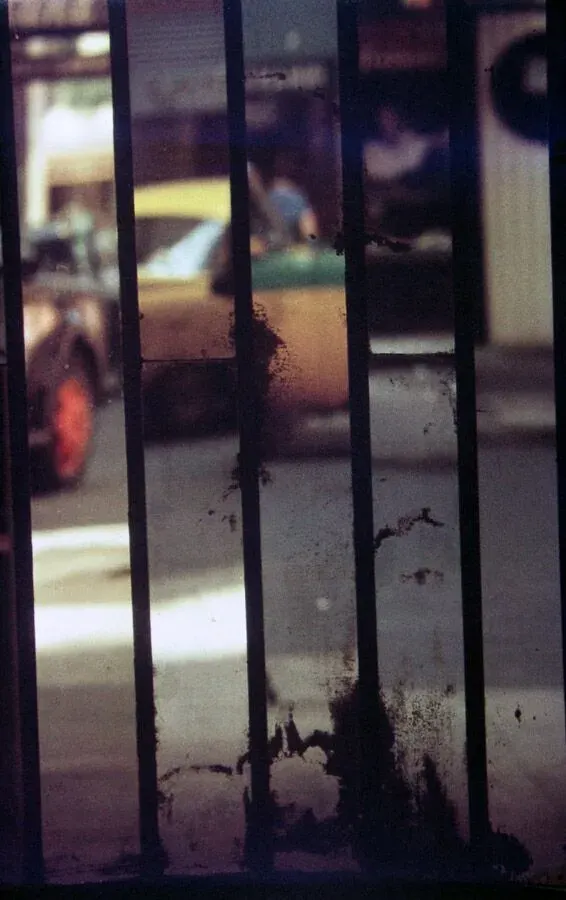
What makes this image memorable is how completely it transforms an ordinary street glimpse into an atmosphere. The scene beyond the barrier is soft and fleeting, while the dark bars in front are firm, rhythmic, and unavoidable. That contrast gives the photograph its emotional charge: it feels observed, withheld, and beautifully shaped at the same time.
A street scene revealed through separation
The photograph’s central pleasure is its layered construction. We do not meet the street directly; we see it through a barrier, with the yellow-green car emerging as a hazy presence behind the dark verticals. That choice turns simple description into mood. The image feels like a found fragment of city life, filtered by distance and obstruction, and that indirection is exactly what gives it its poetic force.

The photograph’s layered view makes distance feel evocative rather than empty.
Vertical bars as graphic rhythm
The repeated bars give the frame its structure. They divide the image into narrow columns, creating a strong beat from edge to edge, but their spacing still feels natural and lived-in rather than rigidly formal. Because the background remains soft, these verticals become the clearest visual language in the picture, lending the scene a bold graphic identity without losing its street-level spontaneity.

The vertical framework gives the image a striking, unmistakable visual rhythm.
Surface texture that makes the image physical
The grime and worn marks on the barrier are essential to the photograph’s character. They catch lightly against the darker foreground and make the picture feel handled by weather, time, and use. This tactile layer keeps the frame from being merely abstract; it anchors the image in the material reality of the street and deepens the sense of urban intimacy.
The stained surface gives the photograph tactile presence and lived-in character.
A muted palette with cinematic restraint
Color is handled with impressive subtlety here. Dusty yellows, browns, violets, and dim grays hold together in a subdued range that feels cinematic without becoming stylized. The soft yellow of the car becomes especially resonant because it sits inside this restrained palette, offering a gentle glow rather than a loud accent. That harmony lets the image stay moody, cohesive, and quietly luminous.
The restrained color palette unifies the scene and sustains its cinematic mood.
Why this photograph stands out
This photograph is compelling because it trusts suggestion over clarity. Bars, blur, wear, and muted color work together to make the city feel mysterious, intimate, and beautifully distant. It is a picture built from obstruction, yet that very obstruction is what makes it so visually rich and emotionally resonant.
About the photographer
Saul Leiter
Saul Leiter was known for his poetic, painterly approach to street photography, finding beauty in quiet, everyday moments rather than dramatic events. He used reflections, fogged windows, rain, vibrant color, and layered compositions to create images that feel intimate and dreamlike. His work often obscures or partially hides his subjects, inviting the viewer to discover the scene rather than simply observe it. Leiter’s photographs are celebrated for their subtle mood, ambiguity, and extraordinary use of color and light.