Saul Leiter Street Photography Mirror
A blurred passerby, weathered reflection, and dark vertical bars turn an ordinary street moment into something hushed, cinematic, and hauntingly beautiful.
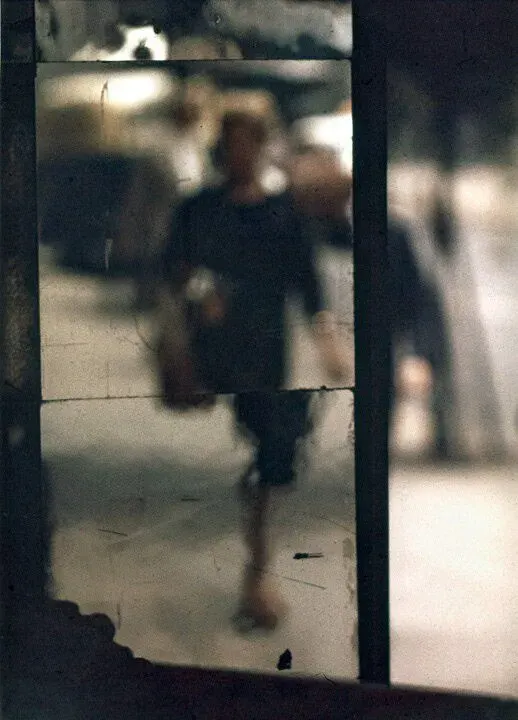
This photograph finds poetry in interruption. A passerby appears not directly, but through a worn reflective surface, softened into a fleeting presence and held within dark structural bands. That combination of blur, texture, and framing gives the image the quiet, elusive beauty associated with great street photography: a scene observed in passing, yet transformed into something layered and unforgettable.
A figure that feels like memory
The central pedestrian is rendered with just enough shape to read as human, while remaining beautifully unresolved. The soft head, dark dress, and faint suggestion of a stride keep the person anonymous, which makes the image feel less like a portrait and more like an urban memory surfacing for a moment. Because the figure is blurred rather than described, the emotional tone stays open and atmospheric.

The indistinct passerby becomes a powerful emotional anchor precisely because the image favors presence over detail.
Surface texture becomes part of the story
Scratches, dust, and age marks across the reflective panel give the photograph its tactile richness. These imperfections catch the eye in small, quiet ways and remind us that we are looking through a weathered urban surface, not a clean window onto reality. That material presence is crucial to the picture’s charm: it turns the reflection into an object with history, making the scene feel discovered rather than simply seen.

The worn reflective surface adds depth and character, making the photograph feel tactile, lived-in, and beautifully found.
Vertical divisions give the image its rhythm
The dark bars running vertically through the frame do more than divide space. They create a measured visual rhythm that guides the eye and turns the scene into a graphic arrangement of panels. The figure appears caught within these bands rather than fully separated from them, which gives the image its fractured, modern feeling. That geometry keeps the softness from drifting; it provides structure and tension without disturbing the photograph’s quiet mood.

The strong vertical framing gives the image architecture and transforms a fleeting reflection into a striking composition.
Muted color sustains the photograph’s hush
The palette stays within soft browns, grays, and pale highlights, and that restraint is a major part of the image’s elegance. Nothing feels loud or decorative. Instead, the color supports the sensation of distance and transience, as if the scene is half-remembered through glass and weather. The tones unify the figure, the surface, and the surrounding street into one continuous atmosphere.
The subdued palette gives the photograph its cinematic calm and lets mood carry the picture.
Why this photograph stands out
What makes this image memorable is the way it turns ordinary visual interference into beauty. Reflection, grime, blur, and framing all collaborate rather than compete, producing a photograph that feels intimate, mysterious, and unmistakably urban. It lingers because it shows how much atmosphere can live inside a brief, partially seen moment.
About the photographer
Saul Leiter
Saul Leiter was known for his poetic, painterly approach to street photography, finding beauty in quiet, everyday moments rather than dramatic events. He used reflections, fogged windows, rain, vibrant color, and layered compositions to create images that feel intimate and dreamlike. His work often obscures or partially hides his subjects, inviting the viewer to discover the scene rather than simply observe it. Leiter’s photographs are celebrated for their subtle mood, ambiguity, and extraordinary use of color and light.