Saul Leiter’s Winter Threshold of Warmth and Motion
A snow-darkened newsstand glows from within as Saul Leiter turns a passing winter errand into something intimate, cinematic, and unmistakably alive.
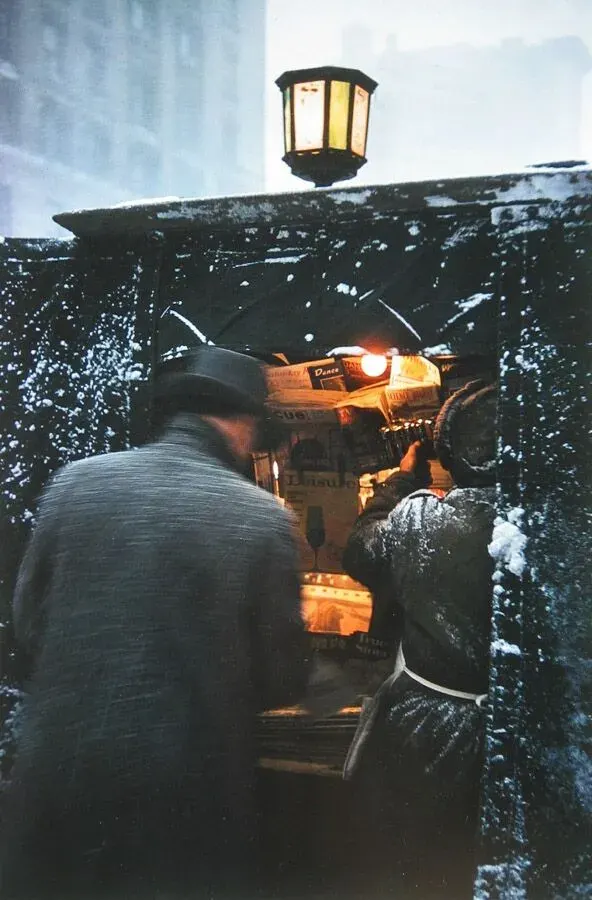
This photograph turns a simple street transaction into a scene of atmosphere and feeling. Snow, darkness, and blur make the cold palpable, while the small interior glow feels tender and magnetic. Leiter finds beauty in the threshold itself: a place between street and shelter, anonymity and encounter, winter weather and human warmth.
A doorway that becomes a stage
The strongest structural choice is the way the dark gate encloses the lit kiosk. The opening forms a frame within the frame, giving the eye an immediate destination and making the interior seem precious against the broad cold around it. That heavy black architecture does more than organize the picture; it creates the sensation of peering into a protected pocket of life.

The gate turns the scene into a vivid frame-within-a-frame, making the interior glow feel concentrated and intimate.
Warm light against blue snow
The color contrast is unforgettable. Amber bulbs and interior reflections burn softly inside the kiosk, while the surrounding snow and city haze drift into blue-grey. That opposition carries the emotional weight of the image at once: outside is raw and wintry, inside is lit, inhabited, and momentarily welcoming. The lantern above echoes the same warmth, extending the glow upward and binding the whole composition together.

The warm amber lights against the cold blue surroundings give the photograph its immediate emotional clarity.
Blur as lived experience
The figure at left is not described in detail, and that is exactly why the moment feels real. The motion blur suggests hurried movement in bad weather, as if the person has just stepped into the frame on the way to buy a paper or seek a little warmth. Leiter uses softness not as abstraction alone but as social truth: city life passes quickly, and the camera catches only its trace.

The blurred passerby gives the image urgency, anonymity, and a beautifully documentary sense of passing time.
Snow you can almost feel
The surfaces are richly tactile. Snow clings to the dark metal gate in irregular patches, and the wet sheen along the structure catches just enough light to make the cold physical. These textures matter because they keep the atmosphere from becoming merely pictorial; they make the weather present on the skin. The contrast between rough, icy exterior surfaces and the soft inner glow is one of the image’s deepest pleasures.
The snow and wet metal give the winter setting a vivid tactile presence.
Details that deepen the story
Inside the kiosk, signs, papers, and fragments of print reward a slower look. They make this feel like a specific urban corner rather than a symbolic shelter. The posted material, the counter light, and the partially seen exchange between figures all suggest daily ritual: buying, waiting, reading, working. That density of lived detail is central to the photograph’s charm, because it lets atmosphere and observation exist together.
The interior papers and signage give the scene specificity, period character, and narrative richness.
Why this photograph stands out
What makes this photograph memorable is how effortlessly it joins design and tenderness. The framing is exact, the color contrast is luminous, the blur feels human, and the snow-laden textures hold the season in every inch of the frame. Leiter transforms a modest street corner into a complete emotional world, one where warmth is glimpsed through weather and ordinary life becomes quietly radiant.
About the photographer
Saul Leiter
Saul Leiter was known for his poetic, painterly approach to street photography, finding beauty in quiet, everyday moments rather than dramatic events. He used reflections, fogged windows, rain, vibrant color, and layered compositions to create images that feel intimate and dreamlike. His work often obscures or partially hides his subjects, inviting the viewer to discover the scene rather than simply observe it. Leiter’s photographs are celebrated for their subtle mood, ambiguity, and extraordinary use of color and light.