Saul Leiter’s Umbrella Turns a Rainy Street into Pure Design
A dark umbrella, wet stone, and a small bouquet of red flowers become an elegant study in concealment, geometry, and mood.
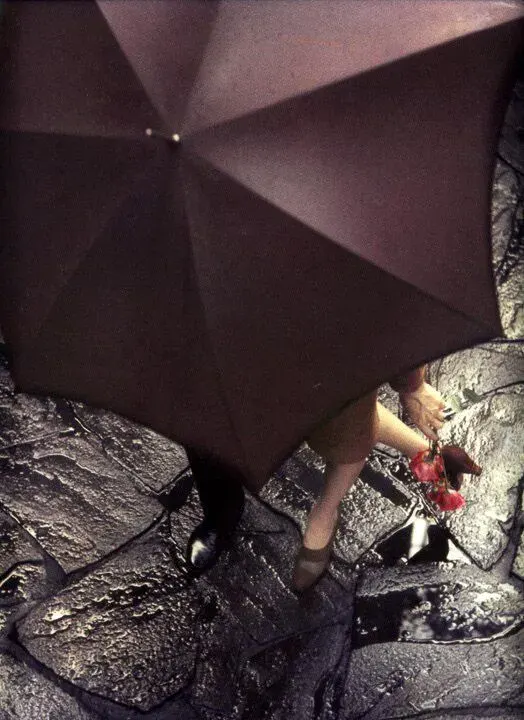
This photograph distills a rainy street into a few unforgettable elements: a faceted umbrella, glistening pavement, a pair of legs, and a bouquet of red flowers. Its beauty comes from reduction. The frame withholds almost everything except shape, texture, and a few charged details, and that restraint gives the image its lasting elegance.
The umbrella gives the frame its commanding structure
Seen from above, the umbrella becomes more than protection from rain: it reads as a strong graphic form. Its dark, segmented planes radiate from the center like a folded geometric star, immediately organizing the picture. Because it occupies so much of the upper frame, it sets a bold visual rhythm before the eye even reaches the figure beneath it. The image feels decisive and unmistakable because this single shape carries both mass and design.

The umbrella’s radial geometry gives the photograph instant identity and remarkable formal clarity.
The partial figure makes mystery feel stylish
Only fragments of the person are visible: a leg stepping forward, a dark shoe, a hand lowered beside the body. That partial reveal is exactly what makes the scene vivid. The subject is present as gesture rather than portrait, which gives the photograph a refined sense of privacy and intrigue. It feels cinematic because the viewer is invited to infer the rest of the story from these carefully glimpsed details.

The concealed figure creates a memorable tension between presence and secrecy.
A small burst of red carries the emotional charge
The bouquet is tiny in relation to the umbrella, but it changes the entire image. Against the subdued browns, blacks, and silvery pavement, the red flowers register immediately. They introduce warmth and tenderness into an otherwise cool, rainy scene, turning an elegant graphic study into something quietly romantic. The bouquet works because it is so restrained: a single accent that feels precious rather than loud.

The red bouquet is a beautifully judged color accent that adds feeling and story in one gesture.
Wet pavement gives the picture its atmosphere
The rain-darkened stone is essential to the photograph’s mood. Its uneven slabs, glossy surfaces, and thin reflective highlights create a tactile field beneath the umbrella and legs. The pavement is not just background; it is an active surface that amplifies the weather, the season, and the softness of the light. Those slick textures make the whole scene feel immediate, as if the rain has only just passed.

The glistening pavement fills the frame with texture, depth, and unmistakable rainy-day atmosphere.
Why this photograph stands out
What makes this image so enduring is the way it balances abstraction and human suggestion. A large dark umbrella becomes a near-abstract shape, while the flowers, legs, and wet street keep the scene tenderly grounded in lived experience. It is graceful, graphic, and emotionally precise—street photography transformed into something almost painterly.
About the photographer
Saul Leiter
Saul Leiter was known for his poetic, painterly approach to street photography, finding beauty in quiet, everyday moments rather than dramatic events. He used reflections, fogged windows, rain, vibrant color, and layered compositions to create images that feel intimate and dreamlike. His work often obscures or partially hides his subjects, inviting the viewer to discover the scene rather than simply observe it. Leiter’s photographs are celebrated for their subtle mood, ambiguity, and extraordinary use of color and light.