Saul Leiter’s Taxi Window Turns Traffic Into Theater
A passing cab, a raised hand, and a blaze of warm color become a layered street photograph full of mystery, rhythm, and urban elegance.
Watch the video
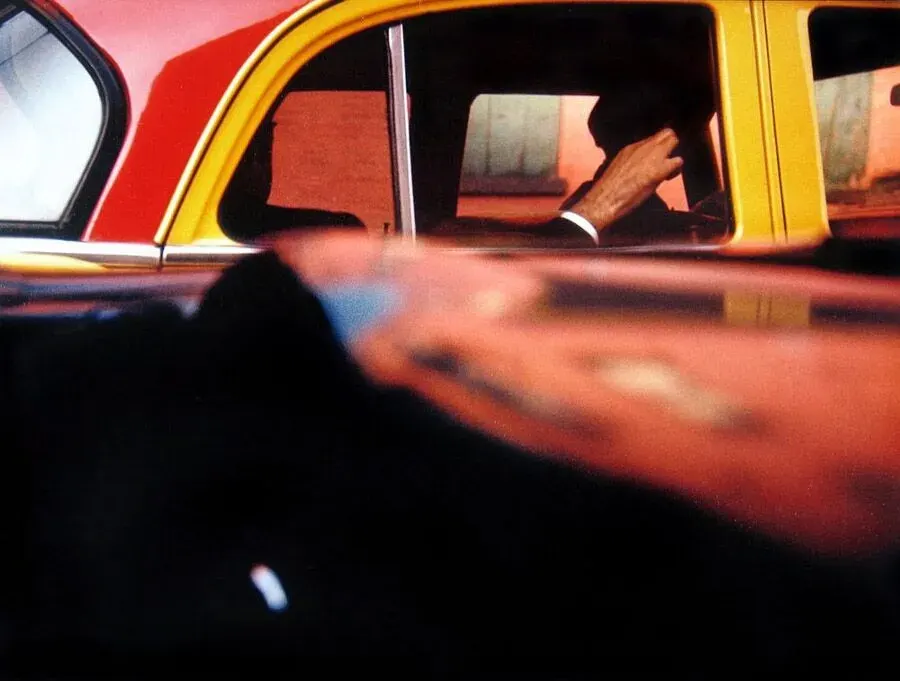
This photograph distills a city instant into something lyrical. Saul Leiter transforms a taxi window, a passing foreground blur, and a single hand gesture into a scene that feels at once graphic and deeply human. The image is memorable because it never separates design from feeling: color, framing, and gesture all arrive together.
A small gesture carries the whole story
The passenger’s raised hand is the emotional center of the frame. Seen through the taxi window, it suggests conversation, pause, or private thought without explaining itself too much. That restraint is part of the image’s power. The hand is unmistakably human, and against the darker interior it becomes the detail that turns a study of cars into a story.

A single visible gesture gives the image narrative life and emotional clarity.
The cab window becomes a perfect stage
The yellow frame of the taxi and the vertical divider give the picture its internal architecture. These lines carve the scene into clear zones and hold the fleeting moment in place. Leiter uses the cab itself as a compositional device, so the partial figure reads not as accidental fragmentation but as deliberate framing. The geometry keeps the photograph crisp even as the scene remains elusive.

The taxi’s framing lines create order and make the cropped human presence feel intentional and elegant.
Warm color does the atmospheric work
The photograph glows with yellow, red, orange, and pinkish reflection. Those warm tones give the scene its urban heat and immediacy. The palette is bold but tightly related, so the picture feels rich rather than busy. Color is not decoration here; it is the mood of the image, making the taxi feel iconic and the whole street moment feel vividly alive.

The warm palette gives the photograph its memorable energy and unmistakable city atmosphere.
Traffic layers become cinematic abstraction
One of the picture’s great pleasures is the way cars overlap into bands of shape, gloss, and shadow. The blurred foreground sweep across the lower frame creates the sensation of looking through movement rather than simply at a subject. On the left, curved rooflines and chrome trim add a graceful rhythm that echoes the taxi’s structure. The result is a street photograph that feels cinematic, as if the city is revealing itself in fragments.
Layered vehicles and repeating curves turn an ordinary traffic scene into something atmospheric and beautifully designed.
Why this photograph stands out
What makes this photograph enduring is how effortlessly it joins mystery with precision. The hand, the window frame, the warm palette, and the passing layers of traffic all work together to make a scene that is both intimate and abstract. Leiter finds beauty not by simplifying the street, but by letting its fragments align for a moment into pure visual poetry.
About the photographer
Saul Leiter
Saul Leiter was known for his poetic, painterly approach to street photography, finding beauty in quiet, everyday moments rather than dramatic events. He used reflections, fogged windows, rain, vibrant color, and layered compositions to create images that feel intimate and dreamlike. His work often obscures or partially hides his subjects, inviting the viewer to discover the scene rather than simply observe it. Leiter’s photographs are celebrated for their subtle mood, ambiguity, and extraordinary use of color and light.