Saul Leiter’s Gift for Urban Layers and Graphic Surprise
This street photograph turns signage, color, and passing presence into a compact, unforgettable city poem. The bold typography, red truck, and elegantly dressed figure lock together with the kind of visual intelligence that makes Saul Leiter’s pictures linger.
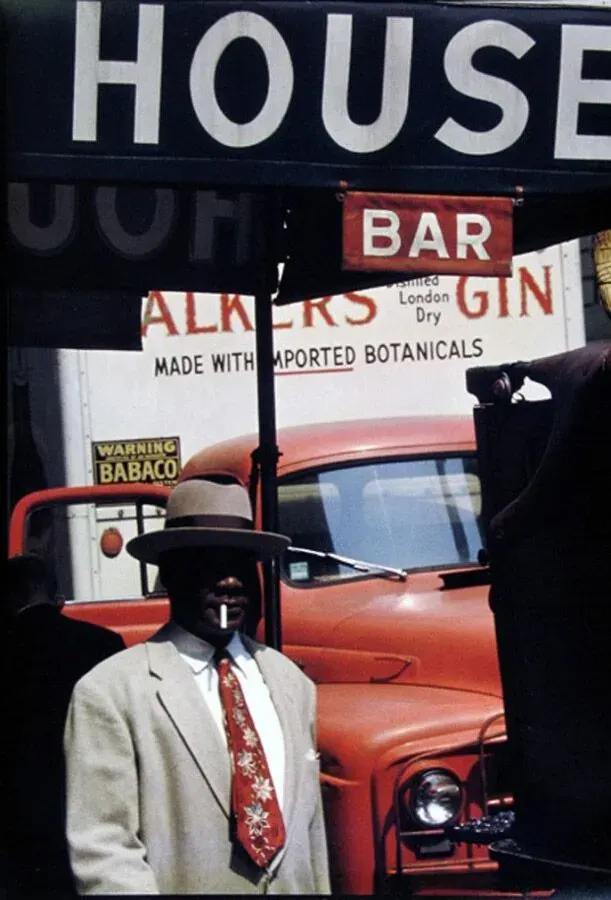
This photograph feels instantly like a found fragment of city theater. A suited man in a pale jacket and brimmed hat stands before a red truck, while huge lettering and hanging signs press down from above. What makes the image memorable is the way it balances human presence with the graphic force of the street itself. Rather than isolating one thing, it lets text, color, metal, fabric, and shadow coexist in a dense, elegant arrangement.
Typography becomes architecture
The enormous "HOUSE" sign at the top gives the frame its first commanding gesture. It does more than label a place; it acts like a ceiling, setting a bold horizontal band across the image. Beneath it, the smaller red "BAR" sign adds a second typographic note, creating a layered stack of words that feels distinctly urban. This use of signage gives the picture immediate identity and turns the street into a graphic composition of blocks, letters, and hanging shapes.

The oversized signage gives the photograph a strong graphic signature and an unmistakable sense of place.
The red truck holds the scene together
The truck is the image’s great color anchor. Its warm red body sits at the center of the frame with satisfying visual weight, balancing the dark signage above and the tailored clothing in front. The rounded hood, windshield, and headlight bring softness to a composition built from so many hard edges and flat planes. It carries period character too, making the whole scene feel rooted in a specific time without needing any explanation.

The red truck supplies warmth, structure, and period atmosphere in a single memorable form.
A portrait embedded in the city
The man in the light suit and patterned tie gives the frame its human elegance. His hat, cigarette, and formal dress create a poised silhouette that feels both candid and iconic. What is especially beautiful here is that he is not separated from the city but absorbed into it: signs hang above him, the truck sits close behind, and the whole environment seems to press around his presence. That integration gives the picture its observational richness and makes the figure feel like part of the street’s visual rhythm.
The dressed figure brings quiet charisma, and his placement inside the street’s visual density deepens the image’s character.
Layering creates documentary texture
The overlapping fragments of text—"BAR," "GIN," and partial lettering in the background—build a vivid surface of information. Poles, vehicle details, signs, and cropped figures all contribute to the sense that the photograph was discovered in motion rather than staged. That density is central to its charm. The eye moves from letters to clothing to painted metal and back again, finding small clues of commerce, atmosphere, and everyday life in every part of the frame.
The layered text and street detail give the image its rich documentary atmosphere.
Why this photograph stands out
What lingers in this photograph is its confidence in complexity. Large lettering, a glowing red truck, and a sharply dressed passerby are all allowed to share the frame, and the result is both graphic and alive. It is a picture full of surface pleasure—color, type, texture, silhouette—but also full of human and historical feeling. That combination is what makes it so distinctive and so rewarding to look at.
About the photographer
Saul Leiter
Saul Leiter was known for his poetic, painterly approach to street photography, finding beauty in quiet, everyday moments rather than dramatic events. He used reflections, fogged windows, rain, vibrant color, and layered compositions to create images that feel intimate and dreamlike. His work often obscures or partially hides his subjects, inviting the viewer to discover the scene rather than simply observe it. Leiter’s photographs are celebrated for their subtle mood, ambiguity, and extraordinary use of color and light.