Saul Leiter’s Gift for Turning a Glimpse into a World
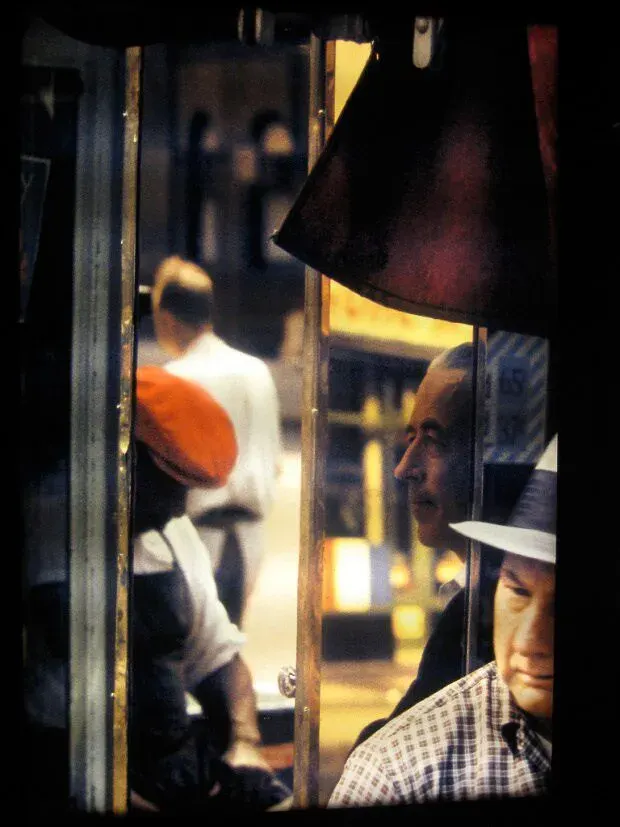
Seen through metal frames and reflective glass, this street photograph finds drama in partial visibility. A man in a hat, a second profile, and a flash of orange resolve into a layered, intimate city scene.
Watch the video
This photograph makes its impression through restraint. Rather than offering a full, open view, it builds the scene from fragments: a face at the lower right, another profile behind glass, a passerby marked by an orange cap, and a scaffold of vertical dividers holding everything in place. The result is unmistakably urban and unmistakably poetic. It feels less like a record of a moment than a moment discovered inside a shifting surface of glass, light, and passing bodies.
A face that quietly holds the frame
The lower-right figure gives the image its emotional center. His face is the clearest human presence in the picture, and that relative sharpness matters: it lets the expression land through a crowded field of reflections, bars, and passing forms. The hat brim, the slight downward set of the mouth, and the warm sidelight across his cheek create a feeling that is inward and self-contained. Because so much of the photograph is partial and interrupted, this face carries unusual weight. It becomes the point where the scene turns from visual complexity into feeling.

The lower-right face gives the photograph a memorable emotional anchor.
Layering that turns observation into narrative
The second face, seen in profile behind the glass, expands the image from portrait to social scene. This figure is not fully presented, yet that is exactly why the moment feels alive. We are made aware of multiple people occupying adjacent spaces, separated by windows, reflections, and framing bars. The picture suggests waiting, watching, and passing contact without spelling any of it out. That light touch is one of the photograph’s real pleasures: it trusts the viewer to feel the relationships between figures rather than explaining them.

The partially obscured second profile gives the scene depth and lived-in narrative.
Vertical divisions as elegant structure
The metal bars and doorway edges do more than divide the scene; they compose it. They create a rhythm of narrow compartments that lets each figure occupy a distinct visual zone. This structure keeps the photograph coherent even as it embraces overlap, blur, and interruption. The eye moves from left to center to right in measured steps, discovering one person, then another, then the reflections and glow around them. The geometry is firm without feeling rigid, which is a hallmark of sophisticated street photography.

The vertical framing bars give the image rhythm, order, and a strong sense of design.
A single orange note that energizes the palette
Much of the color here is restrained: brown-gold reflections, muted shadows, soft flesh tones, dark framing. Against that subdued palette, the orange cap on the left arrives with perfect force. It is a small accent, but it changes the whole tempo of the image, adding a pulse of warmth and immediacy. Because it sits away from the main face, it also helps the composition feel distributed rather than centralized. The photograph gains both balance and vitality from this single vivid note.
The orange cap acts as a vivid counterpoint that brings the muted palette to life.
Reflections and worn surfaces that hold the mood
The photograph’s atmosphere depends on what the surfaces are doing. Glass catches light unevenly. Metal edges glow softly. The panes and frames show age, use, and a little grime, all of which enrich the scene instead of distracting from it. These textures make the city feel tangible. They also soften the photograph into something cinematic, where light seems to settle into the materials rather than simply illuminate them. The warm reflections in the center and lower frame are especially beautiful, giving the image its sense of memory and weathered elegance.
The reflective glass and worn metal give the image a tactile, cinematic beauty.
Why this photograph stands out
What lingers in this photograph is its ability to make incompleteness feel rich. Faces are partial, spaces are segmented, and the street appears in glimpses, yet everything necessary is there: human presence, formal control, color, atmosphere, and mystery. It is a picture built from looking through rather than looking at, and that choice gives it its lasting beauty.
About the photographer
Saul Leiter
Saul Leiter was known for his poetic, painterly approach to street photography, finding beauty in quiet, everyday moments rather than dramatic events. He used reflections, fogged windows, rain, vibrant color, and layered compositions to create images that feel intimate and dreamlike. His work often obscures or partially hides his subjects, inviting the viewer to discover the scene rather than simply observe it. Leiter’s photographs are celebrated for their subtle mood, ambiguity, and extraordinary use of color and light.