Regal Presence, Written Into the Room
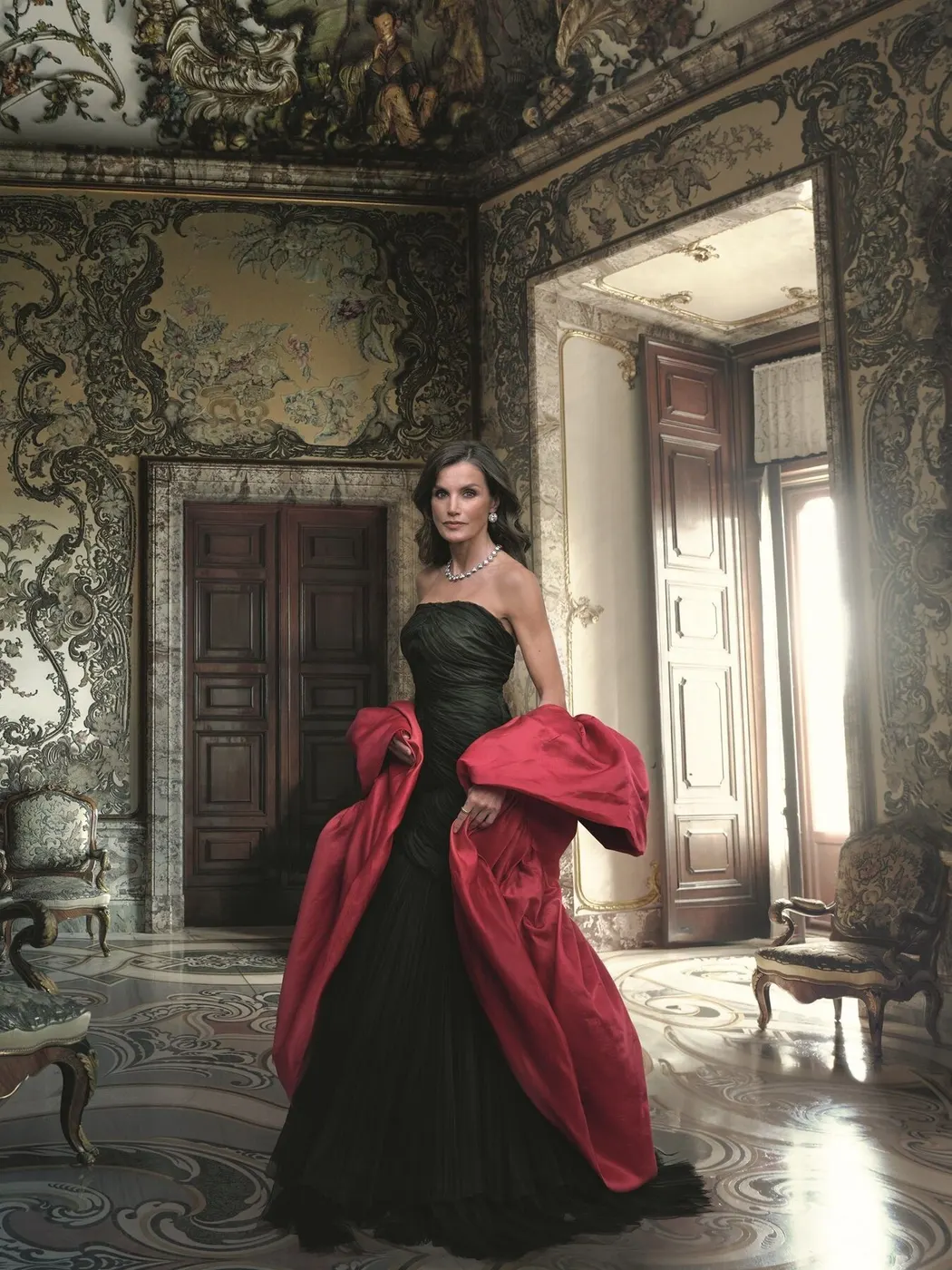
This portrait turns fashion, architecture, and gesture into one unified statement. Queen Letizia’s poised stance, the sculptural black gown, and the vivid red wrap feel inseparable from the ornate interior around her.
Watch the video
This image is memorable because it feels fully composed at every level: pose, wardrobe, architecture, and atmosphere all speak the same language. Queen Letizia stands with calm authority inside a richly decorated room, and the photograph draws its power from that harmony. The portrait is stately without becoming rigid, luxurious without losing human presence.
A poised figure with unmistakable authority
The subject’s placement gives the portrait immediate confidence. She stands slightly off-center, which keeps the composition alive while preserving a sense of balance. Her body angle is relaxed but deliberate, and the upright posture gives the image a regal stillness. The expression is composed and direct, matching the dignity of the setting without any need for theatrical gesture.

The slightly off-center placement and composed stance give the portrait elegance, stability, and authority.
The red wrap transforms the picture into design
The crimson fabric is the image’s most memorable visual event. Against the deep black gown, it reads instantly as both color accent and sculptural form. Its broad folds create rhythm around the lower half of the frame, turning a static standing pose into something flowing and cinematic. The wrap does more than decorate the portrait; it gives the eye a path, carries energy through the composition, and makes the image feel unmistakably grand.

The red wrap provides a luxurious burst of color and movement that makes the portrait instantly recognizable.
An interior that deepens the portrait
The room is not just background; it is part of the character of the image. Painted walls, carved details, and the decorated ceiling surround the subject with history and refinement. These surfaces enrich the frame with texture and visual density, turning the portrait into an environmental statement rather than a simple fashion study. The setting feels worthy of the sitter, and that correspondence between person and place is one of the photograph’s finest achievements.
The ornate interior gives the portrait narrative depth, texture, and a powerful sense of place.
Floor pattern, reflection, and depth
The lower portion of the frame is handled with exceptional elegance. The swirling floor motifs echo the decorative language of the walls and gently guide the eye back toward the figure. Reflections add softness and dimension, helping the subject feel grounded within the room rather than placed on top of it. This makes the entire image feel immersive, as if the architecture extends beneath and around the sitter in one continuous visual field.
The patterned floor and subtle reflections add grandeur and depth while reinforcing the room’s visual rhythm.
Why this photograph stands out
What makes this portrait so compelling is its unity. The pose, gown, red wrap, and opulent interior all reinforce the same idea of grace, status, and control. Nothing feels accidental. The photograph lingers because it presents beauty not as ornament alone, but as structure: every visible element contributes to a singular, regal presence.
About the photographer
Annie Leibovitz
Annie Leibovitz is renowned for transforming portraits into cinematic, storytelling images, often using dramatic lighting, elaborate settings, and carefully directed poses. Her photographs are known for their emotional intensity, theatrical composition, and ability to reveal something about her subjects beyond their public personas. She often blends fine-art photography with editorial storytelling, creating images that feel both intimate and larger-than-life. Her signature style has made her one of the most influential portrait photographers of the modern era.