Milwauke
A street portrait with rare ease and presence, this photograph turns a storefront corner into a stage for attitude, intimacy, and urban texture.
Watch the video
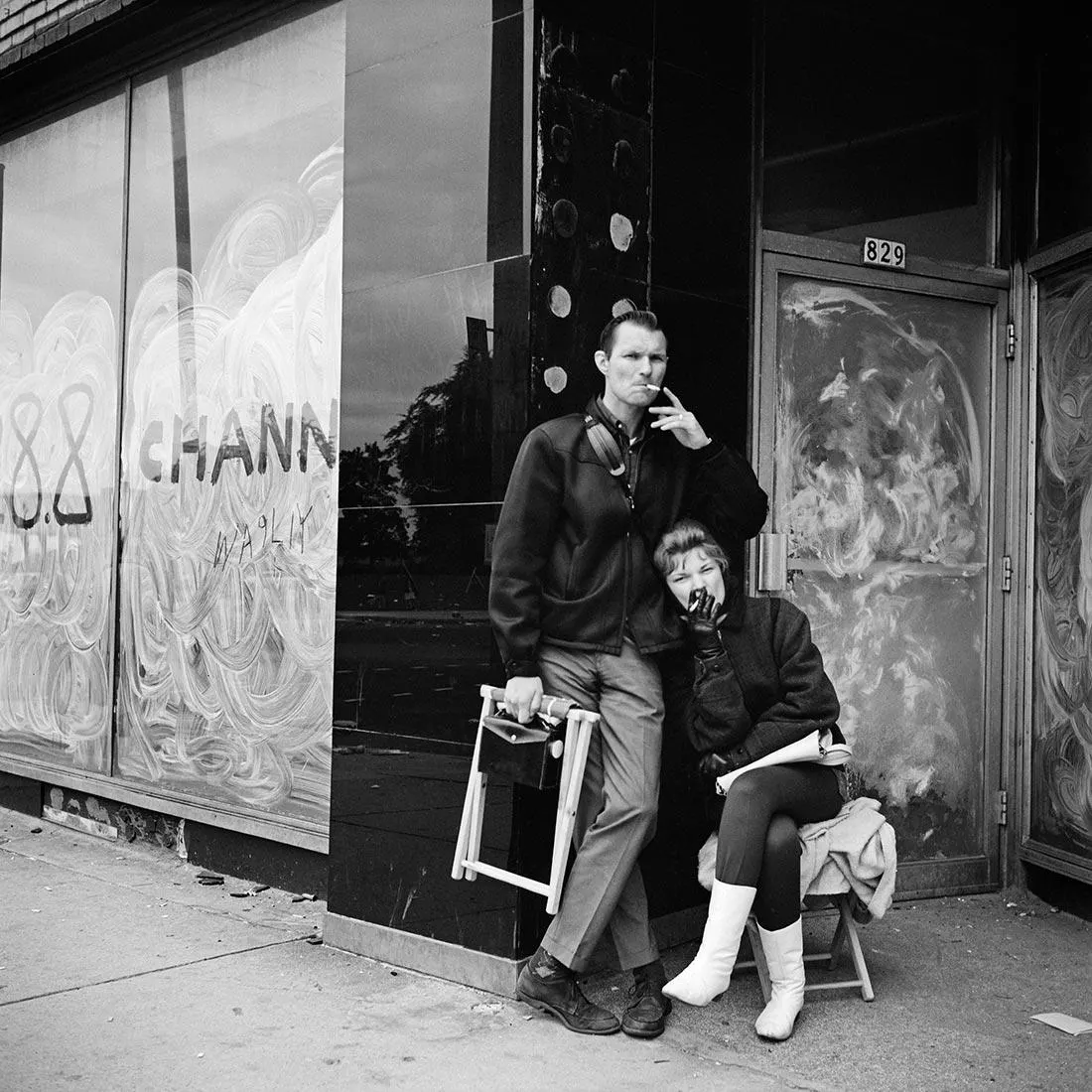
This photograph has the confidence of a scene discovered rather than arranged. Two figures occupy the threshold of a painted storefront with complete naturalness, and the picture builds its power from that self-possessed stillness. In black and white, every surface matters: glossy facade, brushed window paint, worn pavement, dark clothing, pale boots. The result is a portrait that feels both documentary and cinematic.
A figure placed with immediate authority
The standing subject holds the frame from the first glance. Set against the dark pillar, he reads with unusual clarity: face, jacket, hand, and cigarette all separate cleanly from the black facade. That tonal contrast gives the image a decisive visual anchor, while his upright posture establishes the picture’s cool, composed attitude.

The dark facade gives the standing figure a striking, unmistakable presence.
An intimate pair rather than a single portrait
What makes the image memorable is the relationship between the two people. The seated figure leans into the standing one, turning the portrait into a shared mood instead of a solitary pose. Their echoed hand-to-face gestures create a visual rhyme, and that repetition quietly binds them together. It is a small human detail, but it gives the photograph narrative depth and emotional temperature.

The mirrored gestures and physical closeness give the portrait real human charge.
The storefront as atmosphere and evidence
The setting is not backdrop alone; it is part of the portrait’s identity. Painted windows, the doorway, and the visible number above the door place these people in a specific urban environment. The architecture supplies vertical structure, while the hand-marked glass adds a rough, transient beauty. Those details make the scene feel lived-in and true, grounding the subjects in a believable street-world.

The doorway, address, and painted glass give the portrait documentary richness.
Black-and-white tonality that loves texture
The monochrome treatment is especially strong here because it lets texture carry the emotion. The glossy black wall, chalky paint swirls, matte coats, concrete sidewalk, and softly lit skin all hold distinct tonal identities. Bright elements are used with precision, especially the seated figure’s white boots, which create a clean lower accent and stabilize the composition from the ground up. The photograph feels tactile without ever losing its graphic order.
The tonal range turns everyday surfaces into a rich, tactile design.
Why this photograph stands out
What lingers in this photograph is its balance of attitude and authenticity. The people feel relaxed but unforgettable, the setting feels specific without overwhelming them, and the black-and-white rendering gives the whole scene a durable, street-poetry elegance. It is an environmental portrait that understands exactly where its beauty lives: in gesture, texture, presence, and place.
About the photographer
Vivian Maier
Vivian Maier was known for her **intimate, observant street photography**, capturing fleeting moments of everyday life with a remarkable eye for gesture, expression, and composition. Her photographs often reveal the humor, loneliness, curiosity, and quiet drama of ordinary people and city streets. Her work is distinguished by **layered compositions, reflections, strong geometry, and an instinct for capturing unguarded moments**. Working largely in Chicago and New York, Maier created a deeply personal visual record of urban life that was discovered and recognized only after her death.