Julia Jackson and the Stillness of Presence
Julia Margaret Cameron turns a simple frontal portrait into something hauntingly intimate, using direct gaze, drifting hair, and sepia atmosphere to make presence feel almost palpable.
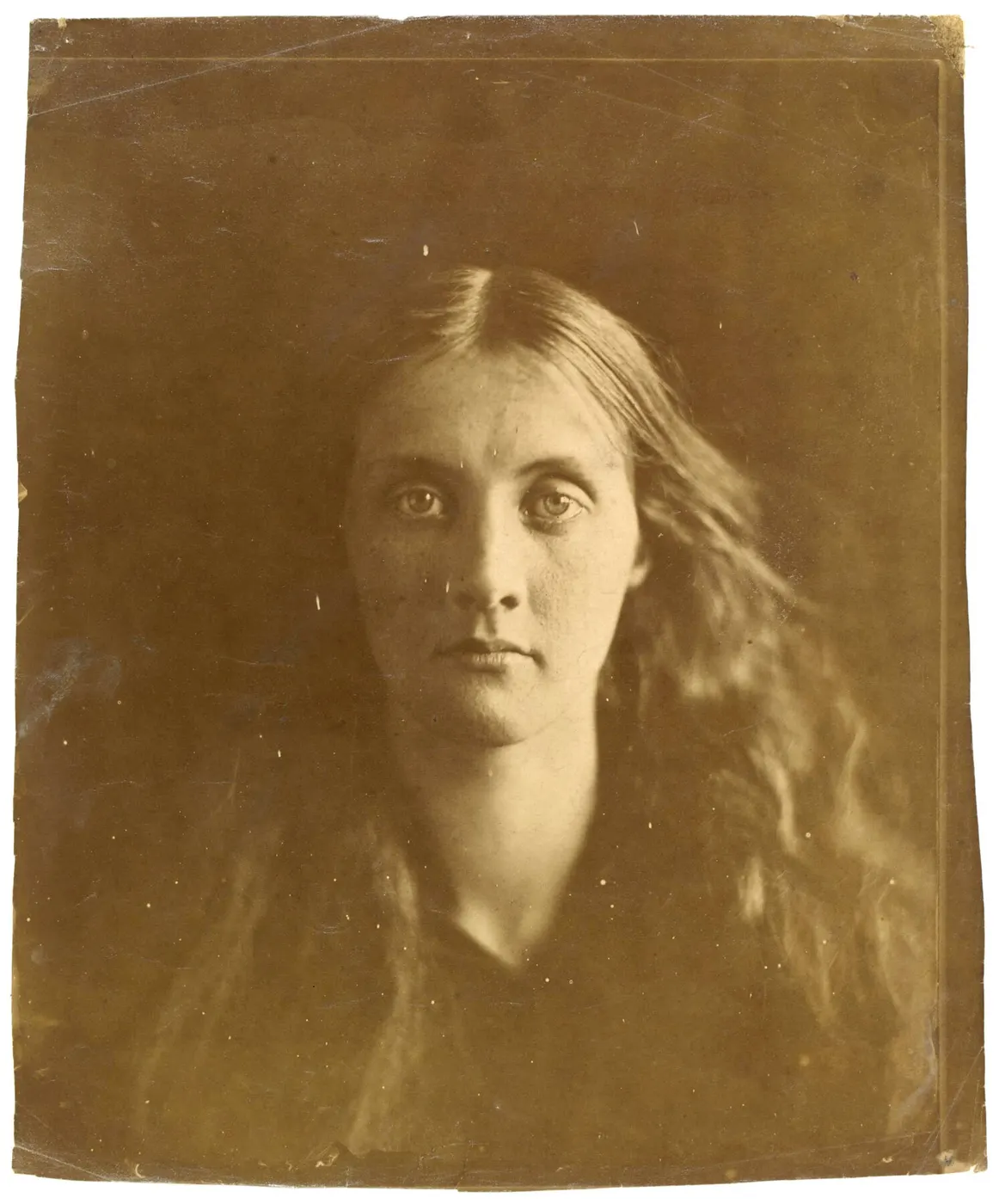
Julia Margaret Cameron’s portrait of Julia Jackson feels immediate and timeless at once. The photograph is built from simple means: a frontal pose, a dark ground, soft light, and an unwavering gaze. Yet those choices produce remarkable depth of feeling. The image holds the viewer not through display, but through concentration. Cameron’s gift for intimate, expressive portraiture is fully present here, turning stillness into something luminous and unforgettable.
Eyes that hold the entire portrait together
The eyes are the photograph’s emotional center. Set near the middle of the frame and gently lit, they establish connection instantly. Their clarity against the surrounding softness gives the portrait its structure: the viewer lands there first, then slowly takes in the rest of the face, the hair, and the shadowed field around her. That balance between softness and fixation is one of the image’s great achievements.

The eyes create a powerful visual anchor and a direct human connection.
A frontal pose made vivid by subtle asymmetry
The pose is straightforward, but never rigid. Cameron uses a centered, head-on composition to emphasize presence, then lets the hair loosen that symmetry. The sweep of hair to the right side introduces motion and organic shape, keeping the image alive. It feels as if the sitter has emerged from shadow for a brief, deeply attentive moment. That slight imbalance is exactly what gives the portrait its natural grace.

The drifting hair brings movement and vitality to the centered pose.
Soft tone, strong presence
One of the most memorable qualities here is how gentleness and intensity coexist. The light is soft, with smooth transitions across the face, but the expression remains unwavering. Julia Jackson’s mouth is quiet, her posture composed, her gaze searching rather than theatrical. This restraint opens the portrait emotionally. It does not tell the viewer what to feel; it creates space for feeling to gather.
The restrained expression gives the portrait its quiet psychological intensity.
Sepia atmosphere as a form of beauty
The sepia palette and worn surface are not incidental; they are central to the image’s character. Scratches, edge wear, and plate-like markings add tactile richness and reinforce the sense of an object shaped by time. Instead of weakening the portrait, these traces deepen its poetry. They make the photograph feel handmade, handled, and preserved, which suits Cameron’s painterly, expressive approach perfectly.
The aged surface and sepia toning give the portrait a distinctive archival beauty.
Why this photograph stands out
What makes this portrait so enduring is its concentration. Julia Margaret Cameron relies on almost nothing extraneous: a face, a gaze, soft light, and the living shape of hair against darkness. From those elements she creates a portrait of unusual intimacy and permanence. Julia Jackson appears neither staged nor distant, but fully present, held in an atmosphere that feels both earthly and dreamlike.
About the photographer
Julia Margaret Cameron
Julia Margaret Cameron was known for her **intimate, expressive portraits**, using photography to explore character, emotion, and the inner presence of her subjects. Rather than pursuing technical perfection, she embraced soft focus, dramatic lighting, and imperfect details to create images with a distinctly painterly and poetic quality. Her distinctive style is characterized by **close framing, luminous faces, atmospheric softness, and a dreamlike sense of intimacy**. Cameron deliberately used blur and shallow focus as expressive tools, giving her portraits a romantic, almost ethereal quality and helping establish photography as a medium capable of personal artistic expression.