Glaciers by Frans Lanting
A telephoto glacier landscape where dark granite peaks, luminous snow, and cyan ice lock together into a scene of weight, clarity, and atmosphere.
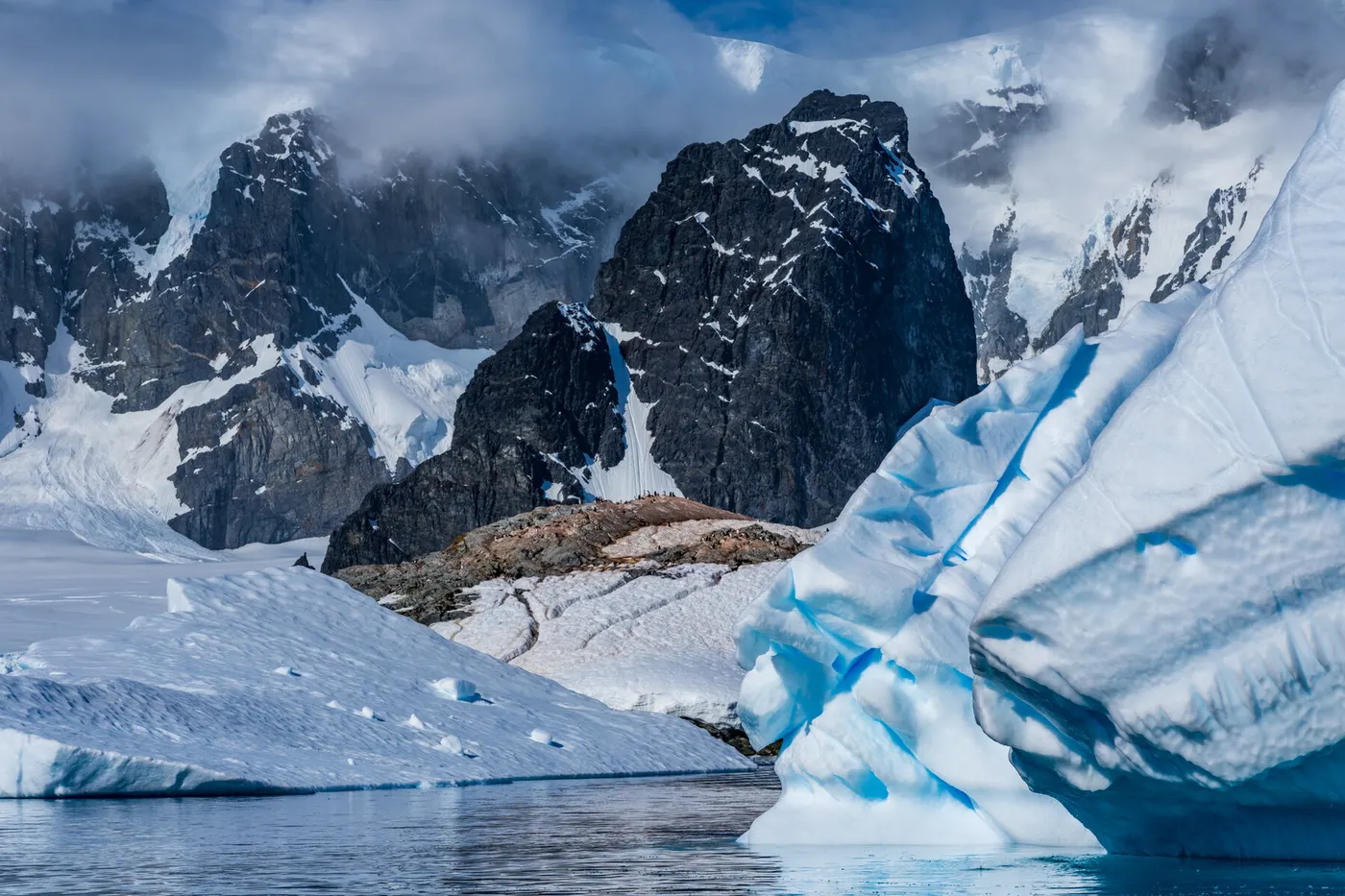
"Laciers" is memorable for the way it brings monumentality and intimacy into the same frame. The photograph uses telephoto compression to stack black granite, white snowfields, a rough midground shelf, and luminous blue ice into a scene that feels both dense and legible. Every major element carries a distinct texture, and the strongest forms read immediately.
A mountain mass with real authority
The central peak gives the image its commanding presence. Its steep triangular rise, deep charcoal tone, and crisp separation from the surrounding snow make it feel immovable. That dark shape lands with force because it is framed by lighter glacial surfaces on both sides, so the eye recognizes it instantly as the image’s anchor.

The main peak holds the frame with bold shape and exceptional tonal presence.
Balanced structure across the range
The mountain on the left is a beautiful supporting form. It echoes the rugged character of the main massif while keeping the composition spread across the frame, and the layered snow channels between the two peaks create a clear sense of depth. The image feels carefully built rather than simply scenic, with each ridge helping the next one read more clearly.

The secondary peak gives the landscape balance and strengthens the sense of layered space.
Mist that softens without hiding
The cloud layer across the upper ridges adds mood without dissolving the mountain architecture. It drifts through the scene like a veil, muting the transition into the sky and giving the snow and stone a colder, more cinematic atmosphere. Because the peaks remain legible beneath it, the mist deepens the image instead of flattening it.
The cloud cover adds atmosphere while preserving the strength of the mountain forms.
A superb dialogue between rock and snow
One of the photograph’s most striking qualities is the edge where black rock cuts into white snow. Hard, jagged granite faces meet soft, flowing snowfields, and that contrast gives the whole image a refined graphic power. The boundaries are intricate but never messy, so the viewer gets both drama and clarity at once.
The meeting of dark rock and bright snow gives the frame its strongest formal tension.
Foreground ice with tactile brilliance
The iceberg on the right brings a vivid tactile presence to the foreground. Its folded surfaces, carved creases, and electric cyan seams feel cold enough to touch, and those blue accents provide a memorable color note against the restrained grays, blacks, and whites elsewhere in the frame. The ice is not just foreground context; it is a sculptural counterpoint to the mountains behind it.
The iceberg’s cyan fissures and sculpted surfaces give the scene a vivid, tactile beauty.
A midground shelf that completes the sense of place
The rocky terrace between water and mountain is a subtle but important part of the image’s success. It creates a transition in scale from the low foreground ice to the towering cliffs, helping the whole landscape feel inhabitable rather than abstract. Its warmer brown-gray tones also add a gentle tonal shift that keeps the frozen palette from becoming uniform.

The midground shelf creates a convincing bridge of scale and enriches the landscape’s sense of place.
Why this photograph stands out
What makes "Laciers" so compelling is its control of contrast: dark against light, hard against soft, stillness against drifting cloud, and neutral stone against flashes of blue ice. The photograph feels massive, cold, and beautifully ordered, with each layer contributing something distinct. It is a landscape that rewards attention through structure, atmosphere, and texture in equal measure.
About the photographer
Frans Lanting
Frans Lanting is renowned for his **immersive wildlife photography that portrays animals as sentient, expressive beings within their natural environments**. His images often go beyond straightforward documentation, using light, perspective, and intimate moments to create a strong emotional connection between the viewer and the natural world. His work is distinguished by **extraordinary patience, elegant composition, dramatic light, and a strong sense of visual storytelling**. Lanting combines the precision of a naturalist with the sensibility of a fine-art photographer, creating images that reveal both the beauty of individual animals and the larger story of life on Earth.