Framed in Transit: The Quiet Magnetism of Alan Schaller’s Subway Portrait
Alan Schaller turns a passing subway moment into a portrait of unusual stillness, using the train door, reflections, and monochrome light to hold a young woman’s gaze at the center of the frame.
Watch the video
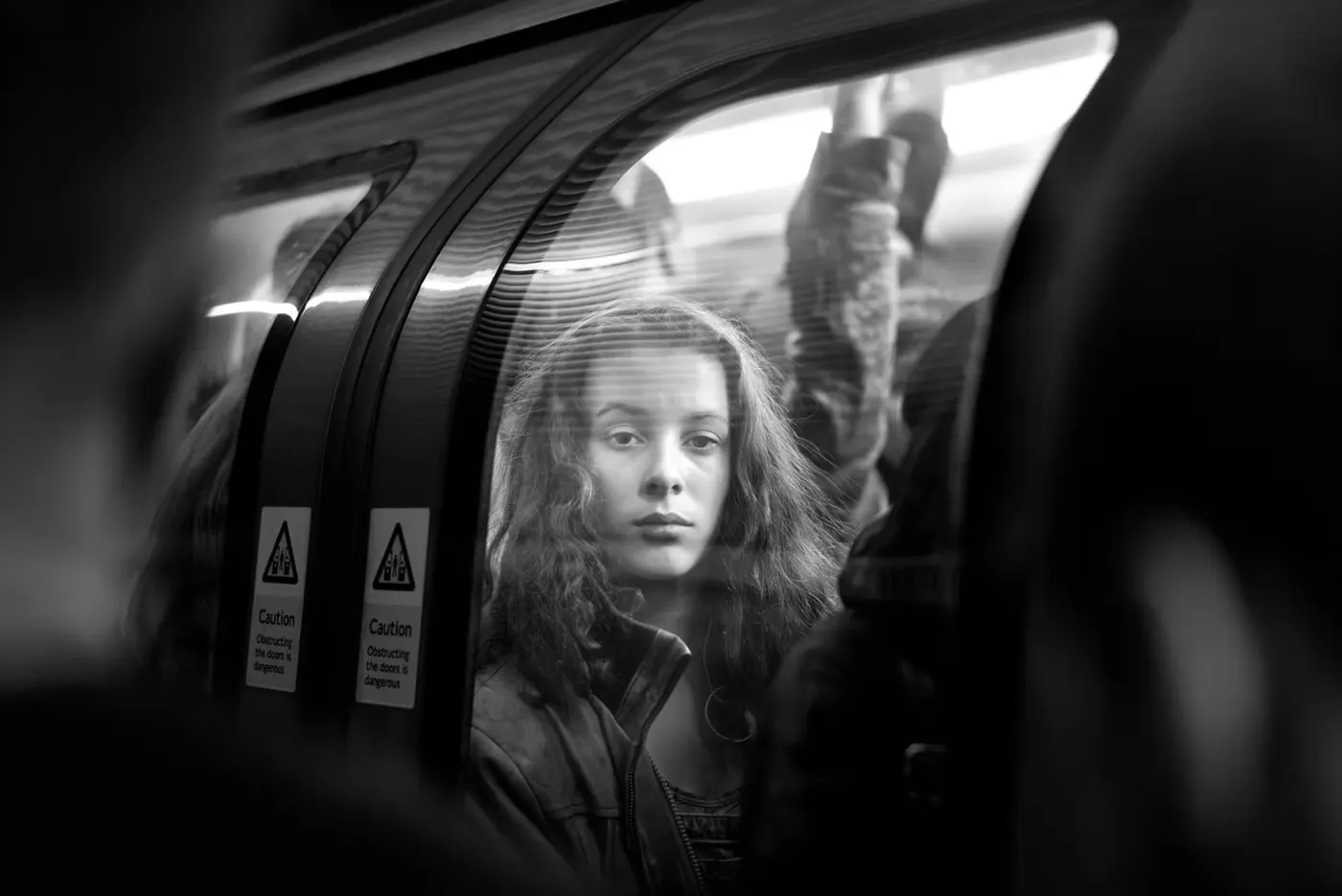
This photograph distills many of the qualities that make Alan Schaller’s work so resonant: clarity of structure, emotional restraint, and a remarkable ability to find poetry inside ordinary urban movement. A young woman looks out through a subway door window, and the image holds on that moment with striking calm. Everything around her—the curved frame, the glass, the blurred figures, the warning labels—builds a sense of public space, yet her face arrives with rare intimacy.
A gaze that steadies the entire frame
The picture begins with the subject’s expression. Her direct, unforced gaze gives the image its emotional center and keeps it from becoming merely observational. There is no theatrical gesture here; the stillness of her face is what makes it memorable. In a crowded transit setting, that calm presence feels even stronger, creating the sense that time has briefly slowed inside the motion of the carriage.

The subject’s quiet eye contact gives the photograph its lasting emotional gravity.
The train door becomes a perfect compositional device
One of the image’s most elegant choices is the use of the subway door window as an internal frame. Its curved edges isolate the portrait without feeling imposed, turning built infrastructure into a visual stage. The geometry guides the eye inward and makes the face feel discovered rather than presented. Schaller’s instinct for finding order in public space is especially clear here: the architecture of the carriage does not surround the subject passively, it actively shapes the picture.

The door window transforms everyday transit geometry into a refined frame within the frame.
Glass, reflection, and monochrome atmosphere
The reflections and horizontal streaks across the glass add a beautiful layer of separation between viewer and subject. Rather than obscuring her, they enrich the mood, reminding us that this is a face seen through surfaces, movement, and public space. In black and white, those textures become especially expressive. Tonal contrast clarifies the face, hair, jacket, and surrounding darkness with a cinematic softness that feels both precise and atmospheric.
Reflections and monochrome tonality give the portrait its distinctive sense of depth and distance.
Small details that anchor the scene in lived reality
The repeated caution labels on the door are a subtle but important touch. They locate the picture unmistakably in a subway environment and add documentary specificity without interrupting the portrait. The surrounding silhouettes do the same. They suggest crowding, routine, and the press of shared space, which makes the centered stillness of the woman’s face feel all the more singular. The photograph balances atmosphere and context with impressive economy.
Contextual details make the portrait feel rooted in a real, observed urban moment.
Why this photograph stands out
What makes this image so memorable is its balance of clarity and mystery. The composition is controlled, the setting is unmistakable, and yet the photograph never feels overexplained. Alan Schaller finds beauty in the exact tension that defines great street photography: a fleeting public moment rendered with the intimacy of a portrait. The result is poised, cinematic, and quietly unforgettable.
About the photographer
Alan Schaller
Alan Schaller is known for his **striking black-and-white street photography**, often finding moments of tension, solitude, and human connection within the rhythms of urban life. He uses strong light and shadow, geometric forms, and carefully timed moments to turn ordinary city scenes into visually powerful compositions. His work is distinguished by **dramatic contrast, minimalist framing, layered compositions, and an exceptional sense of timing**. Schaller often juxtaposes people with architecture, shadows, and negative space, creating photographs that feel both cinematic and emotionally introspective.