Fan Ho’s Theater of Light and Silhouette
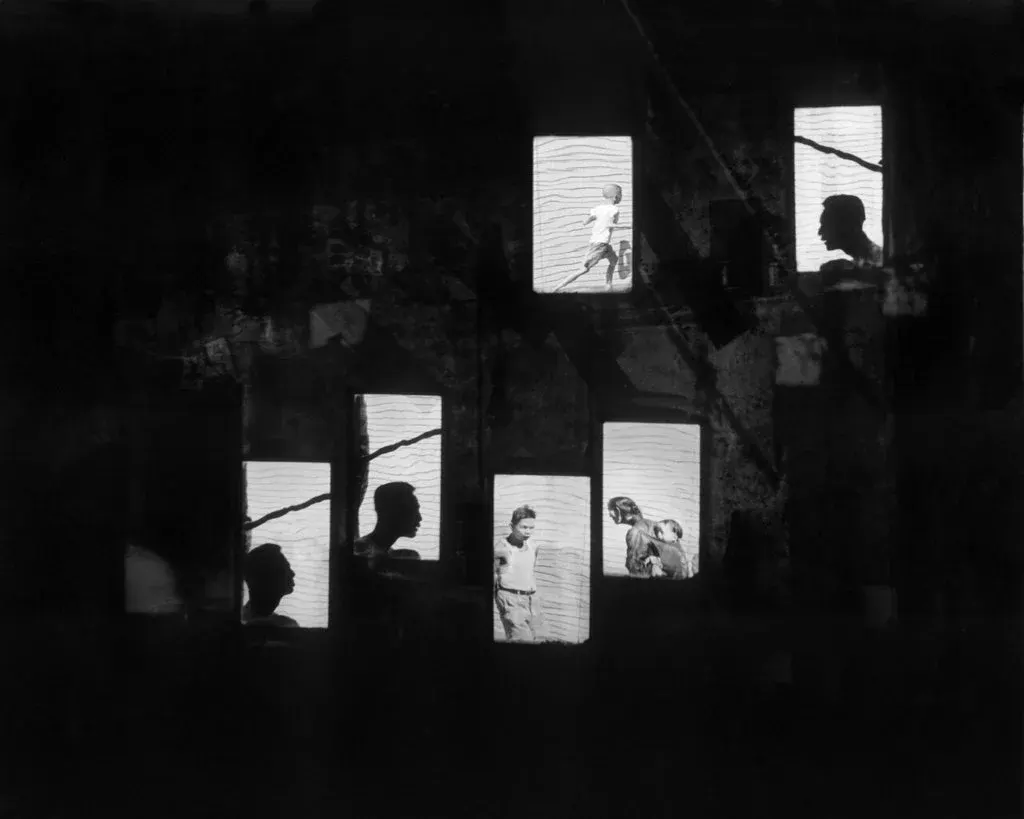
In Behold, Man! 鏡裡真真, Fan Ho turns a cluster of lit windows into a lyrical street tableau, where silhouettes, gesture, and geometry feel at once cinematic and intimate.
Watch the video
Fan Ho had a rare gift for making ordinary urban surfaces feel staged by light itself. In Behold, Man! 鏡裡真真, a dark facade becomes a constellation of bright rectangles, each one holding a human presence. The photograph is striking at first glance for its graphic simplicity, then richer on closer look as each window reveals a different mood, gesture, and relation. Ho transforms the building into a sequence of visual episodes, held together by black space, luminous panes, and exquisitely timed silhouettes.
A facade arranged like visual music
The photograph’s structure is immediately memorable: bright, unevenly spaced windows suspended in a field of deep black. That contrast gives the image its force. The rectangles feel both architectural and theatrical, like illuminated stages cut into darkness. Because the windows vary in height and spacing, the composition develops a syncopated rhythm rather than a rigid grid. That irregular order is what makes the scene feel alive. Ho finds geometry that is disciplined without becoming static.
The irregular pattern of lit windows gives the image a refined geometric rhythm.
The upper-right silhouette as a commanding anchor
The strongest single form in the frame is the large profile in the upper-right window. It is crisp, dark, and unmistakable against the glowing panel behind it. Its placement high in the composition gives the eye an immediate destination, while the clean contour of the head makes the human presence feel iconic rather than incidental. This silhouette does more than attract attention; it stabilizes the whole arrangement, balancing the smaller figures below and turning the facade into a coherent composition.

The upper-right profile gives the photograph an unforgettable focal presence.
Movement enlivening stillness
In the upper-center window, a running child changes the emotional temperature of the picture. Most of the other figures appear paused, posed, or contemplative, but this one introduces motion. That contrast is crucial. It suggests that each illuminated rectangle contains its own separate instant, and together they build a layered sense of life unfolding across the wall. Ho’s timing is especially elegant here: the lifted leg and forward lean read instantly, so the figure becomes a spark of narrative energy within the calmer arrangement of silhouettes.

The running figure brings a vivid pulse of motion to the photograph’s quiet architecture.
Small windows, expansive human drama
The lower windows deepen the image’s emotional range. On the left, profile silhouettes repeat the language of the upper-right figure at a smaller scale, creating visual echoes across the composition. On the lower right, two figures share a single pane, and that closeness introduces a different feeling—less solitary, more relational. Ho makes each window distinct while preserving the unity of the whole. The result is a photograph that feels simultaneously abstract and deeply human: a set of simple shapes that keeps opening into story.

The varied figures across the lower windows turn the facade into a sequence of intimate human moments.
Why this photograph stands out
What makes Behold, Man! 鏡裡真真 so compelling is Fan Ho’s ability to hold several pleasures at once: graphic design, luminous contrast, cinematic mystery, and human tenderness. The picture is built from rectangles, silhouettes, and darkness, yet it never feels cold. Instead, it feels inhabited. Each pane offers a fragment, and together those fragments become a poem about seeing others briefly, across distance, through light.
About the photographer
Fan Ho
Fan Ho was renowned for his **poetic, cinematic street photography**, transforming the streets of 1950s and 1960s Hong Kong into scenes of striking light, shadow, and atmosphere. He often found beauty in fleeting moments, using silhouettes, mist, smoke, and architectural forms to create a sense of mystery and solitude. His work is distinguished by **dramatic geometry, carefully controlled light, strong tonal contrast, and masterful timing**. Ho approached everyday street scenes almost like a film director, composing images in which people become elegant elements within a larger visual story.