Fan Ho’s Graphic Tenderness in “Back To Mother 回歸慈母”
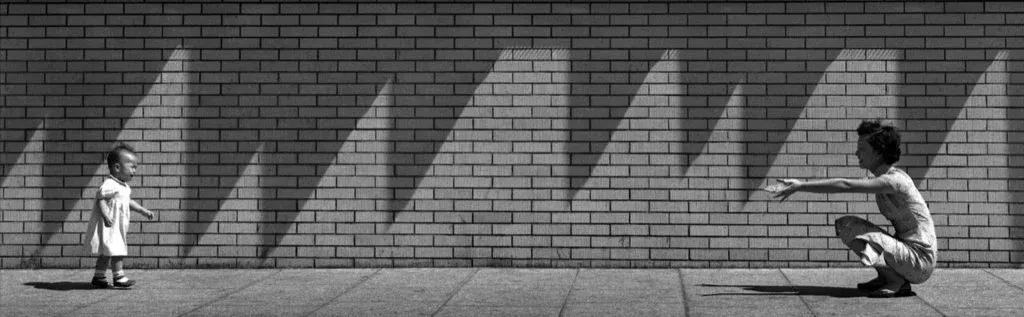
A child at the far left and a waiting mother at the far right turn a brick wall, hard light, and open space into a scene of pure anticipation.
Watch the video
In “Back To Mother 回歸慈母,” Fan Ho builds a deeply human moment from the simplest means: a wall, a pavement, two figures, and light. The photograph feels cinematic and distilled at once. Its power comes from how clearly each element serves the same emotion—distance already giving way to reunion.
A gesture that carries the whole story
On the right, the crouching adult opens both arms toward the child with complete clarity. The pose is instantly readable, but it is also graceful: low to the ground, balanced, and welcoming. That physical openness gives the picture its emotional center, turning a quiet street-side scene into an image about recognition, trust, and return.

The open-armed posture gives the photograph immediate warmth and narrative force.
Distance becomes drama
The child stands far to the left, separated from the adult by a wide stretch of pavement and wall. That spacing is what makes the image memorable. Rather than presenting the reunion itself, Fan Ho photographs the moment just before contact, when the space between two people is still charged with movement and expectation. The child’s small figure against that openness makes the scene feel both delicate and monumental.

The wide separation between the figures turns anticipation into the photograph’s central emotion.
Light turns the wall into music
Across the brick wall, repeating triangular shadows create a bold visual rhythm. These angled forms echo from left to right, giving the scene structure and momentum. The pattern is graphic and exact, yet it never overwhelms the people. Instead, it sets a measured tempo behind them, making the human exchange feel even more deliberate and poised.

The repeated shadow shapes give the image its striking graphic cadence.
Monochrome clarity and tactile calm
The black-and-white treatment strips the scene down to form, tone, and feeling. Brick lines remain crisp and tactile, but the wall stays calm enough to support the figures rather than distract from them. That balance is beautifully controlled. Texture enriches the photograph while the tonal consistency keeps the composition clean, allowing gesture, spacing, and shadow to remain the dominant notes.
The monochrome tones and brick texture create a rich but disciplined stage for the scene.
Why this photograph stands out
What makes this photograph endure is the way Fan Ho joins geometry and feeling without strain. The shadows are elegant, the wall is exact, and the composition is spare, yet the image never feels formal for its own sake. Everything leads back to the tenderness between the child and the waiting adult. In that union of design and emotion, “Back To Mother 回歸慈母” becomes both intimate and iconic.
About the photographer
Fan Ho
Fan Ho was renowned for his **poetic, cinematic street photography**, transforming the streets of 1950s and 1960s Hong Kong into scenes of striking light, shadow, and atmosphere. He often found beauty in fleeting moments, using silhouettes, mist, smoke, and architectural forms to create a sense of mystery and solitude. His work is distinguished by **dramatic geometry, carefully controlled light, strong tonal contrast, and masterful timing**. Ho approached everyday street scenes almost like a film director, composing images in which people become elegant elements within a larger visual story.