Eve Arnold’s Quiet Mastery of Reflection and Presence
In this restroom scene, Eve Arnold turns an ordinary pause between two girls into a layered study of reflection, structure, and human presence.
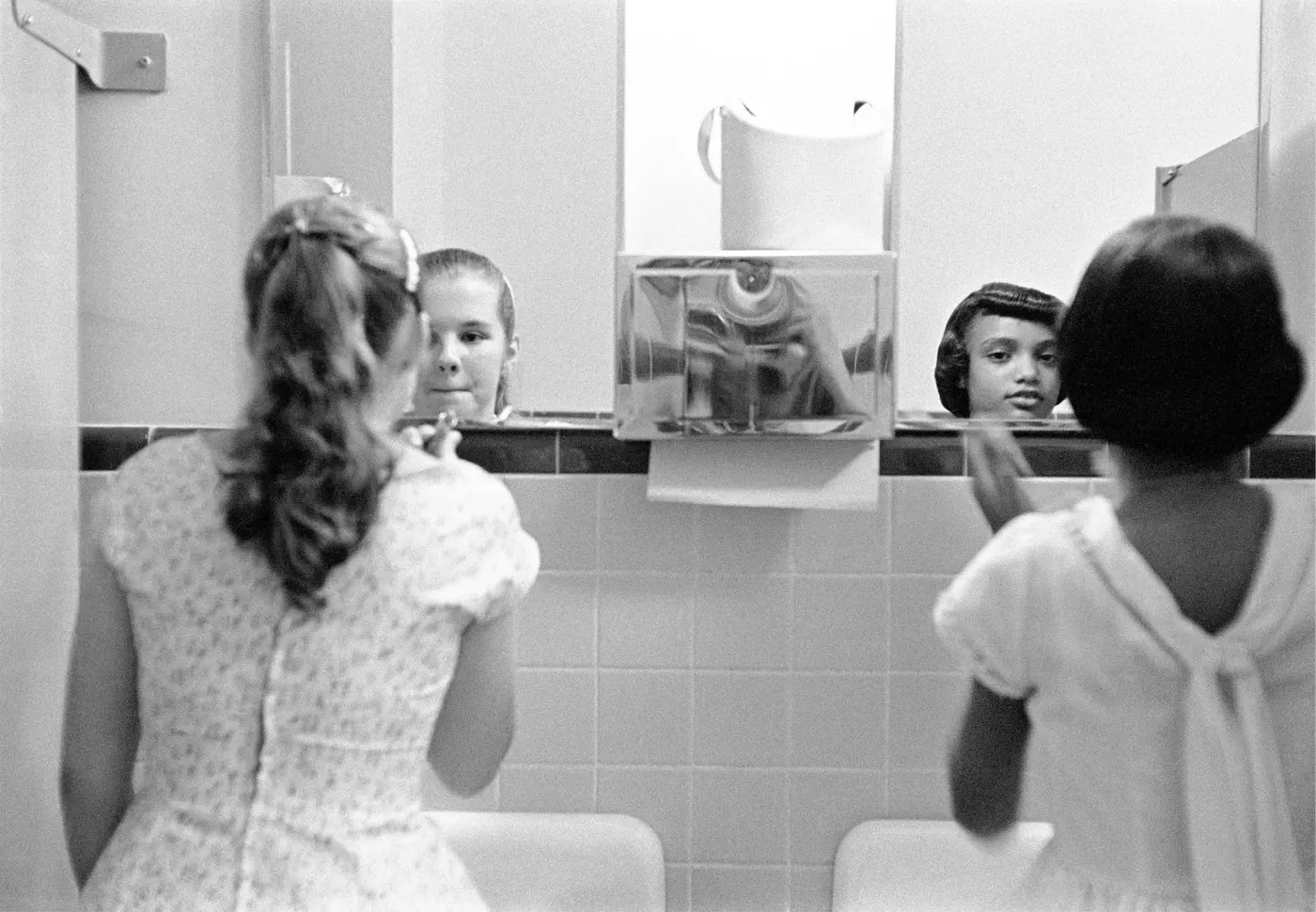
Eve Arnold was unmatched at finding intimacy inside ordinary situations, and this photograph shows that gift with remarkable clarity. Two girls stand with their backs to the camera, yet their faces arrive through the mirror, creating a double experience of presence: physical bodies in the room, private selves in reflection. The scene is simple, but the photograph gives it grace, order, and emotional immediacy.
A layered way of seeing
The photograph’s most memorable choice is its split viewpoint. We first encounter the girls as figures seen from behind, their dresses, shoulders, and hairstyles establishing them as solid forms in space. Then the mirror reveals their faces, turning a straightforward documentary scene into something more psychologically rich. That layering gives the image depth in both visual and emotional terms, because it lets the viewer observe the girls and meet them at the same time.

The photograph beautifully combines physical presence and reflection to create depth and quiet emotional complexity.
A direct human focal point
The reflected face on the right holds the frame with special confidence. Her gaze is calm, self-possessed, and unexpectedly direct, giving the image its clearest emotional entry point. In a room defined by routine fixtures and repeated surfaces, that face brings individuality and life. Arnold’s strength is evident here: she recognizes how a small expression can transform an everyday moment into a lasting portrait.

The right child’s reflection gives the scene its strongest note of personality and immediacy.
Geometry that steadies the moment
The tiled wall, mirror edge, and paired sinks create a firm structural grid beneath the candid action. That order keeps the image from feeling incidental. The girls are framed within a disciplined arrangement of horizontals, verticals, and repeated shapes, so the photograph feels composed without losing its naturalness. Arnold lets the architecture do quiet supporting work, holding the scene steady while the human moment remains central.
The bathroom’s clean geometry gives the candid scene elegance, balance, and formal control.
Black-and-white richness in ordinary surfaces
The tonal treatment brings together metal, tile, fabric, skin, and hair with remarkable sensitivity. Reflective surfaces in the dispenser and mirror catch soft highlights, while the dresses and wall tiles hold a gentler matte texture. Nothing is overstated, yet the range of surfaces gives the image a tactile fullness. This is where the black-and-white approach excels: it turns a plain interior into a nuanced field of tone and texture.
The black-and-white tonality gives everyday materials a subtle, expressive richness.
Why this photograph stands out
What makes this photograph endure is its restraint. Eve Arnold finds no spectacle here, only attentiveness: two girls, a mirror, a quiet interior, and a moment of self-possession. From those modest elements, she builds an image with structure, tenderness, and unmistakable human presence. It is a beautiful example of how documentary photography can make ordinary life feel both intimate and unforgettable.
About the photographer
Eve Arnold
Eve Arnold was known for her **intimate, empathetic approach to documentary and portrait photography**, looking beyond public personas to capture people in unguarded, vulnerable, and often deeply human moments. She photographed everyone from Marilyn Monroe and Malcolm X to migrant workers and ordinary families, bringing the same curiosity and respect to each subject. Her work is distinguished by **natural observation, emotional honesty, and a remarkable ability to create intimacy in difficult or unfamiliar settings**. Arnold often worked unobtrusively, allowing gestures, expressions, and small interactions to carry the story rather than relying on spectacle or dramatic staging.