Eve Arnold’s Quiet Marilyn in a Vast Desert Frame
On the set of The Misfits, Eve Arnold finds Marilyn Monroe not as an icon in full performance, but as a solitary figure held between open land, weather, and thought.
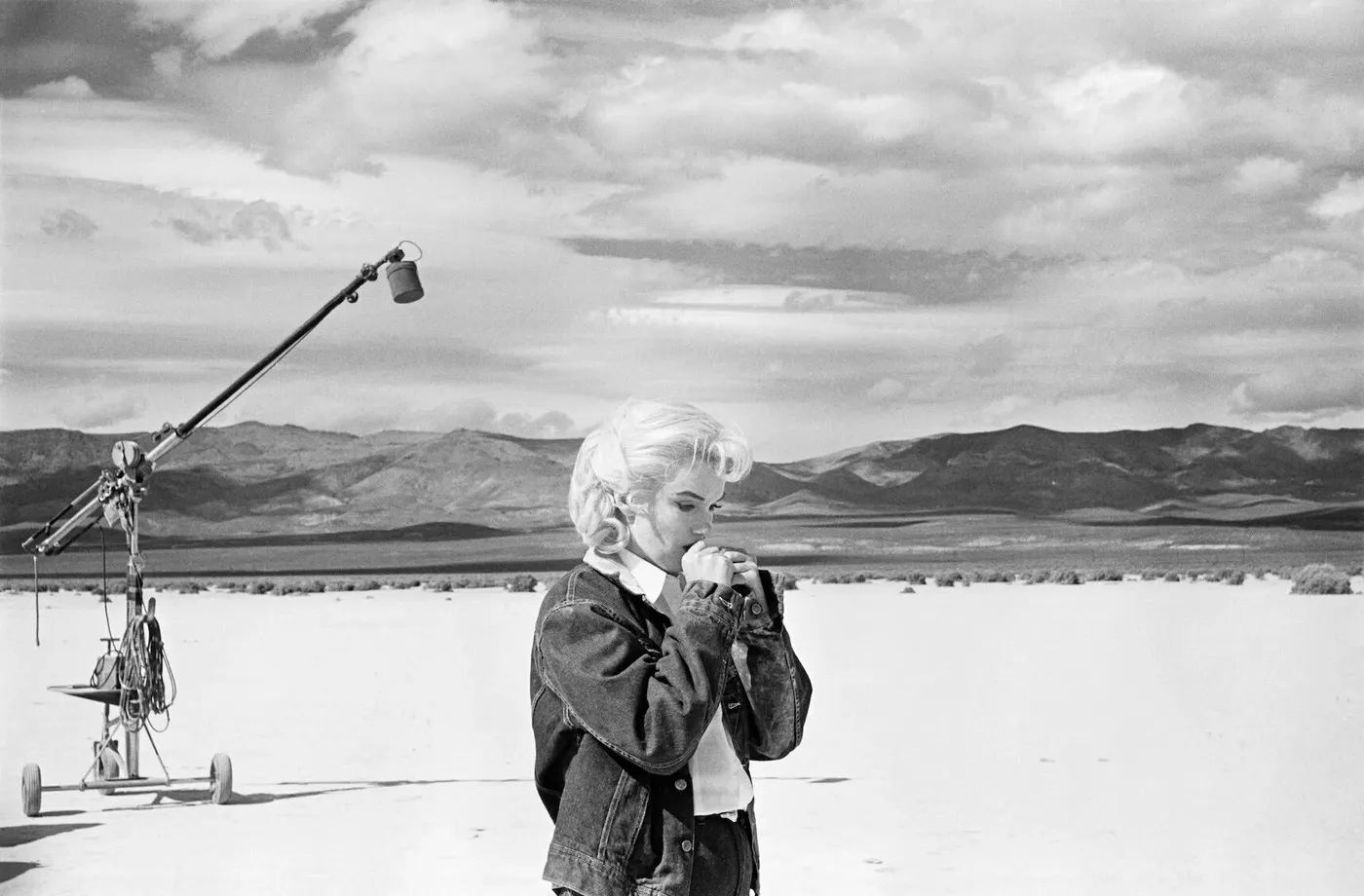
Eve Arnold was celebrated for seeing past celebrity into something more private and human, and this photograph does exactly that. Marilyn Monroe stands in a huge desert setting, yet the image feels intimate rather than grandiose. Arnold lets scale, weather, and a small inward gesture work together, creating a portrait that is both cinematic and delicately unguarded.
An inward gesture becomes the emotional center
The picture holds on Monroe’s downcast gaze and the way her hands rise toward her mouth. That small movement gives the portrait its emotional charge. In a landscape this expansive, Arnold chooses a gesture that is quiet, self-contained, and unmistakably human. It turns the photograph away from spectacle and toward interior life, which was one of Arnold’s great strengths as a portraitist.

The lowered gaze and protective hand gesture give the portrait a rare feeling of privacy.
Open space makes the figure feel more poignant
Monroe is placed slightly right of center with a broad stretch of pale ground around her. That negative space does important emotional work. It emphasizes solitude without diminishing her presence, and it lets the image breathe with a calm, suspended rhythm. The emptiness of the salt flat becomes expressive, making her stillness feel even more profound.

The generous negative space turns isolation into atmosphere.
The landscape gives the portrait cinematic scale
Behind Monroe, the frame builds itself in layers: bright flatland, darker foothills, mountain ridges, and a sky full of dense cloud bands. Those stacked horizontal planes create depth with remarkable clarity. The result is a portrait that feels as if it belongs to a film world, not just a single moment on a set. Arnold uses the land not as backdrop, but as structure, giving the image breadth and gravity.

The layered land and sky give the portrait its sweeping cinematic scale.
Monochrome brings out texture and presence
The black-and-white rendering is especially beautiful in Monroe’s denim jacket, where the worn fabric holds rich tonal detail. That tactile surface anchors the photograph physically. Against the smooth brightness of the desert floor and the soft tonal drift of the sky, the jacket feels weighty and real. This contrast between glamour and rugged materiality is part of what makes the image so memorable.
The monochrome tones make fabric, skin, and landscape feel vividly tangible.
Why this photograph stands out
What makes this photograph linger is its balance of myth and vulnerability. Arnold photographs one of the most recognized faces in the world, yet the image rests on mood, gesture, and space rather than performance. Monroe appears small within the desert, but emotionally she fills the frame. That tension between scale and intimacy is what gives the photograph its lasting beauty.
About the photographer
Eve Arnold
Eve Arnold was known for her **intimate, empathetic approach to documentary and portrait photography**, looking beyond public personas to capture people in unguarded, vulnerable, and often deeply human moments. She photographed everyone from Marilyn Monroe and Malcolm X to migrant workers and ordinary families, bringing the same curiosity and respect to each subject. Her work is distinguished by **natural observation, emotional honesty, and a remarkable ability to create intimacy in difficult or unfamiliar settings**. Arnold often worked unobtrusively, allowing gestures, expressions, and small interactions to carry the story rather than relying on spectacle or dramatic staging.