Elegance Held Against Stone and Time
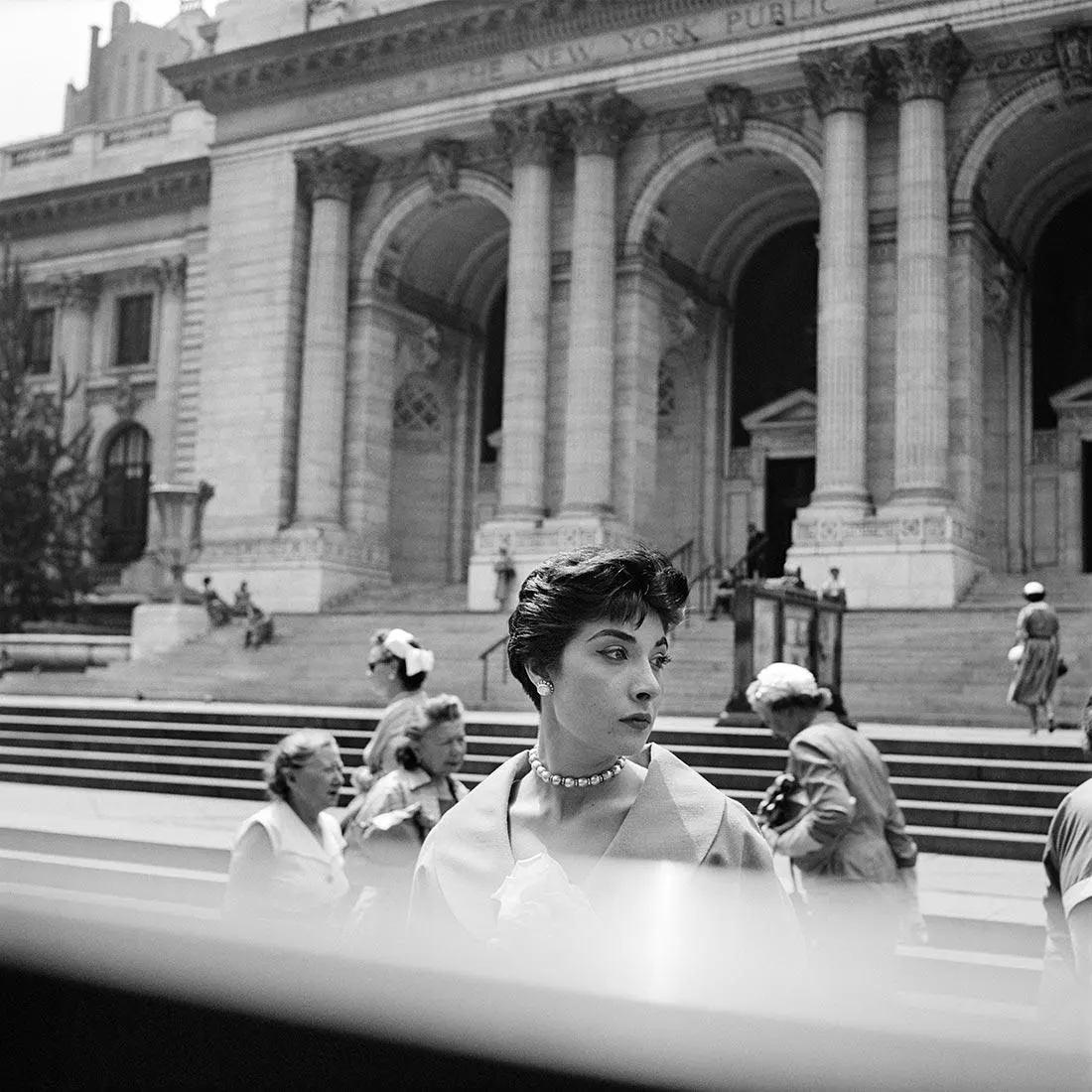
A poised portrait in front of the New York Public Library balances human intimacy with monumental architecture, using expression, tonal softness, and street detail to create a scene that feels both cinematic and lived-in.
Watch the video
This photograph is memorable for the way it joins two kinds of grandeur: the quiet poise of the woman in the foreground and the monumental calm of the library behind her. The frame feels cinematic without losing its documentary pulse. In black and white, the image strips attention down to expression, structure, fabric, stone, and gesture, letting each element reinforce the others with unusual clarity.
A face that holds the entire emotional center
The woman’s sideways gaze gives the portrait its charge. She is not performing directly for the camera; instead, she seems caught in a private moment of attention, and that restraint makes her presence more magnetic. Her expression is composed but not blank, creating a subtle dramatic tension that invites interpretation. The sharp rendering of her eyes, hair, and profile makes her the unmistakable emotional anchor of the frame.

The subject’s off-camera gaze gives the portrait mystery, poise, and immediate human presence.
Architecture that lends scale and dignity
The New York Public Library facade does far more than provide a backdrop. Its tall columns, deep arches, and broad stairway establish a stately visual rhythm that makes the portrait feel expansive. The repeated verticals and curves echo across the upper half of the frame, creating order and gravitas around the figure below. This setting elevates the image from a street portrait into something ceremonial and timeless.

The grand facade surrounds the portrait with rhythm, scale, and a strong sense of occasion.
Black-and-white tonality with remarkable grace
The monochrome treatment is especially effective here because it emphasizes shape and texture over distraction. Soft light holds detail in the woman’s face while preserving the sheen of her hair, the smooth wrap of her coat, the sparkle of her necklace, and the carved surfaces of the stone building. Pale fabric against darker hair creates elegant layering around the face, helping the portrait read cleanly even within a busy public setting. The tonal transitions feel gentle and refined, which suits the subject’s styling beautifully.
The soft monochrome rendering brings out facial structure, fabric, hair, and stone with refined clarity.
Street life that keeps the scene alive
The passersby on the steps and sidewalk give the photograph its lived-in energy. They place the portrait in a real public space rather than isolating it into pure fashion or pure architecture. Their hats, coats, and gestures enrich the period atmosphere and deepen the sense of time and place. Because the central figure remains so visually compelling, these surrounding people read as context and narrative texture, adding movement around her stillness.
The surrounding figures add motion, context, and period character to the portrait’s composed center.
Why this photograph stands out
What lingers in this image is the balance it achieves so effortlessly: intimacy against monumentality, elegance against everyday movement, stillness against the scale of the city. The woman’s expression gives the photograph its soul, while the library’s architecture gives it stature. Together they create an image that feels graceful, self-possessed, and enduring.
About the photographer
Vivian Maier
Vivian Maier was known for her **intimate, observant street photography**, capturing fleeting moments of everyday life with a remarkable eye for gesture, expression, and composition. Her photographs often reveal the humor, loneliness, curiosity, and quiet drama of ordinary people and city streets. Her work is distinguished by **layered compositions, reflections, strong geometry, and an instinct for capturing unguarded moments**. Working largely in Chicago and New York, Maier created a deeply personal visual record of urban life that was discovered and recognized only after her death.