Circular layers by Alan Schaller
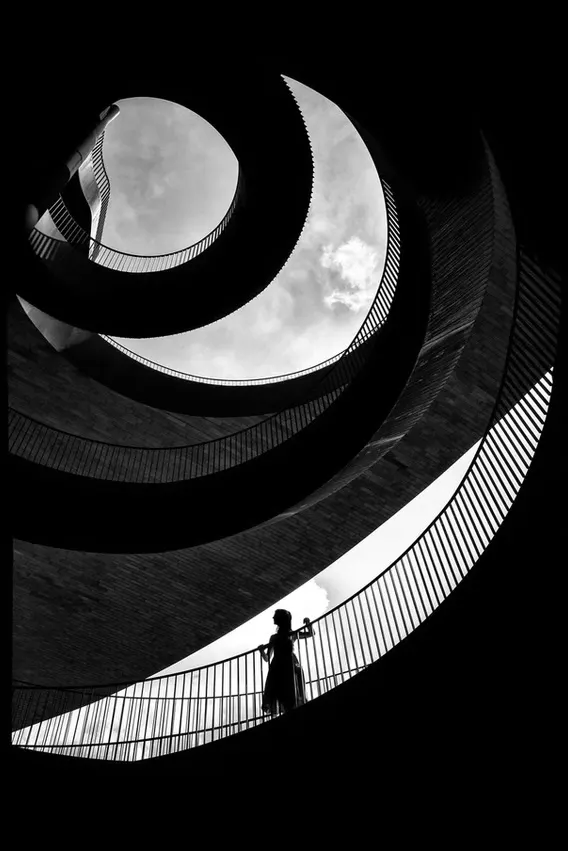
A spiraling architectural frame, luminous sky, and a single silhouetted figure turn this black-and-white photograph into a study of rhythm, scale, and presence.
Watch the video
Alan Schaller’s photograph finds grandeur in a simple visual idea: a person standing within a spiral of architecture. The image feels immediate and carefully distilled at once. Curved bands sweep inward like drawn lines, the sky glows through each opening, and the lone figure gives the entire structure human scale. It is a photograph built on reduction, where black-and-white contrast clarifies form and timing turns geometry into drama.
A spiral that pulls the eye inward
The composition is driven by repeating crescents that stack from the lower frame to the circular opening above. Each band narrows and turns the eye deeper into the image, creating momentum without clutter. The railings sharpen that movement by adding fine parallel lines along the curves, so the architecture reads as both massive and precise. The result is a visual funnel: elegant, graphic, and instantly legible.

The layered spiral geometry creates a powerful sense of rhythm and visual flow.
The figure as scale and story
The silhouetted person near the lower arc is the image’s emotional center. Against the bright opening, the body reads clearly and gives the sweeping architecture a human measure. That contrast between the monumental structure and the stillness of one figure makes the photograph feel cinematic rather than purely abstract. Schaller is especially adept at this kind of moment, where a small human presence turns design into narrative.

The lone silhouette transforms the architecture into a scene with presence, scale, and quiet drama.
Texture keeps the abstraction grounded
For all its graphic force, the photograph never becomes sterile. The darker wall on the right retains a visible surface texture that reminds us this is a built space with weight and material presence. Those textured planes balance the smooth brightness of the sky openings, giving the frame both tactility and tonal depth. It is a subtle detail, but it enriches the image’s architectural character.

The textured architectural surfaces give the photograph tactile richness beneath its bold graphic design.
Clouds animate the negative space
The bright openings are not empty white shapes; faint cloud detail moves through them and keeps the sky alive. This soft variation gives the negative space atmosphere while preserving the strong separation between light and structure. The clouds also echo the sweep of the staircase with a gentler, more organic form, adding a quiet counterpoint to the hard geometry.

Cloud detail adds atmosphere and tonal life to the luminous openings.
Why this photograph stands out
What makes this photograph memorable is how completely its elements support one another. The spiral architecture supplies rhythm, the monochrome treatment sharpens the design, the textured surfaces add substance, and the solitary figure gives the image its human pulse. In Alan Schaller’s hands, a staircase becomes something more than structure: it becomes a stage for light, scale, and stillness.
About the photographer
Alan Schaller
Alan Schaller is known for his **striking black-and-white street photography**, often finding moments of tension, solitude, and human connection within the rhythms of urban life. He uses strong light and shadow, geometric forms, and carefully timed moments to turn ordinary city scenes into visually powerful compositions. His work is distinguished by **dramatic contrast, minimalist framing, layered compositions, and an exceptional sense of timing**. Schaller often juxtaposes people with architecture, shadows, and negative space, creating photographs that feel both cinematic and emotionally introspective.