Ayodhya: A Street Scene Held in Fog and Stone
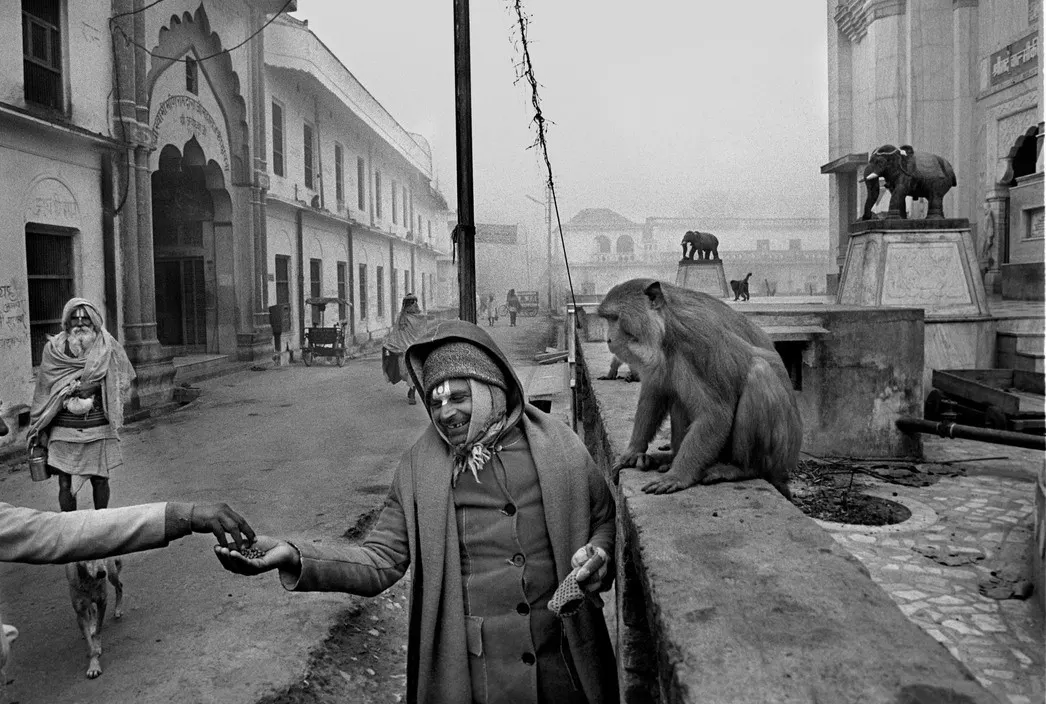
This black-and-white photograph turns a fleeting exchange into a layered tableau, where a monkey on a parapet, a bundled man, and temple architecture share the frame with remarkable poise.
Watch the video
Ayodhya stands out for how naturally it holds several kinds of attention at once. It is a street photograph, an architectural study, and a quietly theatrical moment between human and animal. The image feels discovered rather than arranged, yet its strongest elements lock together with real precision: a monkey poised on the stone ledge, a man extending an open hand, elephants receding into mist, and a street fading into pale morning air.
A focal point with instant mystery
The monkey is the image’s magnetic center. Its placement high on the parapet gives it authority, while its seated pose feels alert but unforced. Because the animal is large in frame and set against softer haze and pale stone, it becomes the photograph’s first clear point of attention. That choice gives the scene immediate intrigue: this is not just a city view, but a moment organized around presence and watchfulness.

The monkey’s pose and placement create an unforgettable focal anchor.
Gesture turns the scene into a story
The bundled man at center gives the photograph its emotional key. His face is animated, his shoulders are wrapped against the cold, and his open palm holds the picture in a moment of exchange. That small gesture does enormous narrative work. It suggests offering, routine, trust, and anticipation all at once. The image becomes memorable because it captures not only a subject, but a relationship unfolding in public space.

The central figure’s expression and open hand give the frame human warmth and narrative clarity.
Architecture gives the encounter a stage
The setting is rendered with exceptional richness. On the left, the arcaded building draws the eye down the street in a long receding plane. On the right, the parapet and shrine structures provide mass, height, and ceremonial weight. Together these forms make the encounter feel embedded in a real, lived environment rather than isolated from it. The photograph benefits from this strong structural frame: the street breathes, the temple edge holds, and the action feels grounded in place.
The surrounding architecture gives the scene depth, balance, and a powerful sense of place.
Repeating forms deepen the sense of place
One of the image’s most elegant touches is the row of elephant statues stepping back into the distance. Their repetition adds rhythm without feeling decorative. In monochrome, their silhouettes read clearly through the haze, so they function as both landmark and visual echo. They extend the world beyond the main interaction and make the photograph feel culturally specific, not generic. This repetition is what turns the background into something memorable.
The repeated elephant forms add rhythm, depth, and a distinctive local identity.
Fog and stone shape the photograph’s mood
The atmosphere is one of the image’s great strengths. Fog reduces contrast in the distance, letting the background dissolve gently while the foreground figures remain tactile and immediate. The stone parapet, rough street, wrapped clothing, and fur all carry beautiful texture, which the black-and-white rendering emphasizes without harshness. This balance between softness and detail gives the photograph its timeless quality. It feels cold, quiet, and fully inhabited.
Fog and textured monochrome give the scene a timeless, deeply atmospheric presence.
Why this photograph stands out
What makes Ayodhya so memorable is the way it combines surprise with structure. The human-animal encounter is unusual and vivid, but the photograph does more than record an event: it surrounds that event with architecture, repetition, fog, and texture that enrich its meaning. The result is a street tableau with documentary force and visual grace, a frame that lingers because every major element contributes to its mood and story.
About the photographer
Raghu Rai
Raghu Rai is renowned for his **powerful, deeply human approach to documentary photography**, capturing the complexity of Indian life through moments of emotion, movement, and quiet observation. His images range from crowded streets and everyday life to major historical events, often revealing unexpected relationships between people and their surroundings. His work is distinguished by **expressive composition, rich tonal depth, and an instinct for capturing decisive moments**. Rai combines the immediacy of photojournalism with a strong artistic sensibility, creating photographs that are not only records of reality but also deeply evocative visual stories.