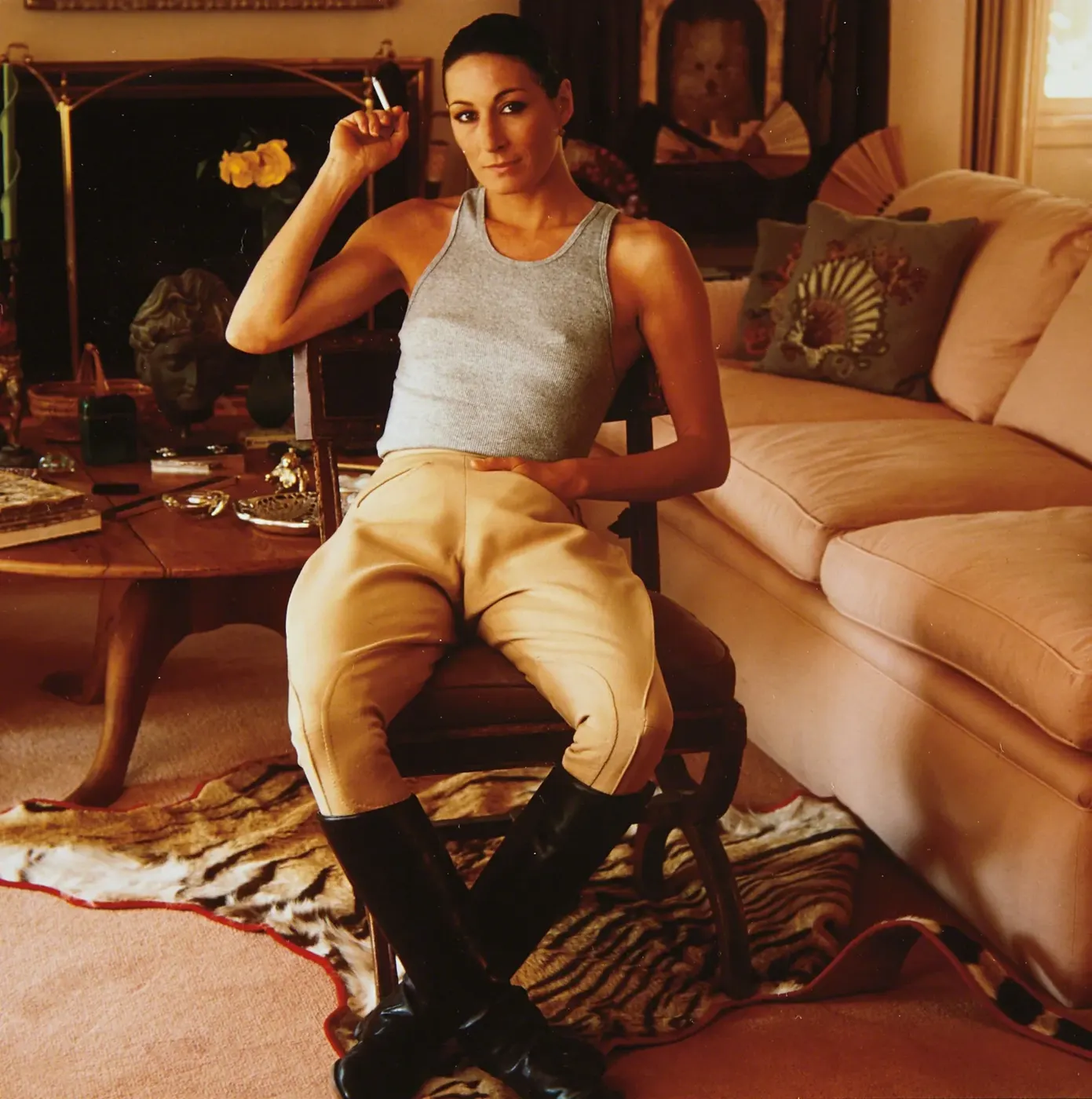
Annie Leibovitz Vanity Fair 1985
A poised interior portrait where direct gaze, sculpted pose, and warm domestic detail combine into an image of confidence and editorial elegance.
Watch the video
This portrait is memorable for how effortlessly it holds attitude and atmosphere in the same frame. The subject’s calm eye contact gives the image its authority, while the room around her adds texture, status, and narrative. Every strong choice—the seated angle, the warm palette, the layered decor—supports a portrait that feels both intimate and unmistakably editorial.
A gaze that sets the whole tone
The face is the emotional center of the photograph. Her direct look is steady rather than theatrical, and that restraint gives the portrait its confidence. The expression feels fully self-possessed, which makes the image compelling without needing overt gesture or dramatic motion. Even in a richly furnished room, the viewer returns to the eyes first because they carry such clear composure.

The direct gaze gives the portrait a controlled, magnetic center.
A seated pose with real structure
The body arrangement is especially well handled. The bent arm, slight recline, angled shoulders, and crossed lower legs create a chain of diagonals that keeps the composition active. Instead of letting a seated portrait settle into symmetry, the pose introduces rhythm and direction. It feels relaxed but carefully shaped, which is a hallmark of strong editorial portraiture.

The pose turns a quiet seated portrait into something dynamic and sculptural.
Warm tones that unify the room
Color does a great deal of the image’s work. Skin, wood, upholstery, and trousers all sit within a warm, harmonious range that gives the portrait a soft glow without losing sophistication. The gray top is a smart counterpoint: cool enough to separate the upper body from the amber room, but subtle enough to stay inside the palette. That balance makes the figure feel integrated into the setting while still remaining distinct.
The warm palette feels cohesive, and the gray top gives the figure elegant separation.
An interior that tells the story
The room is not just background; it is part of the portrait’s identity. Decorative pillows, fans, wood furniture, and tabletop objects create a domestic-luxe atmosphere that feels specific and lived in. These details suggest personality and status without overwhelming the sitter’s presence. The photograph gains much of its editorial richness from this sense of place, where styling and environment deepen the character of the image.
The layered decor gives the portrait character, context, and a distinctive editorial mood.
Depth through furniture and placement
One of the more subtle strengths is how naturally the subject inhabits the chair and room. The chair back, arm position, and slight backward lean create believable spatial depth, so the portrait feels built within the setting rather than placed on top of it. That integration makes the frame more immersive. The photograph invites you to read the figure and the interior together as one composed world.
The subject feels fully grounded in the room, which gives the portrait depth and presence.
Why this photograph stands out
What makes this image last is its combination of poise and atmosphere. The portrait never has to force its elegance: it arrives through a steady expression, disciplined body geometry, warm tonal control, and a richly descriptive interior. The result is a photograph with confidence, intimacy, and the unmistakable polish of a carefully built editorial world.
About the photographer
Annie Leibovitz
Annie Leibovitz is renowned for transforming portraits into cinematic, storytelling images, often using dramatic lighting, elaborate settings, and carefully directed poses. Her photographs are known for their emotional intensity, theatrical composition, and ability to reveal something about her subjects beyond their public personas. She often blends fine-art photography with editorial storytelling, creating images that feel both intimate and larger-than-life. Her signature style has made her one of the most influential portrait photographers of the modern era.