Annie Leibovitz’s Monochrome Portrait Turns Presence Into Atmosphere
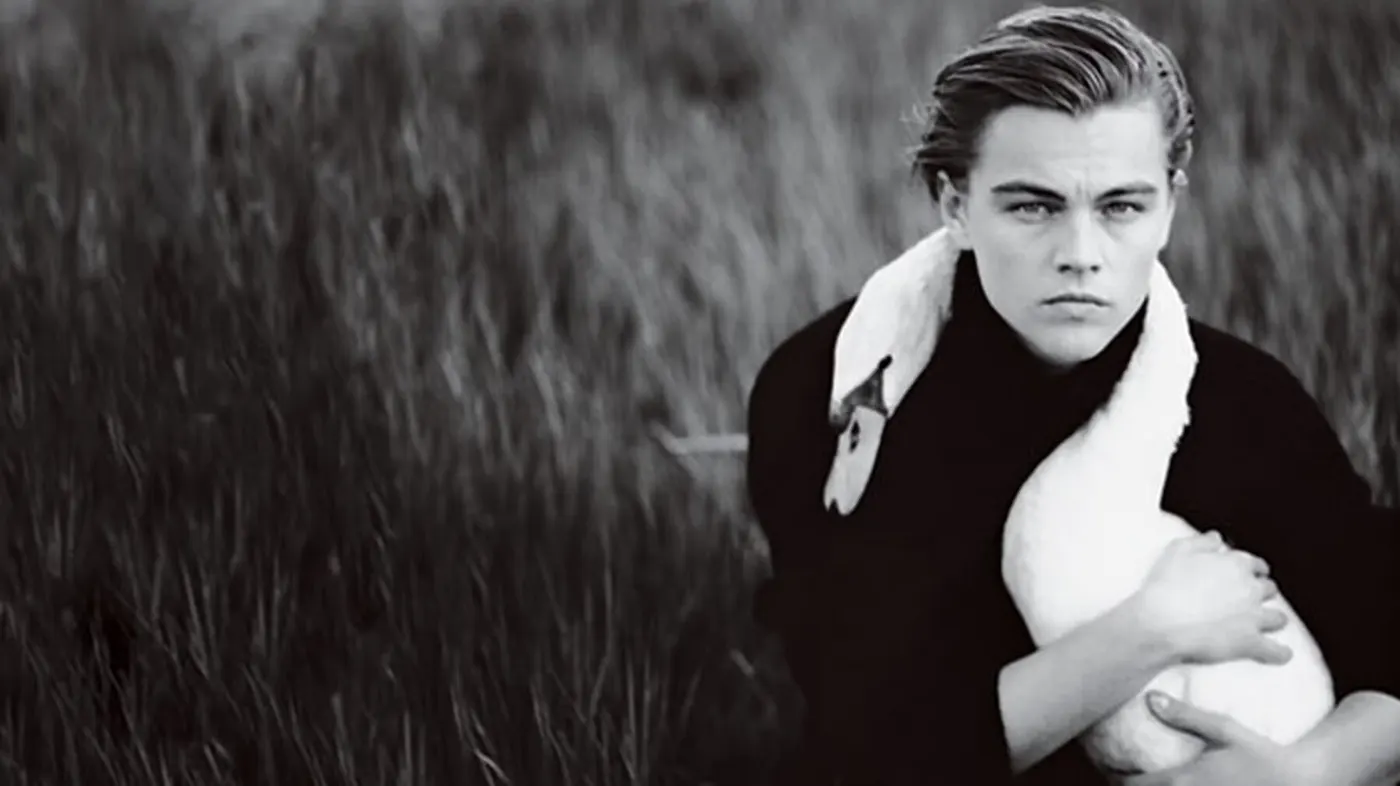
This portrait’s lasting power comes from its calm intensity: a direct gaze, sculptural black-and-white tonality, and a luminous wrap set against deep clothing and wind-softened grass.
Watch the video
This portrait is memorable for how much force it holds in such restrained terms. Annie Leibovitz builds the image from a few clear elements—a steady expression, a sculpted face, dark clothing, a bright wrap, and a blurred field—and lets each one do real work. The result feels cinematic and intimate at once, with the subject’s presence emerging out of the frame’s soft, moody atmosphere.
The eyes establish the entire emotional temperature
The first thing that lands is the gaze. DiCaprio’s eyes are sharp, level, and unembellished, and that directness gives the portrait its gravity. Nothing about the expression feels overstated; the power comes from its stillness. Because the face is rendered with such clarity against the softer field behind him, the eyes become the photograph’s emotional anchor and the point from which the rest of the image unfolds.

The portrait’s emotional force is concentrated in a steady, unforgettable gaze.
Monochrome contrast gives the portrait its sculptural clarity
The black-and-white treatment is especially effective in the way it separates forms. The dark coat and shirt create a dense visual mass, while the bright wrap catches light and cuts a clean shape through the frame. That contrast gives the portrait immediate legibility. It also creates a graceful path for the eye: from the luminous wrap upward to the face, where the expression resolves the image.

The luminous wrap against deep black clothing gives the image striking tonal precision.
Soft grass turns the setting into atmosphere
The background is beautifully handled. The grass is present as texture, but softened enough that it reads as atmosphere rather than detail. Its blurred vertical sweep gives the portrait an organic, almost painterly field, surrounding the subject with motion-like softness while never competing with him. That makes the figure feel isolated in a poetic way, as if the landscape is carrying the mood rather than merely describing a location.

The blurred field supplies mood and texture while keeping the subject beautifully isolated.
Hair and facial structure become graphic design
One of the most elegant choices in the portrait is how strongly the head reads as shape. The slicked-back hair creates a clean contour, and the cheekbones, brow, and jaw are modeled with enough light to feel carved rather than simply lit. In monochrome, these lines become even more pronounced. The portrait gains a classic, almost sculptural quality because the styling and facial structure are treated as graphic elements as much as descriptive ones.
The clean hair shape and facial contours give the portrait a timeless sculptural presence.
Why this photograph stands out
What makes this image endure is its discipline. Every visible element—the unwavering eyes, the severe elegance of the styling, the white wrap, the dark clothing, the soft field—serves the same mood. Leibovitz does not crowd the portrait with explanation. She lets tone, shape, and expression carry it, and that restraint is exactly what makes the photograph feel so lasting.
About the photographer
Annie Leibovitz
Annie Leibovitz is renowned for transforming portraits into cinematic, storytelling images, often using dramatic lighting, elaborate settings, and carefully directed poses. Her photographs are known for their emotional intensity, theatrical composition, and ability to reveal something about her subjects beyond their public personas. She often blends fine-art photography with editorial storytelling, creating images that feel both intimate and larger-than-life. Her signature style has made her one of the most influential portrait photographers of the modern era.