Annie Leibovitz:Queen Elizabeth
A grand room, a measured pose, and exquisitely controlled window light turn this portrait into a study in dignity, scale, and ceremonial presence.
Watch the video
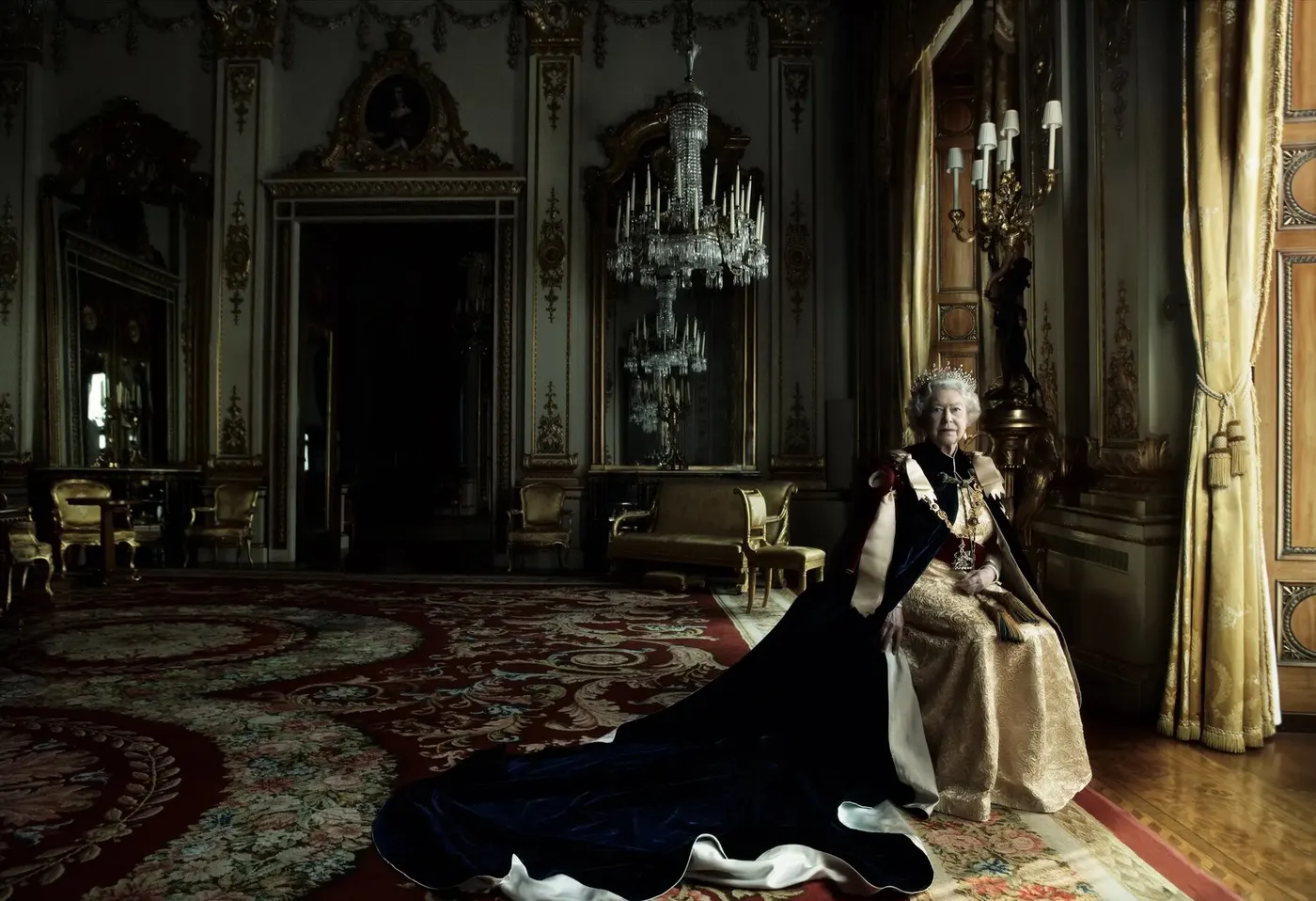
This portrait achieves grandeur through precision. Queen Elizabeth is placed within an opulent interior, yet the image never loses its human center. The room conveys history and power, while the soft side light and disciplined pose give the photograph calm authority. What makes it memorable is the balance between spectacle and restraint: every major visual element, from the train to the drapery to the carved walls, reinforces the sitter’s presence.
Window light gives the portrait its dignity
The face is illuminated by soft directional light from the right, and that choice defines the emotional register of the image. The light models the Queen’s features with clarity and gentleness, creating shape without harshness. It gives the portrait an immediate focal point while preserving the room’s low-key atmosphere, so the image feels stately rather than theatrical.

The window-side illumination gives the face poise, depth, and unmistakable importance.
The sweeping train turns space into ceremony
The dark velvet train spreads across the foreground as a commanding compositional line. It begins near the viewer and carries the eye directly to the seated figure, making the room feel expansive while keeping the portrait unified. Its broad shape also intensifies the sense of ritual and rank, transforming floor space into part of the subject’s presence.

The sweeping robe creates a powerful lead-in and makes scale feel regal rather than empty.
Architecture frames authority without losing intimacy
The portrait uses the room’s vertical structure beautifully. Curtains, window frames, gilded moldings, and wall details rise around the Queen and give the image a formal visual grammar. These elements establish the setting as historic and ceremonial, yet they also guide attention back to the sitter, letting the environment support the portrait’s authority.

The surrounding architecture gives the portrait grandeur, context, and formal balance.
Textiles carry the photograph’s richness
Much of the image’s luxury comes from its extraordinary treatment of fabric. The robe’s deep velvet absorbs light differently from the bright satin trim and the patterned gold gown, creating a layered tactile experience. The photograph invites close looking: every surface feels deliberate, ceremonial, and alive to the light.
The contrast between velvet, satin, and brocade gives the portrait sumptuous tactile depth.
Why this photograph stands out
This is an environmental portrait of rare composure. Its success lies in how confidently it combines human presence with architectural scale, ceremonial dress, and restrained light. The result is not only regal but deeply legible: a portrait that communicates history, rank, and personality through visual control alone.
About the photographer
Annie Leibovitz
Annie Leibovitz is renowned for transforming portraits into cinematic, storytelling images, often using dramatic lighting, elaborate settings, and carefully directed poses. Her photographs are known for their emotional intensity, theatrical composition, and ability to reveal something about her subjects beyond their public personas. She often blends fine-art photography with editorial storytelling, creating images that feel both intimate and larger-than-life. Her signature style has made her one of the most influential portrait photographers of the modern era.