A Portrait Built on Presence, Motion, and Monochrome Grace (Annie Leibovitz)
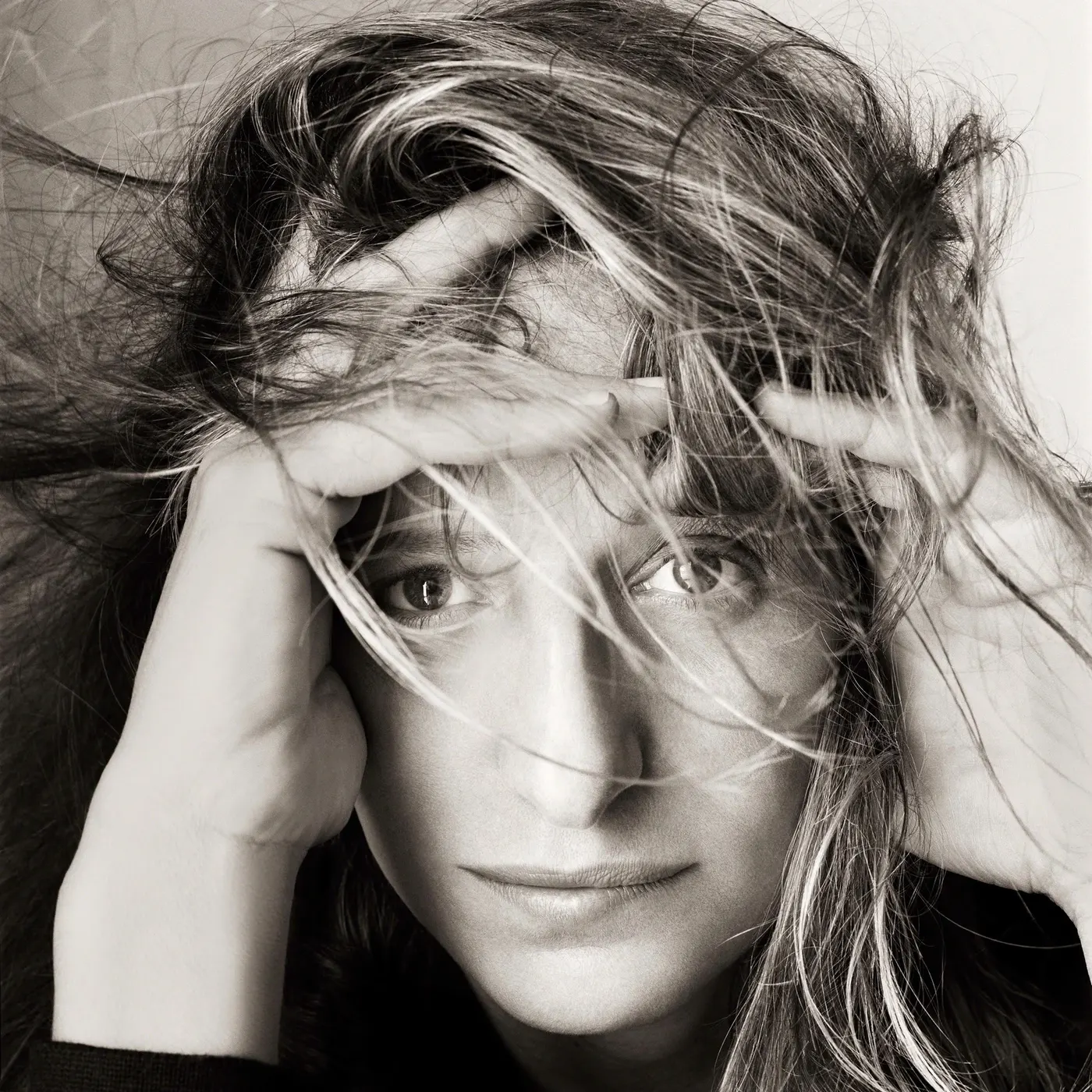
This black-and-white portrait is unforgettable for the way it balances direct human presence with restless movement. The gaze holds the frame, while the hands and windblown hair turn a tight crop into something charged, cinematic, and deeply alive.
Watch the video
This portrait has the rare quality of feeling immediate and iconic at once. The subject’s eyes meet the viewer with unusual steadiness, while the hair and hands introduce motion and pressure around that still center. In black and white, every choice becomes more graphic: tone, texture, shape, and expression do all the work, and they do it beautifully.
The eyes give the portrait its magnetic center
The first thing that lands is the gaze. Even within a frame full of moving strands and tightly placed hands, the eyes remain the emotional anchor. They are bright, alert, and searching, and that clarity gives the portrait its psychological force. The viewer does not simply look at the face; the face looks back with equal intensity.

The eyes create an immediate, unforgettable connection that holds the entire portrait together.
Windblown hair turns a still portrait into something cinematic
The hair sweeping across the upper half of the frame gives the image its kinetic energy. It arcs and tangles in multiple directions, creating a sense of motion that keeps the portrait from feeling posed or fixed. Those shifting lines add tension and drama, especially against the calm steadiness of the face beneath them. The result feels editorial in the best sense: raw, shaped, and vividly alive.

The moving hair gives the portrait drama, tension, and a striking sense of life.
The hands create a sculptural frame around the face
Both hands do more than occupy the edges of the picture; they actively build the composition. The left hand curves inward like a protective border, while the right hand balances it with a matching pressure on the opposite side. Together they form an enclosure that funnels attention toward the eyes and central features. In such a tight crop, that hand placement creates intimacy without softness, making the portrait feel concentrated and emotionally charged.

The hands turn the close crop into a powerful, intimate composition.
Black and white reveals the portrait’s full tactile richness
The monochrome treatment is essential to the image’s character. Without color, the portrait depends on tonal transitions, and those transitions are handled with real finesse. Skin, hair, and hands each carry their own texture, yet they remain part of one cohesive surface. The soft grays through the face, the brighter highlights in the hair, and the deeper darks in the clothing give the image depth while keeping the mood unified and elegant.
The monochrome palette makes texture, tone, and expression feel especially refined and cohesive.
Why this photograph stands out
What makes this portrait memorable is its balance of opposites: stillness and movement, intimacy and intensity, polish and wildness. The gaze is steady, the framing is controlled, and the hair brings just enough disorder to make the image feel fully alive. In black and white, those elements become timeless, giving the portrait both immediacy and lasting presence.
About the photographer
Annie Leibovitz
Annie Leibovitz is renowned for transforming portraits into cinematic, storytelling images, often using dramatic lighting, elaborate settings, and carefully directed poses. Her photographs are known for their emotional intensity, theatrical composition, and ability to reveal something about her subjects beyond their public personas. She often blends fine-art photography with editorial storytelling, creating images that feel both intimate and larger-than-life. Her signature style has made her one of the most influential portrait photographers of the modern era.