Alan Schaller’s Elegant Theater of Light and Scale
A single window, a field of shadow, and two small figures are enough for Alan Schaller to build a photograph of striking clarity. The image feels architectural and human at once, turning hard sunlight into rhythm, direction, and quiet drama.
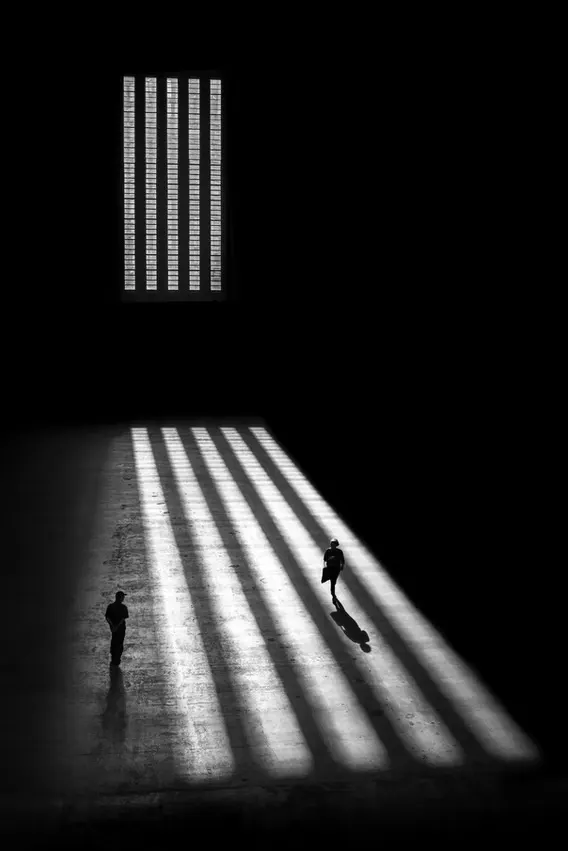
This photograph distills many of Alan Schaller’s signature strengths into an unusually pure frame. A bright window hangs in darkness like a visual source note, while its light falls across the floor in long bars that structure the entire image. Within that severe geometry, two human figures introduce scale, movement, and a sense of lived space. The result is minimalist, cinematic, and immediately memorable.
A window that explains the whole picture
The luminous window near the top of the frame does more than attract attention: it establishes the logic of the image. Its vertical slats are repeated below as projected stripes, so the composition feels complete from top to bottom. That connection gives the photograph unusual coherence. The eye understands the light instantly, and the architecture becomes both subject and design.

The window anchors the composition and gives the striped light a clear architectural origin.
Light turned into rhythm
The strongest visual force in the picture is the banded light stretching diagonally across the floor. These bright lanes carve the empty interior into measured intervals, creating pace and direction without any clutter. They also deepen the sense of space: what could have been a flat surface becomes a stage of receding light and shadow. The photograph feels graphic, but never static, because the stripes keep the frame moving.

The projected light bands give the image its rhythm, depth, and forward motion.
A figure placed for drama and momentum
The right-hand figure becomes the primary human presence by stepping into the brightest zone. The placement is precise: small in scale, but immediately legible against the illuminated ground. The person’s shadow extends the line of movement, so the figure reads not as a fixed silhouette but as a passing event. That combination of clarity and motion gives the image its pulse.

The illuminated figure and its shadow create a vivid sense of movement within the geometric scene.
A second presence that opens the story
The darker figure on the left gives the composition a subtle counterweight. Without disturbing the minimalist structure, this second person expands the photograph from a study of light into a scene with human relationships and scale. The distance between the two figures introduces tension and possibility: they may be connected, or simply sharing the same architecture for a moment. That ambiguity is part of the image’s elegance.

The second figure adds balance, scale, and quiet narrative possibility.
Negative space with real conviction
Much of the frame is given over to darkness, and that decision is central to the picture’s power. The black surrounding space strips the architecture to essentials and intensifies the lit floor as if it were a spotlight. This restraint is what makes the image feel so confident. Nothing extra competes with the window, the stripes, or the figures; every element arrives with force because so much has been left out.
The expansive darkness gives the photograph its drama and disciplined minimalist mood.
Texture beneath the abstraction
For all its graphic strength, the photograph never becomes purely symbolic. The floor retains enough surface detail to feel tactile and real, especially where the light skims across it. That texture matters: it keeps the image grounded in physical space even as the composition approaches abstraction. The picture balances design and material presence with impressive control.
The visible floor texture adds physical presence beneath the clean geometry.
Why this photograph stands out
What makes this image so lasting is the way it holds several qualities in perfect balance. It is austere but not cold, graphic but not empty, theatrical but fully believable. Schaller turns a simple architectural situation into a complete visual world, where light describes structure, darkness shapes mood, and two tiny figures supply human scale. It is a beautiful example of how black-and-white photography can reduce a scene to essentials and make those essentials feel monumental.
About the photographer
Alan Schaller
Alan Schaller is known for his **striking black-and-white street photography**, often finding moments of tension, solitude, and human connection within the rhythms of urban life. He uses strong light and shadow, geometric forms, and carefully timed moments to turn ordinary city scenes into visually powerful compositions. His work is distinguished by **dramatic contrast, minimalist framing, layered compositions, and an exceptional sense of timing**. Schaller often juxtaposes people with architecture, shadows, and negative space, creating photographs that feel both cinematic and emotionally introspective.