A Snowstorm Seen as Memory and Feeling
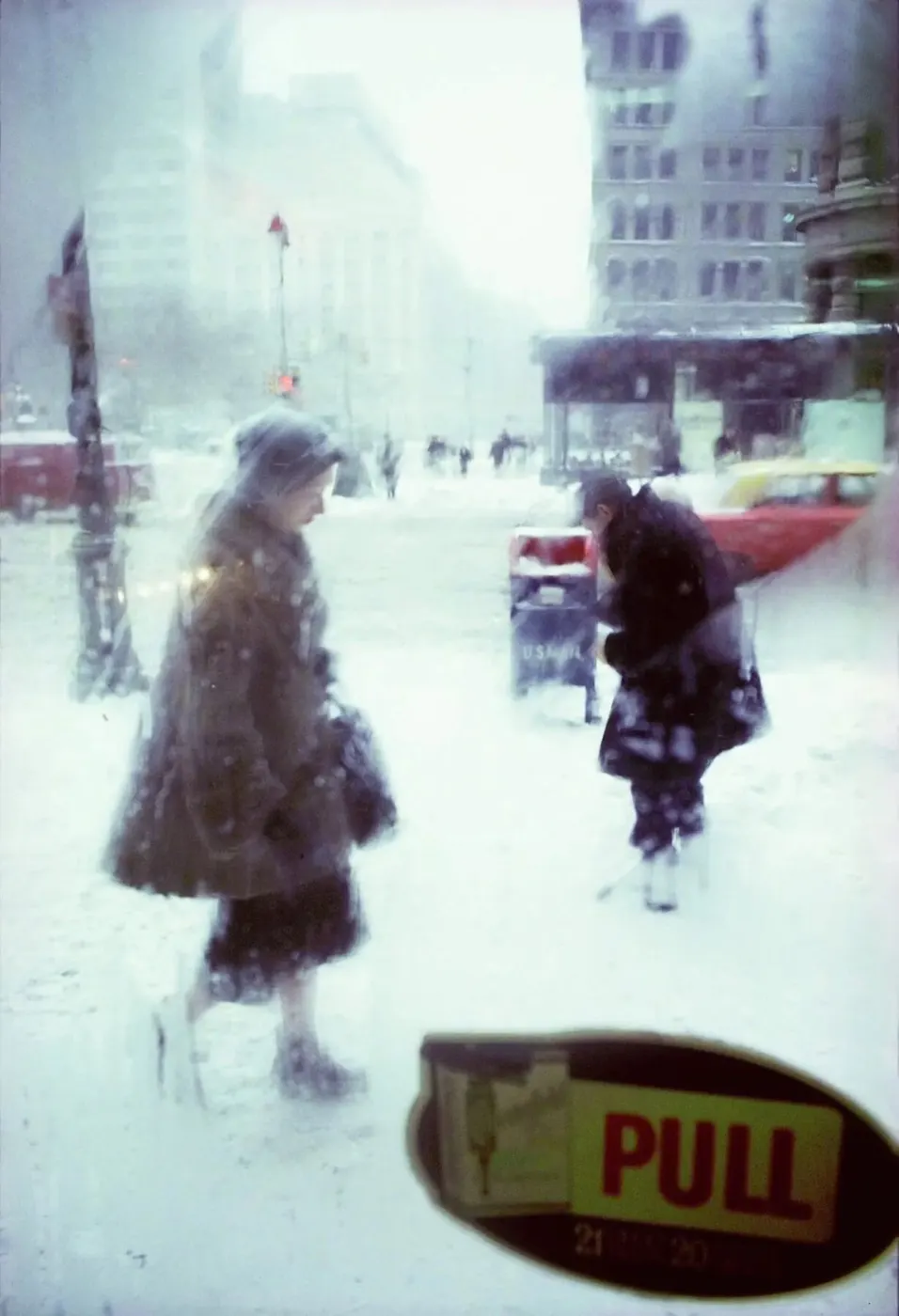
Viewed through wet glass, this street scene turns a winter crossing into something tender, painterly, and deeply human. The photograph’s blur, texture, and quiet color make the storm feel lived rather than merely observed.
Watch the video
This photograph is compelling because it never treats the snowstorm as simple spectacle. Instead, it lets weather, glass, and human movement merge into a soft urban impression. The scene feels half witnessed, half remembered: bundled figures lean forward through the whiteout, buildings dissolve into haze, and the city becomes a stage for endurance. Its beauty lies in that translation from document to atmosphere.
The glass turns the street into a painting
The wet, fogged surface between camera and street is the image’s defining gesture. Smears, condensation, and melting snow soften edges and dissolve detail, so the city appears filtered through touch as much as sight. That veil gives the frame a tactile, handmade feeling. Rather than describing the storm literally, the photograph renders it as sensation: cold, moisture, blur, and distance all become visible at once.
The textured glass gives the scene a painterly, tactile atmosphere that makes the storm feel immediate and poetic.
The left pedestrian carries the emotion
The bundled figure on the left is the photograph’s emotional center. Their bowed head, softened outline, and heavy winter silhouette convey the physical weight of the weather. Because the figure is blurred rather than crisply frozen, the image holds onto vulnerability instead of description. That softness makes the person feel less like a passerby and more like an embodiment of winter effort.

The left figure anchors the image with empathy, turning weather into human experience.
A second figure gives the storm a shared narrative
The person on the right deepens the story by echoing that same struggle in a different posture. Bent forward against the snow, they create a visual conversation across the frame with the left pedestrian. Together, the two figures transform the scene from an isolated portrait into a communal moment of endurance. Small background pedestrians extend that idea farther, suggesting a whole city moving through the same difficult weather.

Multiple figures make the storm feel collective, giving the frame narrative breadth as well as intimacy.
Architecture steadies the blur
For all its softness, the photograph is not formless. The right-side building, with its visible window grid and vertical facade, provides a crisp geometric counterweight to the drifting haze. Those repeated rectangles help locate the figures in an urban scale and keep the composition grounded. The balance between structural lines and atmospheric blur is especially satisfying: the city remains solid even as the storm seems to erase it.
The building geometry gives the image structure and scale, balancing its otherwise dreamlike softness.
Small notes of red keep the palette alive
Most of the frame lives in pale whites, grays, and cold blue-violets, which suits the storm beautifully. Within that subdued palette, the red car and tiny red accents become vivid punctuation marks. They animate the middle distance without disturbing the hush of the scene. That restrained use of color keeps the photograph from slipping into monotony while preserving its wintry quiet.
The restrained red accents energize the muted palette and guide the eye through the storm.
Why this photograph stands out
What makes this image memorable is the way it privileges feeling over factual clarity. The storm is not simply shown; it is translated through moisture, blur, posture, and light into something tender and cinematic. Human fragility, urban structure, and weather all remain present, but they are fused into one impression. That fusion is the photograph’s distinction: it makes a fleeting winter street scene feel enduring.
About the photographer
Saul Leiter
Saul Leiter was known for his poetic, painterly approach to street photography, finding beauty in quiet, everyday moments rather than dramatic events. He used reflections, fogged windows, rain, vibrant color, and layered compositions to create images that feel intimate and dreamlike. His work often obscures or partially hides his subjects, inviting the viewer to discover the scene rather than simply observe it. Leiter’s photographs are celebrated for their subtle mood, ambiguity, and extraordinary use of color and light.