A Rain-Polished City Memory
This photograph turns a wet street, a vintage taxi, and a passing figure into something cinematic and enduring. Its beauty lives in the balance between structure and atmosphere.
Watch the video
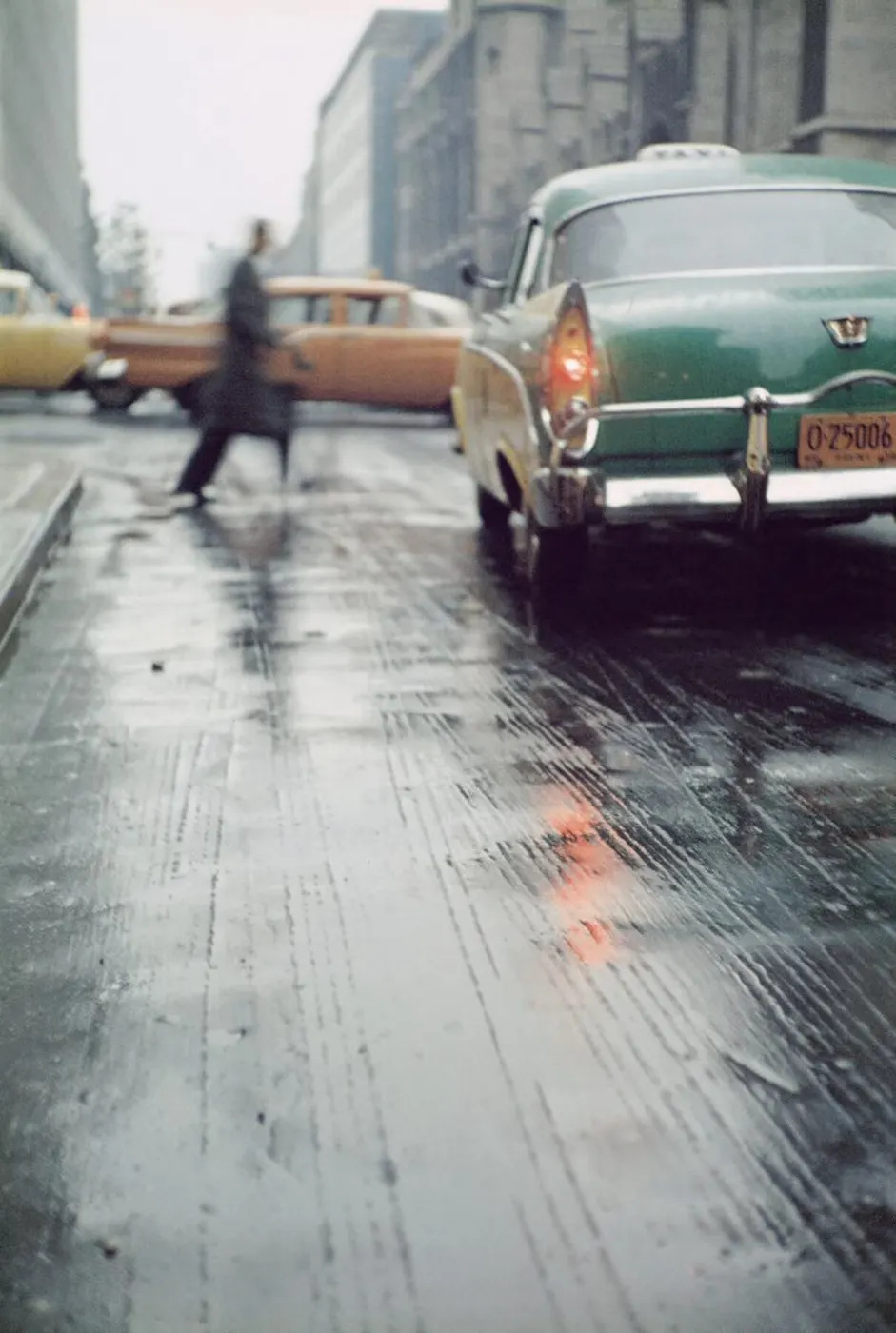
"Saul Untitled" feels less like a document than a memory held in perfect visual form. The image gathers rain, traffic, architecture, and human motion into a scene that is both immediate and dreamlike. What makes it so memorable is how clearly the photograph knows where its emotional weight belongs: in the gleam of the taxi, the sweep of the street, and the fleeting life crossing through it.
The taxi gives the frame its unmistakable identity
The rear of the green taxi holds the right side of the image with real authority. Its mass, color, and distinctive shape give the picture an instant subject, while its placement creates a beautiful asymmetry against the open stretch of wet street. The car feels iconic rather than incidental, and that clarity gives the whole scene a strong visual backbone.

The green taxi anchors the scene with memorable shape, weight, and character.
Rain becomes texture, depth, and mood
The street surface is extraordinary here. The low viewpoint lets the rain-slick pavement dominate the foreground, so every streak and reflective band helps pull the eye deeper into the frame. The surface does more than describe weather; it becomes the picture’s main atmosphere, carrying the softness of the day while giving the composition a strong directional flow.

The rain-darkened pavement turns texture into a powerful source of depth and atmosphere.
A passing figure brings the city to life
The blurred pedestrian is one of the image’s most elegant touches. The figure is readable at a glance, yet soft enough to feel transient, as if the city is moving through the frame in real time. That motion keeps the photograph from becoming purely graphic; it adds human rhythm and makes the rainy street feel inhabited, observed, and alive.

The crossing figure gives the photograph movement, scale, and human pulse.
Small warm accents sharpen the emotional tone
Within the cool, muted palette, the taillight and nearby warm reflections matter enormously. They provide a precise note of color that punctuates the gray air and wet black street without disturbing the photograph’s restraint. The glow at the taxi’s rear and its echo in the pavement make the scene feel quietly luminous, giving the softness a center of energy.

Warm taillight color and chrome highlights give the muted scene a subtle, vivid spark.
Why this photograph stands out
What lingers in this photograph is its control of feeling. It is structured enough to read instantly, but soft enough to feel remembered. The vintage taxi, reflective street, and blurred passerby combine into a city image that feels timeless because every visible element serves the same mood: rain, motion, distance, and grace.
About the photographer
Saul Leiter
Saul Leiter was known for his poetic, painterly approach to street photography, finding beauty in quiet, everyday moments rather than dramatic events. He used reflections, fogged windows, rain, vibrant color, and layered compositions to create images that feel intimate and dreamlike. His work often obscures or partially hides his subjects, inviting the viewer to discover the scene rather than simply observe it. Leiter’s photographs are celebrated for their subtle mood, ambiguity, and extraordinary use of color and light.