A Quiet Human Drama Inside Monumental Stone
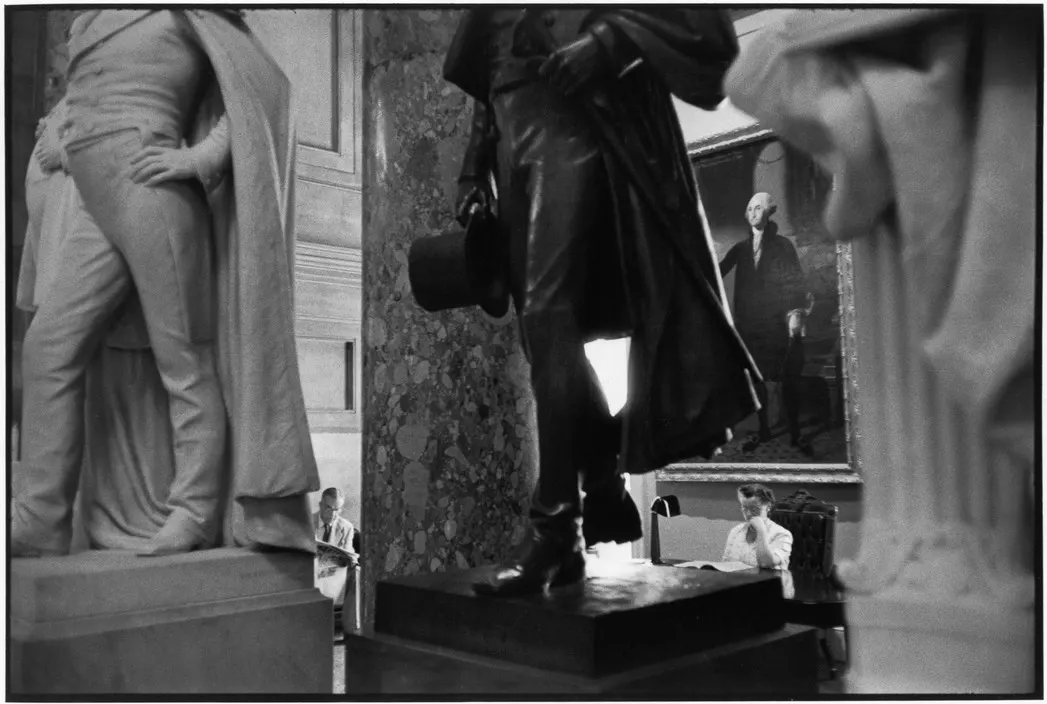
This photograph turns a museum interior into a layered stage, where statues, marble, portraiture, and a single seated woman create a scene of remarkable depth and calm intelligence.
Watch the video
What makes this image memorable is the way it withholds its subject, then reveals it. At first glance, the frame belongs to sculpture and architecture: heavy stone figures, a mottled column, a grand portrait. Then the eye discovers the seated woman at her desk, small within the room yet emotionally central. That movement from monumentality to intimacy gives the photograph its lasting power.
Foreground sculpture becomes a theatrical frame
The statues at the edges do more than describe the setting. They create a proscenium around the distant scene, letting the viewer look through stone into a quieter human space beyond. On the left, the bent arm, drapery, and pedestal form a sequence of elegant shapes that immediately establish the museum as a place of bodies, weight, and history. The framing feels discovered rather than arranged, which gives the image its alive, observational character.

The foreground statues turn the museum interior into a layered visual stage.
A small seated figure anchors the entire image
The woman at the desk is tiny compared with the surrounding sculptures and architecture, yet she becomes the emotional center of the frame. Her presence introduces scale, stillness, and a sense of daily life unfolding inside a monumental room. The contrast is beautiful: carved figures stand immobile in the foreground while a living person reads, waits, or works in the distance. That tension between grandeur and ordinary concentration gives the photograph its human warmth.

The seated figure gives the grand interior a calm and deeply human focal point.
The portrait above her creates a second human presence
One of the photograph’s most intelligent choices is the alignment of the painted portrait above the seated woman. The result is a conversation across mediums and across time: a formal figure in the painting presides over a contemporary, working figure below. This pairing transforms the background from simple decor into narrative. The room feels inhabited not only by visitors and staff, but by memory, history, and representation itself.

The portrait and the seated woman create a rich dialogue between history and the present moment.
Black and white brings out the material poetry of the room
Monochrome is especially effective here because it lets surface and density carry the picture. Marble, cloth, polished dark sculpture, and painted canvas each hold light differently, and those differences become tactile. The mottled column at center-left is especially striking, its textured surface breaking up the broader tones with mineral complexity. The grayscale treatment also reinforces the mood of quiet observation, giving the whole image a classical, timeless presence.
The black-and-white tonal range makes stone, fabric, and polished surfaces feel vividly tactile.
Small details deepen the sense of an inhabited space
Beyond the main figures, the photograph keeps rewarding attention. A small distant person visible through the left-side gap extends the scene further into the building and makes the museum feel gently populated. This extra layer matters because it prevents the image from becoming only an arrangement of objects. Instead, it becomes a lived interior, full of glimpsed presence and spatial continuation. The photograph feels expansive because every layer contains life.
Subtle background details make the space feel lived in, spacious, and quietly active.
Why this photograph stands out
This photograph is compelling because it balances grandeur with intimacy so gracefully. Its statues and architectural forms provide structure, but its lasting impression comes from the human presences threaded through the scene: the seated woman, the portrait above her, and the distant figure glimpsed at left. The image invites slow looking, and the more time you give it, the more elegantly its layers unfold.
About the photographer
Henri Cartier-Bresson
Henri Cartier-Bresson was renowned for capturing spontaneous moments of human life with remarkable precision and timing. He pioneered the idea of the “decisive moment”—waiting for the instant when gesture, emotion, geometry, and circumstance come together perfectly. His photographs are known for elegant composition, natural light, and an ability to find extraordinary meaning in ordinary scenes. His work helped establish street photography as both a documentary practice and a form of visual art.