A Cathedral of Ice and Weather
This Antarctic photograph turns an iceberg into architecture: an immense arch, a sheer ice block, and a storm-laden sky combine into a scene that feels both ancient and alive.
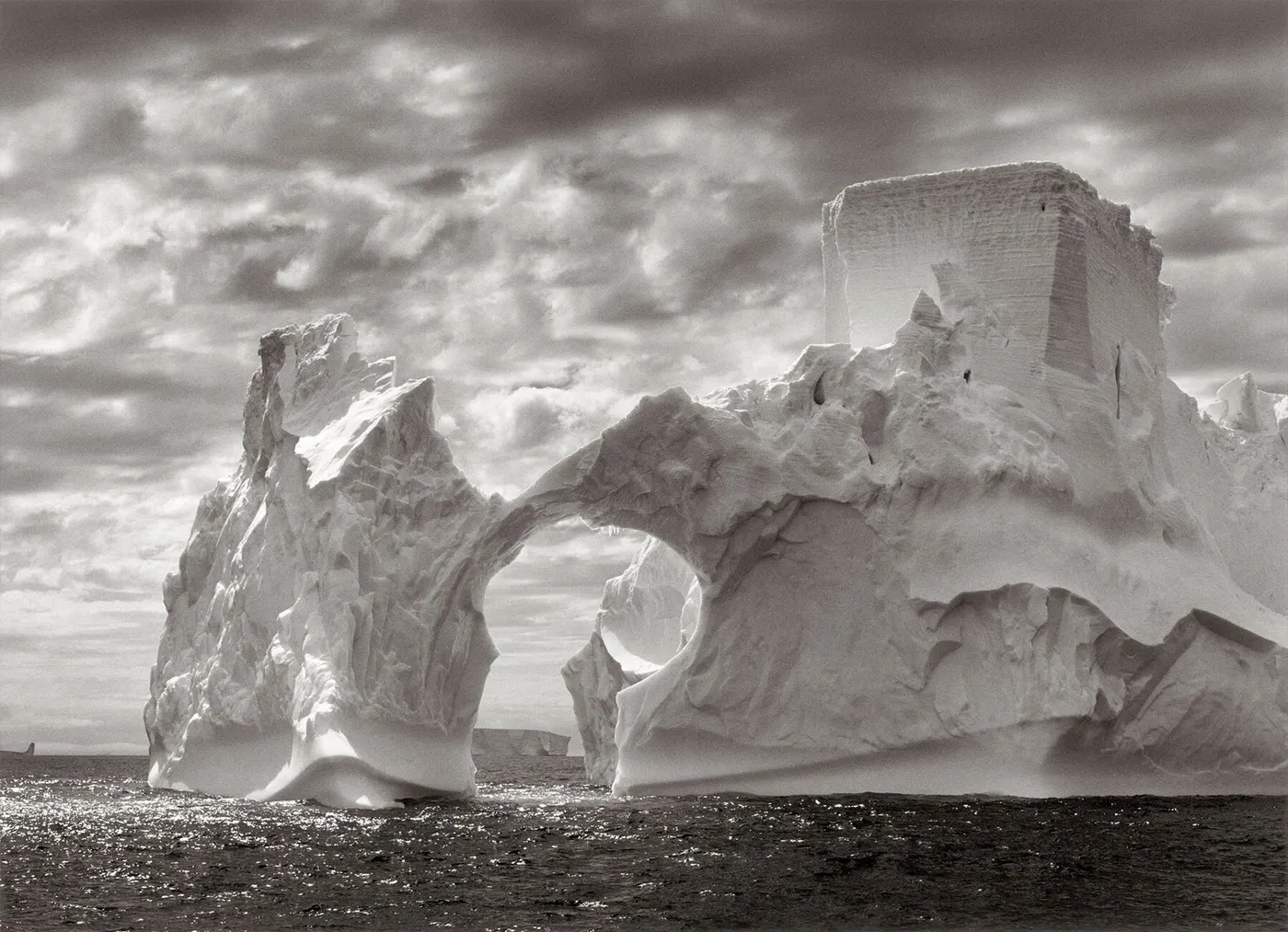
In this photograph, the iceberg feels less like floating ice than a discovered monument. The picture’s power comes from how clearly its forms are organized: a jagged spire on the left, a sweeping arch in the center, and a massive squared tower on the right. Rendered in black and white, the scene becomes a study in weight, erosion, weather, and light, where every surface seems carved by time and every tonal shift adds to the sense of polar grandeur.
The arch gives the iceberg its unforgettable identity
The central arch is the image’s defining gesture. It transforms the iceberg from a single mass into a structure with interior space, making the eye move through the picture rather than stop on its surface. The opening creates a strong pocket of negative space, and that hollow gives the surrounding ice more presence and drama. Instead of reading as static, the berg feels shaped, weathered, and improbably suspended.

The natural arch turns the iceberg into a memorable sculptural form with depth, movement, and striking negative space.
A towering block of ice anchors the whole scene
On the right, the iceberg rises into a near-vertical wall that feels monumental. Its squared silhouette is extraordinary: blunt, heavy, and almost architectural against the softer, more eroded shapes below it. That contrast between block-like mass and carved understructure gives the photograph much of its tension. The sheer face also establishes scale immediately, making the entire formation feel immense and improbable.

The immense right-hand mass gives the photograph weight, scale, and an unforgettable sense of monumentality.
The left spire keeps the composition alive
The left side of the iceberg rises in a jagged, narrower spire that answers the visual heaviness of the right. Its broken edges and upward thrust add rhythm to the frame, preventing the composition from becoming too static or one-sided. Because this section is more angular and fractured, it introduces energy that plays beautifully against the heavier geometry across the arch.

The left spire brings lift and tension, balancing the heavier forms with elegant directional energy.
Storm light gives the iceberg an elemental setting
The sky is not just backdrop here; it is an active force in the picture. Thick, layered clouds echo the iceberg’s drama and enlarge the emotional scale of the scene. Their shifting tonal bands make the bright ice feel even more luminous, while the weathered atmosphere reinforces the harshness of Antarctica. The photograph gains much of its mood from this partnership between sky and ice.
The textured sky deepens the mood and places the iceberg within a convincingly harsh, majestic polar atmosphere.
Monochrome reveals the iceberg as pure sculpture
Black and white is an especially strong choice for this subject. Without color competing for attention, the photograph concentrates on shape, tone, and surface. The carved planes, softened overhangs, fractures, and erosional curves all read with tactile clarity. Subtle tonal separation across the ice keeps the surfaces legible even within such a large white form, allowing the berg to feel both solid and intricately worked.
The monochrome treatment makes the iceberg’s textures and erosion patterns feel tactile, sculptural, and beautifully clear.
Why this photograph stands out
What makes this photograph so lasting is the way grandeur and structure meet. The iceberg is enormous, but it is also exquisitely organized within the frame: arch, spire, tower, and sky each play a distinct role. The result is an image that feels geological, architectural, and atmospheric all at once—a vision of Antarctica distilled into form, light, and weather.
About the photographer
Sebastião Salgado
Sebastião Salgado is renowned for his **powerful black-and-white photographs that explore human life, labor, migration, and the natural world on a monumental scale**. His images often place individuals within vast landscapes or dramatic environments, emphasizing both human dignity and the forces shaping their lives. His work is distinguished by **rich tonal contrasts, dramatic light, layered compositions, and an almost epic sense of scale**. Salgado transforms documentary photography into something deeply poetic and immersive, creating images that confront difficult realities while celebrating the resilience and beauty of the people he photographs.